
AD Plant Health Checks: What They Are, Why They Matter, and How to Get Started

Most problems on an anaerobic digestion plants do not arrive as a single dramatic failure. They build slowly. A gasket degrades a little more each month. A digester runs a fraction below its optimum temperature. A pressure vessel drifts closer to its next statutory inspection date without anyone tracking it. None of this shows up as an alarm. It shows up months later as lost gas yield, an unplanned shutdown, or a compliance notice.
An AD plant health check is designed to catch these issues while they are still small and cheap to fix. It is a structured, proactive assessment of your plant's biological performance, mechanical condition, and regulatory compliance, carried out before problems become expensive.
This guide explains what a health check involves, why it matters for operators, developers and investors, and what a proportionate response looks like when issues are found.
What is an AD plant health check?
An AD plant health check is a comprehensive, scheduled assessment of an anaerobic digestion system, covering biological performance, mechanical condition, gas handling, and statutory compliance. It combines a detailed site inspection with a review of operational data to identify issues before they affect output, safety or compliance.
Unlike a single-issue survey, such as a leak detection check or a routine statutory inspection, a health check looks at the plant as a whole. It brings together process data, physical inspection, and regulatory documentation into one assessment, then translates the findings into a prioritised, practical action plan.
Think of it as the AD equivalent of a full vehicle service rather than a single tyre check. It does not replace your statutory inspections or your day-to-day monitoring. It sits alongside them, giving you a periodic, independent view of how the plant is actually performing against how it should be performing.
Why does a health check matter for AD plant performance?
Every issue caught during a health check has a cost attached if it is left unaddressed. Some of these costs are obvious, such as a failed pump or a missed statutory inspection. Others are less visible but just as damaging over time.
Gas yield and revenue. A digester running a few degrees below its optimum temperature, or with mixing that is not distributing feedstock evenly, will typically produce less biogas than its design potential. These losses rarely trigger an alarm. They simply appear as underperformance against the numbers on your feasibility study, month after month.
Downtime and unplanned costs. Equipment that fails without warning is far more expensive to fix than equipment that is serviced on a planned schedule. A mixer bearing that seizes mid-cycle, or a heat exchanger that fouls unnoticed until it fails, both cost more in emergency callout, replacement parts, and lost throughput than they would have cost to address early.
Compliance and regulatory risk. AD plants sit under a web of regulatory obligations, including the Pressure Systems Safety Regulations 2000 (PSSR), the Dangerous Substances and Explosive Atmospheres Regulations 2002 (DSEAR), and, for some sites, the Control of Major Accident Hazards Regulations 2015 (COMAH). Missing an inspection deadline or letting documentation drift away from actual site conditions is a common and avoidable source of enforcement risk.
Safety. Biogas is flammable, and hydrogen sulphide (H2S) is toxic in confined spaces. A health check that includes gas detection, pressure system review and hazardous area checks is directly protecting the people who work on your site.
Investor and lender confidence. For developers and asset owners, a documented health check programme is evidence of good asset management. It supports due diligence, protects the value of the investment, and gives lenders and insurers confidence that the plant is being run responsibly.
What does an AD plant health check cover?
A well-structured health check typically works through the following areas. Not every plant needs every element in equal depth, and a good assessment will be tailored to your feedstock, plant configuration, and operating history.
Digester performance and process review
This covers the biological heart of the plant: retention time, loading rate, volatile fatty acid (VFA) levels, pH, and the balance between feedstock input and gas output. A process review compares actual performance against what the plant should be achieving, and flags early signs of instability before they escalate into a stuck digester.
Mixing and agitation
Poor mixing creates dead zones, encourages crust and scum formation, and can mask the true condition of a tank. A health check assesses whether mixing equipment is performing as designed and whether feedstock is being distributed evenly through the digester volume.
Heating systems
Digester temperature has a direct effect on microbial activity and gas production. Heating system checks look at temperature uniformity across the tank, heat exchanger condition, and whether the system can maintain set point under peak demand, particularly through winter months.
Gas production and utilisation
This looks at the full gas pathway, from digester through to gas holder, upgrading equipment or combined heat and power (CHP) unit. It covers gas quality, pressure management, and whether the volume being produced is being fully and efficiently utilised.
Compliance and safety
A structured review of environmental permit conditions, DSEAR hazardous area classification, and general site safety management. This is where gaps between what your documentation says and what is actually happening on site tend to surface. If your plant may fall under COMAH, this is also the point to confirm your position. Our guide to COMAH regulations and anaerobic digestion sets out how the thresholds work and what they mean for your obligations.
LDAR assessment (methane emissions)
A leak detection and repair (LDAR) survey identifies fugitive methane emissions across the plant, typically using optical gas imaging (OGI) to make otherwise invisible leaks visible. Given that surveys across the UK and Germany have found the majority of AD plants suffering some level of biogas leakage, this is one of the highest-value elements of a health check. Our detailed guide on biogas leak detection in AD plants covers the detection methods, common leak points, and repair options in full.
PSSR inspections
Pressure vessels, digesters operating under positive pressure, and associated pipework fall under PSSR 2000. A health check verifies that your written scheme of examination is current, that inspection intervals are being met, and that any defects identified in previous examinations have been actioned.
Thermographic inspections
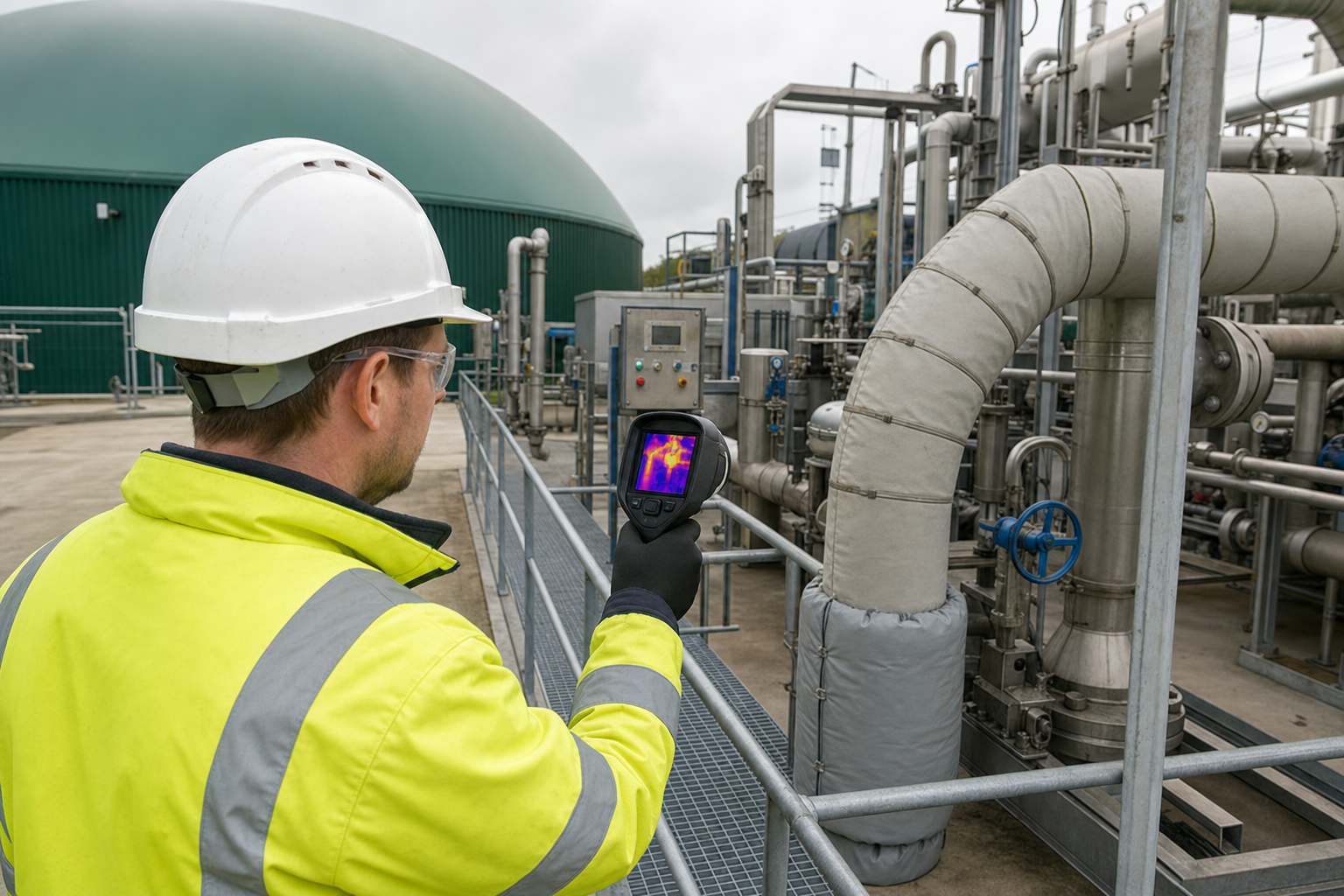
Thermal imaging identifies hot spots, electrical faults, and insulation losses that are not visible to the naked eye. On an AD plant, this is particularly useful for spotting failing electrical connections in switchgear and control panels, heat loss from digester walls or pipework, and early-stage bearing or motor faults before they cause a breakdown.
A practical health check process: what to expect
A structured health check generally follows a consistent process, whether it is being carried out internally or commissioned from a specialist.
Data review. Before any site visit, historical process data, maintenance records, permit documentation, and previous inspection reports are reviewed to build a picture of the plant and flag areas that warrant closer attention.
Site inspection. A detailed walk of the plant, covering digesters, gas handling, mechanical equipment, and safety systems. This is where thermographic imaging, LDAR checks, and physical condition assessments are carried out.
Process and biological assessment. Review of loading rates, retention time, VFA and pH trends, and gas yield against expected performance for the feedstock and plant design.
Compliance check. Review of PSSR written schemes, DSEAR documentation, environmental permit conditions, and any COMAH obligations, checked against what is actually happening on site.
Reporting. Findings are consolidated into a clear report with prioritised, actionable recommendations, supported by evidence such as thermal images, gas readings, and process data.
Action planning. The report should give you a realistic sequence of actions, distinguishing between issues that need immediate attention and those that can be scheduled into planned maintenance windows.
Real-world considerations by plant type
Health checks need to reflect the realities of the specific plant, not follow a generic template.
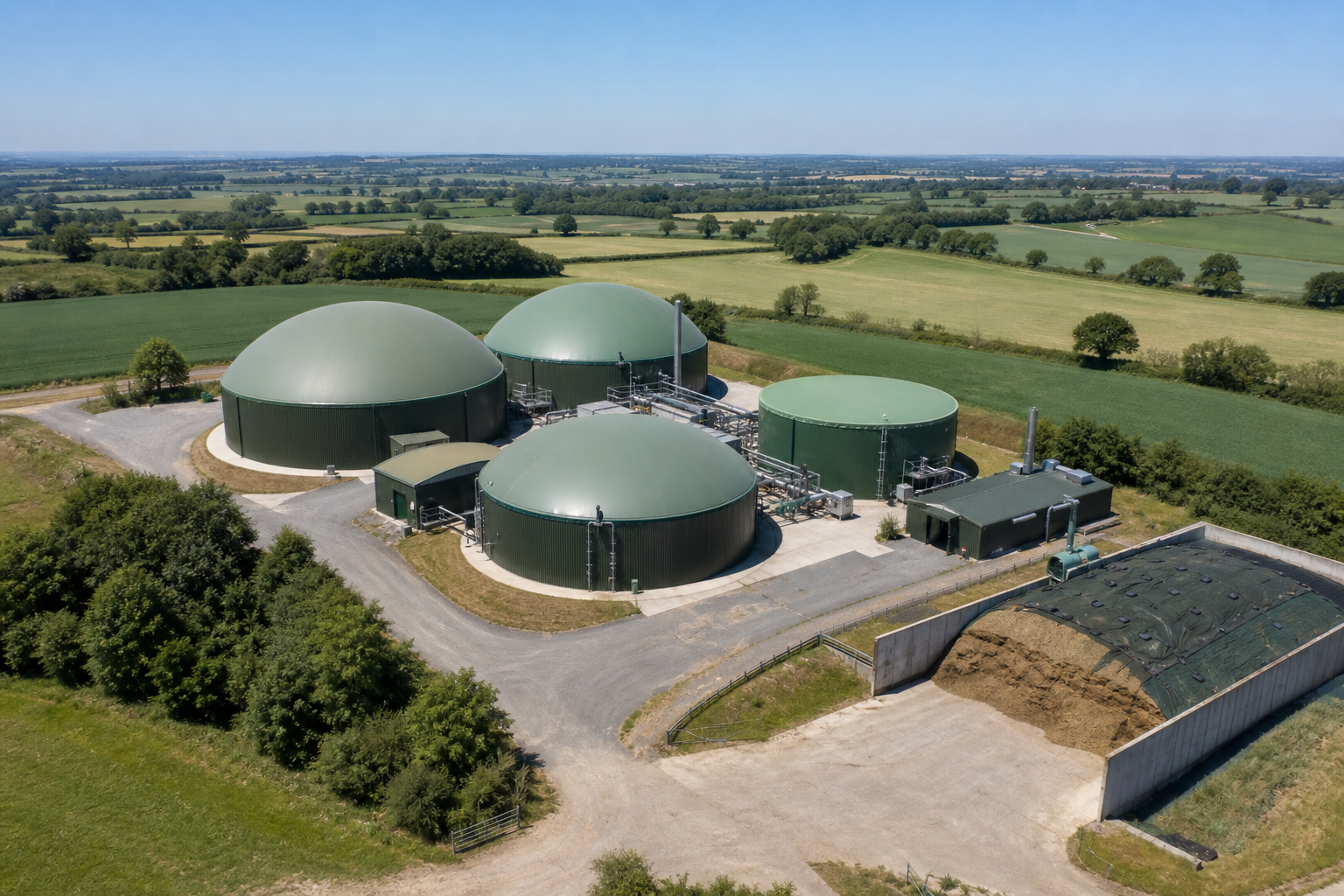
Agricultural and farm-based plants often run large digester volumes with membrane roofs, and can experience seasonal stress on fixation points and heating demand through winter. Health checks on these sites should pay particular attention to membrane condition, heating capacity, and feedstock consistency across the year.
Food waste and industrial plants typically have more mechanical complexity, higher throughput, and more variable feedstock. Depackaging equipment, agitator seals, and grit accumulation in reception tanks and digesters deserve close attention. Our guide to tank de-gritting covers how grit build-up affects working volume and equipment wear if left unmanaged.
Municipal and sewage treatment plants often use concrete digesters, where cracking is a common cause of biogas loss, and are more likely to have integrated CHP or gas upgrading equipment, which introduces additional points of mechanical and gas handling risk.
Risks and controls: what a health check protects against
The value of a health check is best understood through the risks it is designed to catch before they escalate.
Process instability. Left unmonitored, a gradual drift in VFA levels or loading rate can tip a digester toward instability, which can take weeks to recover from. Early identification through routine process review avoids this.
Uncontrolled gas loss. Fugitive methane emissions represent lost revenue, a safety hazard, and an environmental compliance risk. Regular LDAR assessment, alongside fixed and portable gas detection, keeps this under control.
Pressure system failure. Vessels and pipework operating outside their inspection schedule, or with unaddressed defects, present a genuine safety risk under PSSR. Health checks confirm your written scheme is being followed.
Electrical and mechanical failure. Thermographic inspection catches developing faults in switchgear, motors, and connections before they cause unplanned downtime or, in more serious cases, fire risk.
Compliance drift. Documentation that no longer matches site reality is one of the most common findings during any regulatory inspection. A health check closes that gap before an external inspector finds it first.
What a good AD plant health check should cover
Review of digester performance data, including loading rate, retention time, VFA and pH trends
Physical inspection of mixing and agitation equipment
Heating system review, including temperature uniformity and heat exchanger condition
Gas production and utilisation review, including gas quality and pressure management
LDAR assessment using optical gas imaging where appropriate
PSSR written scheme of examination review and inspection status check
Thermographic inspection of electrical systems and key mechanical components
DSEAR and environmental permit compliance review
COMAH applicability check where relevant
A clear, prioritised report with practical, tailored recommendations
Getting proactive about plant performance
The plants that perform best over the long term are rarely the ones with the newest equipment. They are the ones with the most disciplined approach to monitoring, maintenance, and compliance. A structured health check programme is one of the simplest ways to build that discipline into your operation.
Done well, a health check is not a one-off exercise. It becomes part of your planned maintenance calendar, sitting alongside statutory PSSR inspections, LDAR surveys, and routine servicing, giving you a consistent, evidence-based picture of plant condition over time.
Frequently Asked Questions
-
A typical health check covers digester performance and process data, mixing and heating systems, gas production and utilisation, LDAR assessment for methane leaks, PSSR inspection status, thermographic imaging, and a review of compliance documentation. The result is a prioritised report with practical recommendations.
-
Most operators benefit from a full health check annually, alongside statutory inspections that follow their own separate schedules under PSSR. Plants approaching their first year of operation, recovering from process instability, or preparing for investor due diligence should consider one sooner.
-
Cost depends on plant size, complexity, and the scope of assessment required, so it is not possible to give a single figure. In most cases, the cost of a health check is small compared to the value of the gas losses, downtime, or compliance risk it can help avoid.
-
A PSSR inspection is a statutory examination of pressure vessels and pipework, carried out to a legally required written scheme. A health check is broader, covering biological performance, mechanical condition, gas handling, and compliance as a whole, and can include a review of your PSSR status as one component.
-
Yes, in most cases. A leak detection and repair (LDAR) assessment, often using optical gas imaging, is one of the most valuable elements of a health check, since fugitive methane emissions are common and rarely visible during routine walkarounds.
-
Yes. A health check reviews your position against PSSR, DSEAR, environmental permit conditions, and, where relevant, COMAH, and highlights any gaps between documentation and actual site conditions. This gives you the chance to close those gaps before a regulator identifies them.
-
Thermographic, or thermal imaging, inspection identifies hot spots, electrical faults, and insulation losses that are not visible during a standard walkdown. It is commonly used to check switchgear and control panels, pipework insulation, and early-stage motor or bearing faults.
Ready to get a health check on your site?
If it has been a while since your plant had a proper independent assessment, or you are approaching a major PSSR milestone and want confidence that everything is in order, a health check is a sensible place to start. BioConsult carries out AD plant health checks combining process review, LDAR assessment, PSSR inspection support, and thermographic imaging, tailored to your plant and feedstock. Get in touch with the team and we will talk through what your site needs.
Contact the BIOCON Group team today to arrange a AD Plant Health Check or to find out more.
