
Tank De-Gritting: What It Is, Why It Matters, and When to Act
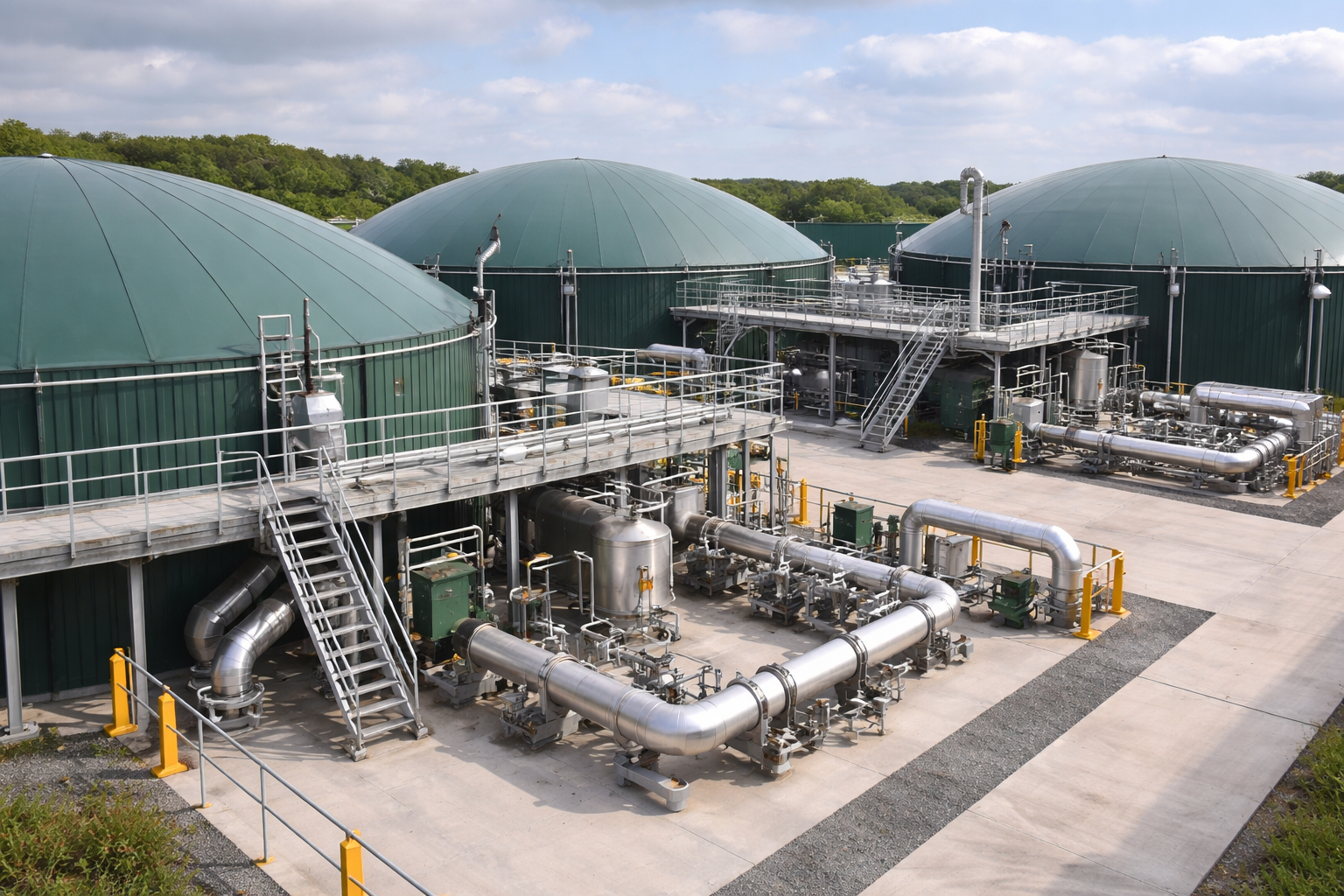
Grit does not announce itself. It settles quietly at the bottom of your digesters and reception tanks, building up over months and years without triggering an alarm or showing up clearly on a process monitor. By the time most operators notice a problem, a significant amount of working volume has already been lost.
Tank de-gritting is one of the most important maintenance activities on an anaerobic digestion (AD) plant, yet it is often underplanned, underscheduled, or deferred until a shutdown is unavoidable. This guide covers what de-gritting involves, why it should be on every operator's maintenance calendar, and what the consequences are when it is left too long.
What is tank de-gritting, and why do AD plants need it?
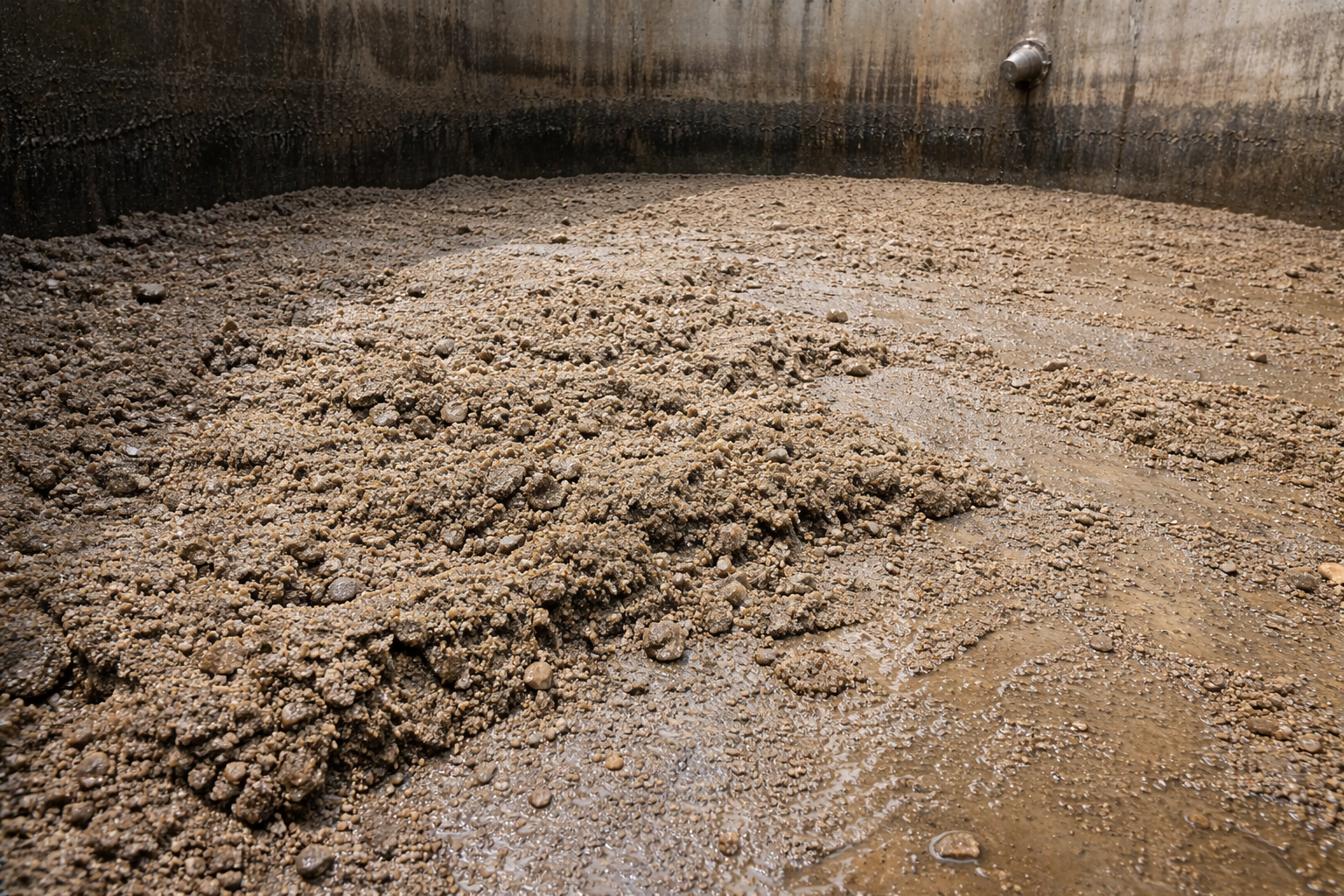
Grit is the collective term for the dense, inorganic material that enters an AD plant through feedstocks and accumulates at the bottom of tanks over time. It includes sand, soil, stones, glass fragments, bone fragments, and other heavy solids that do not break down during the digestion process.
In a food waste or source-segregated organic waste plant, grit typically arrives with the incoming material. Even after depackaging and pre-treatment, a proportion of heavy inorganic material passes through into the digester feed. In agricultural plants, soil contamination from maize, root crops, and farmyard manures contributes a steady stream of grit. Municipal and industrial plants face similar challenges depending on feedstock composition.
Over time, this material accumulates on the tank floor. Because it is denser than the liquid digestate, it sinks and does not get circulated back out by normal mixing. The result is a growing layer of compacted grit that gradually displaces the usable volume of the tank.
De-gritting is the process of removing this accumulated material. It requires taking the tank out of service, emptying or partially emptying it, and physically removing the settled solids, typically using a combination of jetting, pumping, and mechanical removal. It is a significant undertaking, but it is a manageable one if it is planned properly.
Why grit build-up is a serious operational problem
The consequences of ignoring grit build-up go beyond a modest reduction in tank volume. Left unchecked, grit accumulation creates a cascade of operational and financial problems that become progressively harder to manage.
Lost working volume reduces gas output and throughput
The most direct impact is the loss of effective digester volume. If grit has built up to a depth of half a metre across a large tank floor, the volume loss can be significant, sometimes representing months' worth of accumulated material. Less working volume means less retention time for the feedstock, which typically reduces biogas yield and may require throughput to be reduced to maintain process stability.
For plants operating near capacity, this can have a meaningful effect on revenue. For plants that are already stretching retention time to manage high-solids feedstocks, it can push the process toward instability.
Equipment wear and damage
Grit that is disturbed during mixing can be drawn into pumps, pipework, and heat exchangers, causing accelerated wear and abrasion damage. Impellers, pump casings, and seal faces are all vulnerable. The cost of replacing worn pump components or repairing an impeller is significant, and if the damage is unexpected, the associated downtime is difficult to plan around.
Plants that use submersible mixers or side-entry agitators may find that grit accumulation interferes with mixer performance, creating dead zones where material does not circulate properly. This can contribute to localised process instability and uneven digestion.
Structural load and tank integrity
A compacted layer of grit on a tank floor is heavy. Over time, this can place additional load on the base slab and floor structure of the digester. While modern tanks are designed to handle significant loads, the long-term effect of unexpected weight distribution is worth considering, particularly in older structures or tanks that were built to tighter tolerances.
In some cases, grit build-up combined with poorly managed digestate can contribute to hard, cementite deposits that are extremely difficult to remove and may require specialist intervention.
Reduced visibility into plant condition
One of the less obvious effects of heavy grit accumulation is that it obscures the floor of the tank during any internal inspection. If a tank cannot be properly inspected, problems with the base coating, floor joints, or structural elements may go undetected until they become serious. Regular de-gritting keeps tanks inspectable.
What causes grit build-up, and which plants are most at risk?
Grit enters every AD plant to some degree. The feedstock type and pre-treatment setup are the primary factors that determine how quickly it accumulates.
Maize and energy crop-fed plants tend to have higher soil contamination, particularly when harvesting conditions are wet or when machinery is picking up material from near the ground surface. Seasonal variation is common, with autumn and winter crops often carrying more soil than those harvested in drier conditions.
Food waste plants receive grit through contaminated loads, particularly when source-segregated collections include soil-heavy green waste or when pre-treatment equipment is not operating effectively. Glass and ceramic fragments from packaging failures can also accumulate.
Slurry and manure-fed plants typically have lower grit loads than food waste or crop-fed plants, but sandy bedding materials, compacted farmyard runoff, and root vegetable residues can all contribute over time.
Reception tanks and primary digesters generally accumulate grit faster than secondary digesters because the feedstock has had less opportunity to be agitated or screened. However, secondary tanks are not exempt, particularly if there is carryover from the primary stage.
Plants without a dedicated grit removal or grit trap stage in their pre-treatment system are most at risk of rapid accumulation. If your plant design does not include an effective grit separation step, the digesters are likely acting as the de facto grit trap.
Practical steps for managing grit accumulation
1. Baseline your tanks
If you have no record of when your tanks were last de-gritted or surveyed, the first step is to establish a baseline. A bathymetric survey using sonar or physical sounding can give you an accurate picture of current floor levels and grit depth without taking the tank offline. This is a relatively low-cost exercise that gives you the data to plan properly.
2. Include de-gritting in your planned maintenance schedule
De-gritting should sit within your long-term maintenance plan alongside other major planned interventions such as digester inspections, roof maintenance, and CHP overhauls. The frequency will depend on your feedstock composition and pre-treatment setup, but most operators working with food waste or crop-heavy diets should expect to de-grit every 3 to 7 years. Agricultural slurry plants may go longer between interventions.
The key is to have a schedule based on evidence, not on leaving it until a problem forces the issue.
3. Plan the shutdown carefully
De-gritting requires a tank to be taken out of service. For a plant with a single primary digester, this is a significant operational event that requires careful planning around retention time, feedstock management, and digestate handling. For multi-tank sites, the work can often be sequenced to maintain overall plant throughput.
Work with your engineering and operations teams to plan the timing, the bypass strategy, and the disposal route for the removed grit and any residual digestate before committing to a programme.
4. Commission appropriately rated contractors
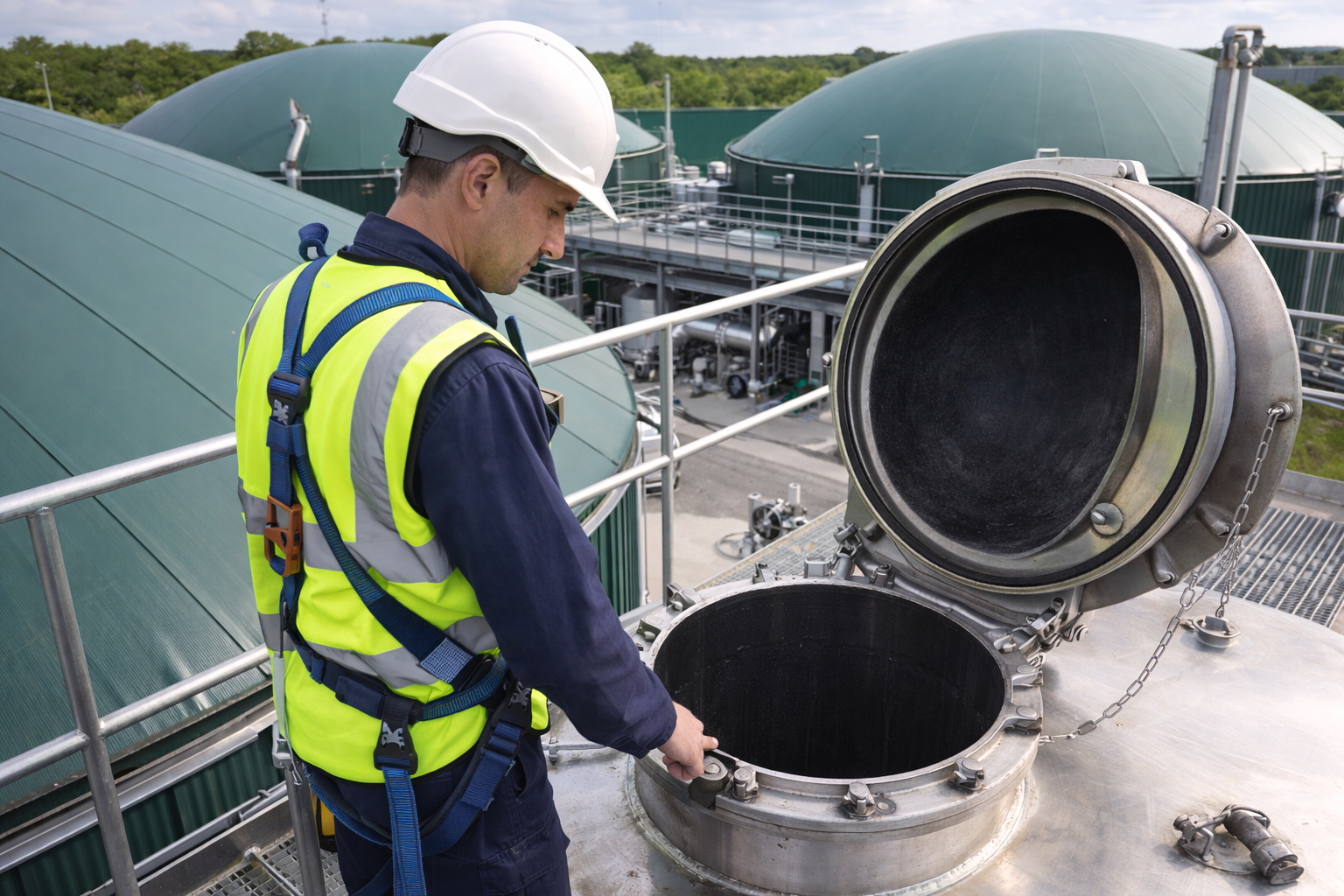
De-gritting is a confined space operation and a hazardous waste management exercise. The work requires appropriately rated contractors with confined space entry competence, the right pumping and jetting equipment, and a clear waste disposal plan. The removed material will typically be classified as waste and will need to be managed in accordance with the Environmental Permitting (England and Wales) Regulations 2016 or equivalent Scottish and Northern Irish legislation. Do not attempt to manage this without a clear understanding of your permit conditions.
5. Use the shutdown productively
When a tank is offline for de-gritting, it is good practice to carry out any internal inspection work, coating repairs, or structural checks at the same time. The incremental cost of doing additional work during a planned shutdown is usually far lower than the cost of an unplanned return.
Real-world considerations by plant type
Food waste and municipal organics plants should treat de-gritting as a routine planned activity rather than a reactive one. Feedstock contamination is often higher and more variable than expected, and pre-treatment equipment performance can degrade over time. Regular inspection of grit trap and screen efficiency is as important as the de-gritting work itself.
Agricultural plants can often go longer between de-gritting cycles, but should still carry out periodic surveys to track accumulation rates. Farms that have changed their feedstock mix, for example adding maize or co-digestion materials, may find that grit accumulation rates increase compared to their earlier slurry-only operation.
Industrial and commercial waste plants vary considerably depending on the input streams. Plants processing food manufacturing effluent with low solid content may have minimal grit issues, whereas those processing fruit and vegetable waste or catering waste with high contamination levels may accumulate grit more quickly than anticipated.
Seasonal feedstock variation is worth factoring in for any plant where outdoor-harvested crops form part of the diet. Consider timing de-gritting surveys for periods when accumulation is likely to be highest, typically late winter or early spring after an autumn and winter crop intake.
Health, safety, and compliance considerations
De-gritting is a high-risk activity and must be treated as such. Key considerations include:
Confined space entry: all work inside a digester or enclosed tank requires compliance with the Confined Spaces Regulations 1997. This means a written system of work, a rescue plan, appropriate atmospheric monitoring, and trained personnel. Never improvise this.
Gas hazards: digesters and related tanks may contain residual biogas, hydrogen sulphide (H2S), or carbon dioxide (CO2), all of which are hazardous in an enclosed space. Gas monitoring before and during entry is non-negotiable.
Waste classification: the material removed during de-gritting is likely to be classified as controlled waste. Depending on the origin of your feedstocks and the composition of the removed material, it may also require specific handling or treatment before disposal. Check your environmental permit and seek specialist advice if you are unsure.
Permit conditions: some AD plants operate under environmental permits that specify how tank contents must be managed during maintenance operations. Review your permit conditions before planning a de-gritting campaign to avoid inadvertent breaches.
Simple steps to improve longevity
Grit accumulation is one of those plant management issues that feels distant until it is not. The impact builds slowly, the costs are diffuse, and the temptation to defer action is understandable. But the combination of lost working volume, equipment wear, safety risk, and potential compliance exposure means that active grit management is not optional on a well-run site.
The good news is that it is very manageable with proper planning. A simple survey, a scheduled programme, and a well-organised shutdown are all it takes to keep your tanks in good condition and your plant performing as designed.
Could your tanks do with a check-up?
If you are not sure when your digesters were last de-gritted, or if you suspect grit build-up may already be affecting your working volume or equipment, it is worth getting a clear picture before the problem gets ahead of you. BioConsult can support with process reviews, maintenance planning, and practical advice tailored to your plant and feedstock profile. BioContractors can assist with operational planning and field support during shutdown activities.
Get in touch with the BIOCON Group team and we will help you work out what your site needs and when.
-
The most reliable way is a bathymetric survey or physical sounding, which gives you an accurate floor level reading. Indirect indicators include declining gas yield without a clear process explanation, increasing pump wear, or longer mixing cycles needed to achieve the same homogeneity.
-
This varies by feedstock and pre-treatment setup. Food waste and crop-fed plants typically need de-gritting every 3 to 7 years. Agricultural slurry plants may go longer. The best approach is to survey periodically and plan based on actual accumulation rates rather than a fixed calendar.
-
In some cases, partial de-sludging is possible without a full shutdown, depending on tank design and the nature of the accumulated material. However, heavy or compacted grit deposits usually require full access. Speak to a specialist before assuming a live-tank approach is feasible.
-
Almost always yes. The removed material will typically be classified as controlled waste under UK waste regulations, and your environmental permit will set out how it must be managed and where it can go. Always check permit conditions before beginning work.
-
De-sludging typically refers to removing accumulated digestate solids or foam from a tank, which is a separate activity. De-gritting specifically targets the dense, inorganic sediment layer on the tank floor. In practice, the two activities are often combined during a planned shutdown, since removing the digestate is usually a necessary precursor to accessing the grit layer.
