
Digestate Storage, Land Application and NVZ Compliance: A Practical Guide for AD Operators
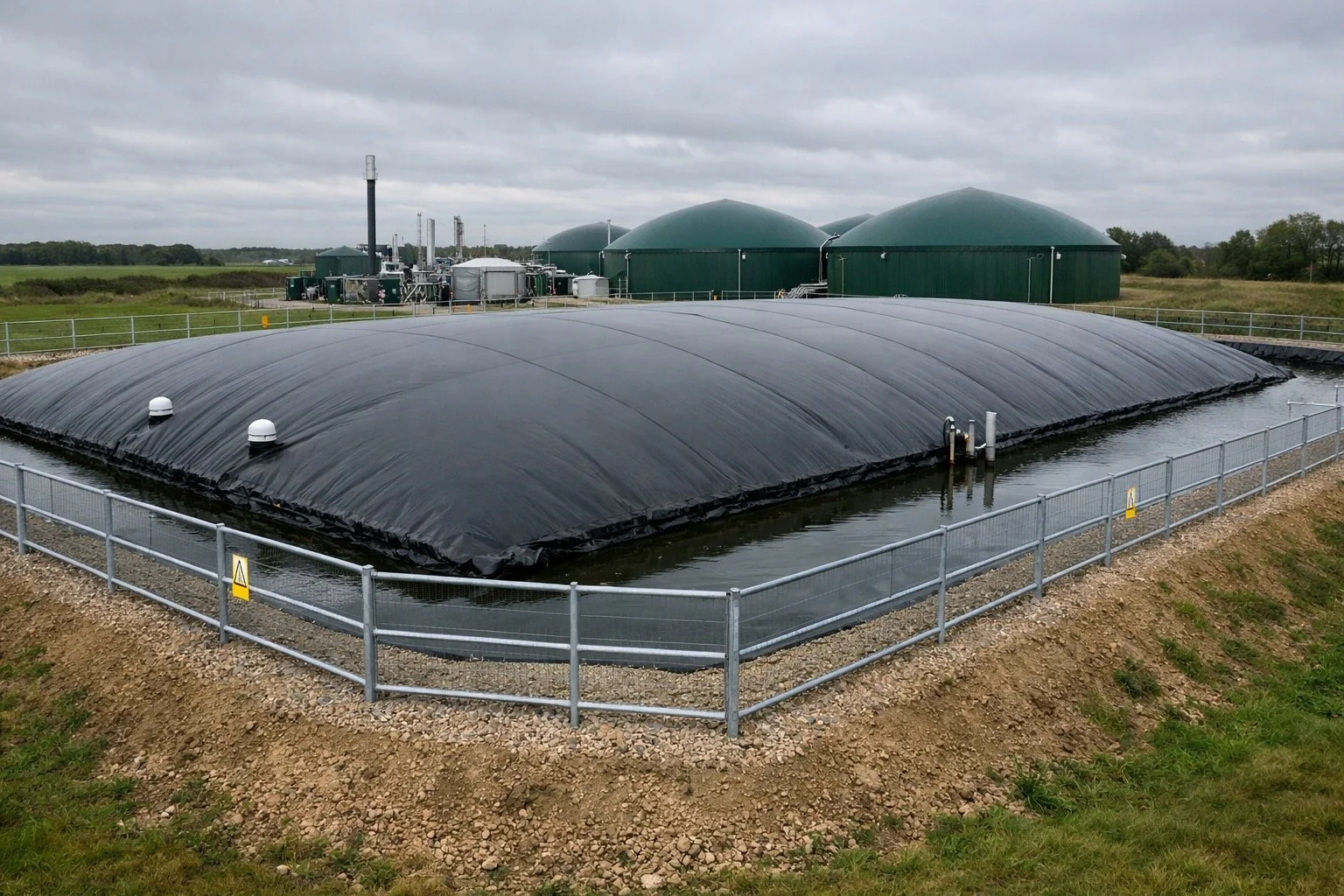
Digestate does not stop being your responsibility when it leaves the digester. Everything that happens after that point, from how you store it to when you spread it, what records you keep, and how you advise the farmers receiving it, sits within a regulatory framework that is getting tighter.
A lot of operators have a reasonable grip on the quality side of things. If you have read our guide on PAS 110 and the Anaerobic Digestate Resource Framework, you already understand the end-of-waste test, the certification requirements, and what the October 2025 changes to the ADQP mean in practice. This article picks up where that one leaves off.
Here we focus on the operational side: storage infrastructure, closed period rules, application rates, nutrient management planning (NMP), and the documentation that protects you if the Environment Agency (EA) comes knocking. None of it is especially complicated, but the gaps between what operators know they should do and what they actually have in place are often significant.
Why Digestate Management Has Become a Bigger Compliance Risk
The regulatory pressure around digestate has been building steadily. The EA's shift from the old Anaerobic Digestate Quality Protocol (ADQP) to the Anaerobic Digestate Resource Framework (ADRF) in October 2025 placed much greater emphasis on documentation, storage, and evidence of use. At the same time, the July 2025 restructuring of the Farming Rules for Water tightened how readily available nitrogen (RAN) must be accounted for and applied.
Together, these changes mean that operators who have been coasting on informal arrangements (sending digestate to familiar farms without formal NMPs, storing beyond safe limits, or relying on verbal agreements for "certainty of use") are now carrying real compliance risk.
The EA has made clear that enforcement is evidence-led. If you cannot demonstrate compliant storage, proper timing of applications, and crop-matched nutrient planning, that is an audit risk regardless of how long you have been operating.
Digestate Storage: What You Are Required to Have in Place
How digestate is classified for storage purposes
Liquid digestate is typically classified as a liquid organic manure for regulatory purposes. Where it falls under slurry regulations, the Silage, Slurry and Agricultural Fuel Oil (SSAFO) Regulations set the construction and capacity standards for storage infrastructure.
The key requirement under SSAFO is a minimum of four months' storage capacity. This is the floor, not a target. In practice, most well-managed sites aim for more, particularly those operating in nitrate vulnerable zones (NVZs) where closed periods can make land application impossible for months at a time.
The ADRF also introduced a ten-month maximum holding period for digestate that is to be treated as end-of-waste material. Digestate stored beyond this without documented certainty of use reverts to waste status under the framework. This is distinct from the SSAFO minimum capacity rule, but both need to be planned around together.
Construction standards for storage
Storage tanks, reception pits, pipes, and channels must be impermeable and resistant to corrosion. The relevant standard is British Standard 5502-50:1993+A2:2010, which sets out construction requirements for slurry and liquid manure stores. Freeboard requirements are 300 mm for steel or concrete stores and 750 mm for earth-banked lagoons.
If you are using a covered lagoon or digestate bag system, ensure the liner specification and cover integrity are reviewed regularly. Liners degrade, seams fail, and covers accumulate damage. A visual inspection twice a year is a reasonable minimum; more often if the store is near a watercourse or in an area of high rainfall.
Planning storage capacity correctly
Storage capacity planning needs to account for several variables at once: production rate, seasonal spreading restrictions, land availability, and the ten-month ADRF ceiling. Operators running food waste plants tend to produce digestate year-round at a reasonably consistent rate; farm-based plants can have more seasonal variation in both production volume and offtake.
Work through your capacity planning on a monthly basis, not annually. A simple spreadsheet tracking monthly production against expected offtake, storage volume, and closed period windows will flag problems well before they become emergencies. If you find that your current storage is consistently within weeks of capacity during the autumn closed period, that is the signal to either invest in more storage or develop additional land agreements.
NVZ Rules and Closed Periods: What AD Operators Need to Understand
What is a nitrate vulnerable zone?
A nitrate vulnerable zone (NVZ) is a designated area in England where water is affected by, or at risk of, nitrate pollution from agricultural sources. Around 55% of land in England falls within an NVZ. If your digestate is being spread on land within an NVZ, the stricter set of rules applies.
Closed period dates for digestate
Digestate is classified as a liquid organic manure with a high readily available nitrogen content. This means it is subject to NVZ closed period restrictions for higher-RAN materials.
The closed periods for high-RAN liquid organic manures in England are:
Sandy or shallow soils, grassland: 1 September to 31 December
Sandy or shallow soils, tillage land: 1 August to 31 December (with a limited exception for crops sown on or before 15 September)
All other soils, grassland: 15 October to 31 January
All other soils, tillage land: 1 October to 31 January
These dates mean that on heavy land in NVZs, digestate cannot be spread for roughly four months of the year. On lighter soils, the restricted window is even wider. This is why storage capacity planning matters so much. A plant that underestimates closed period demand will find itself in breach well before winter ends.
Application limits in NVZs
Within an NVZ, total nitrogen from organic manures (including digestate) is limited to 170 kg of total nitrogen per hectare per year. This is the organic nitrogen ceiling. It does not mean you can apply 170 kg in a single pass; individual applications still need to be matched to soil and crop demand, and the three-week gap between applications should be observed.
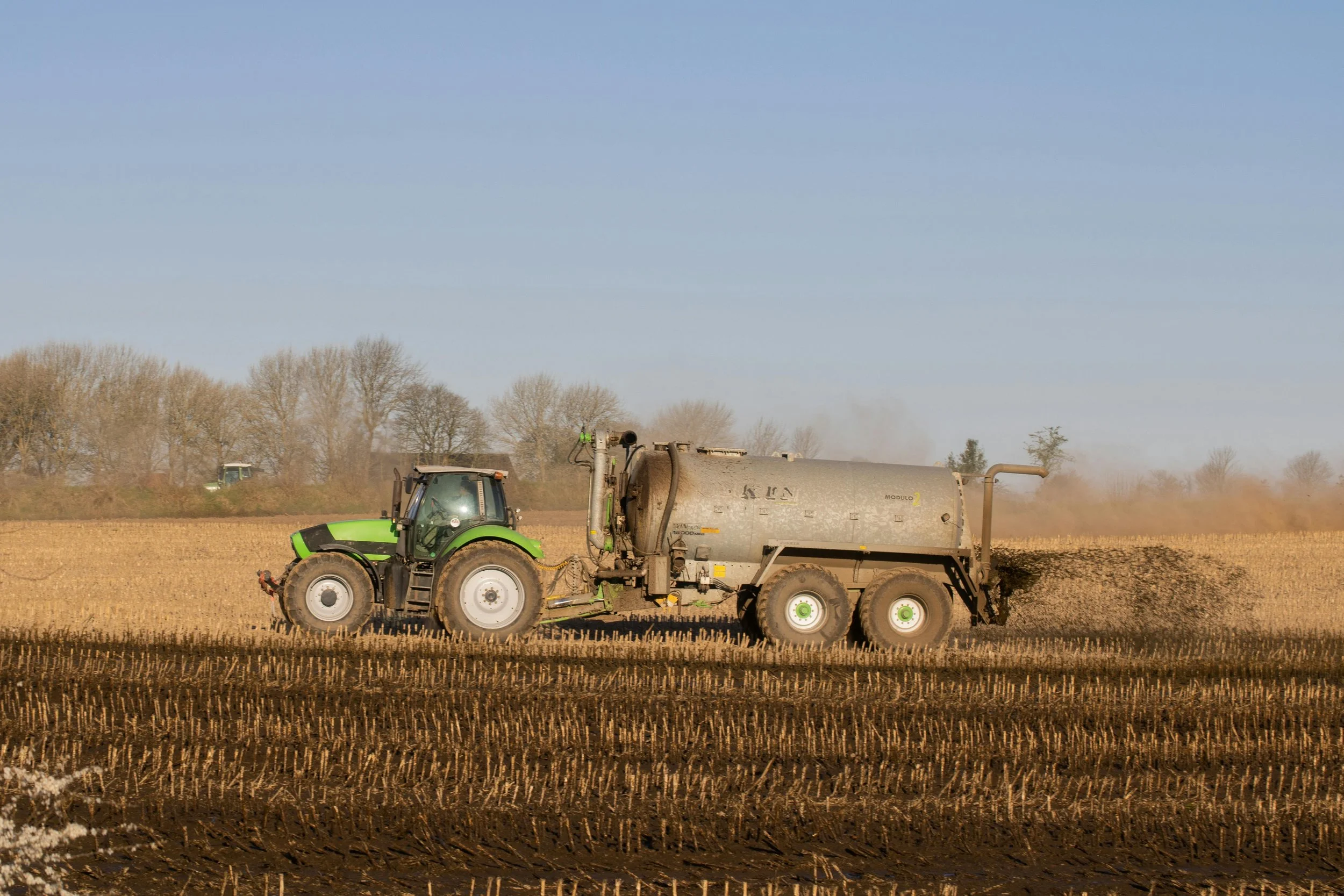
As a practical starting point, application rates of 20 to 30 cubic metres per hectare are considered sensible for most digestate types. This reduces the risk of nitrogen scorch, run-off, and lodging in cereal crops. Always use your NMP and RAN calculations to determine the appropriate rate for each field and each application. Blanket rates applied across a whole farm are no longer acceptable under the updated Farming Rules for Water.
Spreading conditions
Digestate must not be spread when land is waterlogged, frozen, or snow-covered. It also cannot be applied when the land has been frozen for 12 or more hours in the preceding 24 hours. These restrictions apply regardless of NVZ status and are enforced under the Farming Rules for Water and EA permit conditions.
Buffer zones must be maintained. Typically this means no spreading within 10 metres of a watercourse and wider exclusion zones on steeply sloping ground. Check your environmental permit and any site-specific conditions for the exact distances that apply to your plant and your customers' land.

Take control of your digestate compliance
Download the FREE Digestate Storage & Land Application Toolkit to assess your current setup, reduce risk, and stay compliant with NVZ requirements.
Nutrient Management Plans: Your Responsibility Does Not End at the Gate
What an NMP is and why it matters for digestate
A nutrient management plan (NMP) is a documented plan that sets out how nutrients from all sources (manufactured fertiliser, organic manures, and digestate) will be matched to soil and crop needs across a farm's land parcels. Under the Farming Rules for Water, digestate cannot be applied in a way that exceeds crop demand at the time of spreading.
Under the ADRF supply documentation requirements, AD operators must tell customers in writing that they need an NMP in place before using digestate and must apply it in accordance with that plan. If you are supplying digestate to farms and you are not including this in your supply documentation, you are not meeting the framework's requirements.
What good NMP support looks like from an operator
The best-run operators do not just drop a tanker of digestate at the gate and hand over a delivery note. They provide:
Regular digestate analysis results (total nitrogen, ammonia nitrogen, phosphorus, potassium, dry matter) with each batch or at agreed frequencies
A clear statement of the RAN content and how that should factor into the farmer's NMP
Written guidance on closed period dates applicable to their land type and NVZ status
Confirmation that the digestate meets PAS 110 standards (where applicable) and has been certified under the Biofertiliser Certification Scheme
Some operators now offer agronomic support directly or in partnership with an agronomy firm. This adds value to the digestate supply relationship and reduces the compliance burden on smaller farms that may not have in-house nutrient management expertise.
BIOCON perspective
Supplying digestate to agriculture without proper NMP support is one of the most common gaps identified during compliance reviews. It is not just a regulatory obligation; it is also a commercial risk. If digestate from your plant contributes to a water quality incident on a customer's farm, the trail of documentation (or the lack of it) matters. Operators who have invested in proper supply documentation and agronomic support rarely face that problem.
Record-Keeping: What You Need to Hold and for How Long
This is where many operators are caught out. The records you need are not complicated, but they need to be in place, consistent, and accessible.
Records for the AD plant itself
Under environmental permit conditions and the ADRF requirements, operators must keep records for a minimum of four years. These records must be made available to your certification body and to the EA on request. The key records are:
Waste inputs: type, quantity, date received, origin, and waste code
Digestate outputs: quantity produced, batch or lot reference, date of dispatch or storage, nutrient analysis results
Storage levels: a log showing storage volume at regular intervals (weekly or monthly depending on throughput)
Dispatch records: recipient name, delivery date, quantity, and confirmation that ADRF/PAS 110 compliant supply documentation was issued
Records for land application
Where you or your contractors are carrying out the spreading, additional field-level records are required. These should capture:
Field identifier or parcel reference
Date and time of application
Volume applied and application rate (cubic metres per hectare)
Soil type and NVZ status of the field
Crop type at time of application
Weather conditions and any spreading restrictions in force
NMP reference or soil test date
These records sit at the heart of any EA inspection or audit. Gaps in the spreading log are one of the most common findings. A simple site-specific logbook or digital system updated at the point of spreading is sufficient; the key is that it is completed consistently and accurately.
Real-World Considerations by Plant Type
Food waste and co-digestion plants
Food waste digestate tends to be higher in ammoniacal nitrogen (NH4-N) than agricultural digestate, which makes RAN management particularly important. The higher moisture content of many food waste digestates also means higher transport costs and more volume to manage per unit of nutrient.
Operators should ensure that nutrient analysis accounts for batch variability, which can be significant when feedstocks include supermarket waste, catering residues, and industrial food by-products in varying proportions. Analysis from a single quarterly sample is rarely sufficient for a high-throughput food waste plant. Monthly analysis is more appropriate.
Farm-based plants
Farm-based AD plants often have a simpler picture in terms of digestate outlets because much of the output returns to land managed by the plant operator or a closely connected farming business. However, the compliance requirements are identical, and farms that have become accustomed to spreading animal slurry under informal arrangements sometimes need to update their systems when digestate is involved, particularly around PAS 110 certification and supply documentation.
Where farm-based operators spread to their own land, they are still required to have an NMP in place and must comply with NVZ closed periods and application limits if the land is designated.
Biomethane upgrading plants
Plants that have upgraded to biomethane typically handle larger volumes of digestate than conventional combined heat and power (CHP) plants. The digestate produced at biomethane sites falls under the same ADRF requirements, but the logistics of managing high volumes, often at sites not directly connected to agricultural land, require careful planning. Many biomethane operators work with a network of agricultural contractors and landowners under structured offtake agreements. These agreements should explicitly address NMP requirements, closed period obligations, and the documentation standards expected under the ADRF.
Risks and Controls
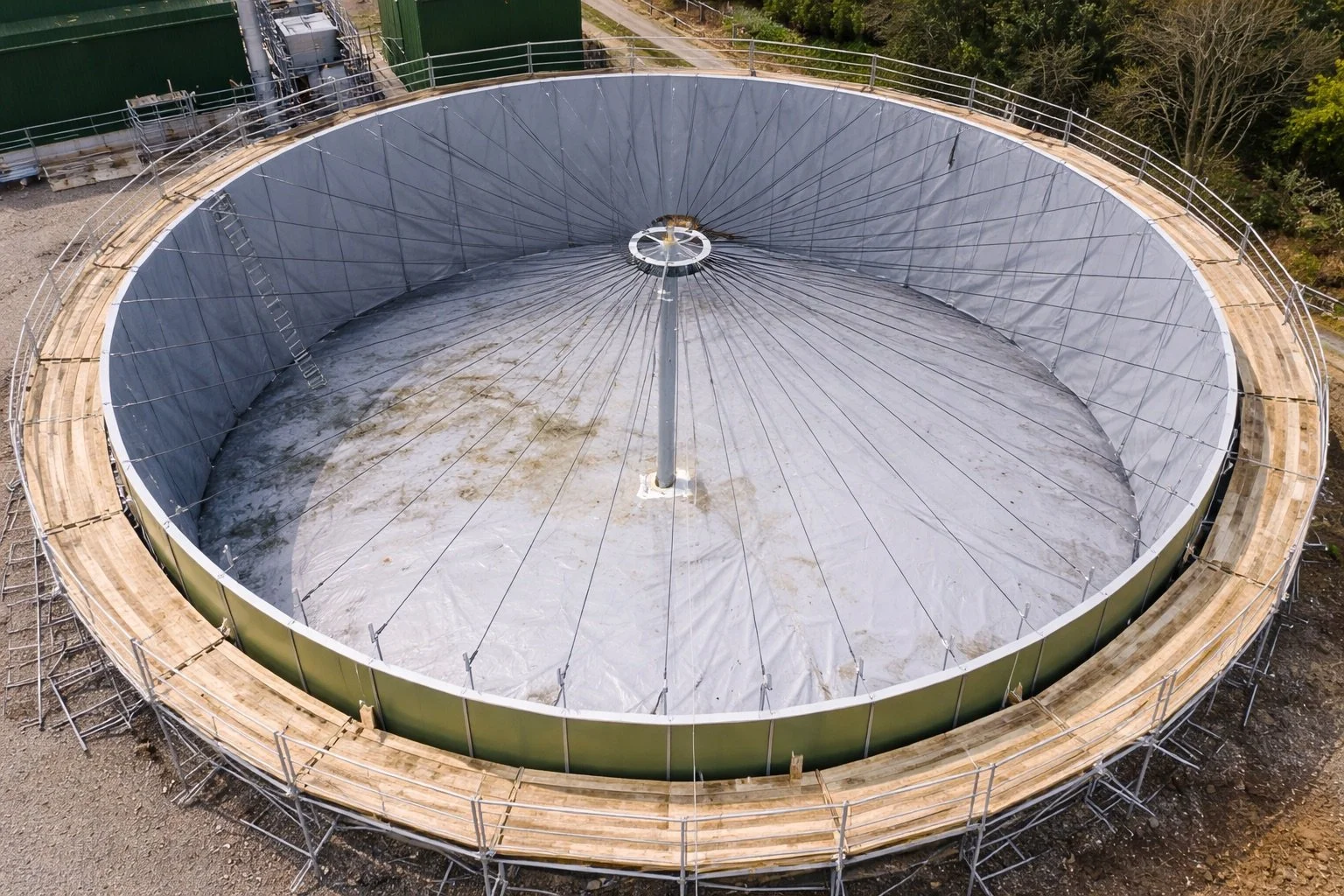
The main risks in digestate storage and land application sit in three areas: environmental (run-off, leachate, odour), regulatory (permit breaches, NVZ violations, ADRF non-compliance), and commercial (loss of end-of-waste status, supply relationship damage).
Control measures to have in place:
Regular inspection and maintenance of storage infrastructure, with records kept
Storage capacity planning reviewed at least quarterly, particularly heading into the autumn closed period
Bund integrity checks and leachate drainage systems maintained and tested
Odour management plan in place and reviewed annually (relevant where digestate is stored in open lagoons)
Closed period calendar circulated to all staff involved in spreading and logistics
Supply documentation template reviewed against current ADRF requirements at least annually
Emergency plan for storage overflow events, including contact details for EA reporting
Conclusion
Digestate management is not a single task. It is a system: storage capacity sized against closed periods, application rates matched to NMPs, nutrient analysis kept current, supply documentation issued consistently, and records maintained accurately over four years. When all of those parts work together, compliance is not a burden. It becomes the routine.
The regulatory environment has tightened, and the evidence bar has risen. Operators who built their digestate logistics around informal habits will need to formalise their approach. Those who already have systems in place should review them against the ADRF requirements and the updated Farming Rules for Water to make sure nothing has slipped.
If you have not yet worked through the quality and end-of-waste side of the ADRF changes, our guide to PAS 110 and the Anaerobic Digestate Resource Framework covers those requirements in detail and is a useful companion to this article.
Get support with your digestate storage
If your digestate storage, land application records, or supply documentation are not where they need to be ahead of an EA review or the next closed period, it is worth getting a clear picture now rather than under pressure. BIOCON Group works with AD operators across the UK to review digestate management systems, identify compliance gaps, and put practical plans in place. Drop us a message and we will help you get it right.
FAQ’s
-
A minimum of four years, covering both input and output records and field-level spreading logs. These must be made available to your certification body and the EA on request.
-
Liquid digestate is typically classified as a liquid organic manure and in many cases falls within SSAFO requirements for storage construction and minimum capacity. The four-month minimum storage capacity rule applies. Check your environmental permit and local EA guidance for confirmation specific to your site.
-
Digestate is treated as a high-RAN liquid organic manure. Closed periods depend on soil type and land use. On grassland with heavy soil, the closed period runs from 15 October to 31 January. On sandy or shallow soils used for tillage, it runs from 1 August to 31 December. Check the EA and NFU guidance for the full breakdown applicable to each land parcel.
-
Not if it would exceed soil and crop need. The Farming Rules for Water prohibit spreading in a way that is not matched to demonstrable crop uptake at the time of application. Spreading onto bare land without a documented agronomic reason is a compliance risk.
-
Digestate held beyond the ten-month limit without documented certainty of use (such as a contract or proven sales history with a named recipient) reverts to waste status under the Anaerobic Digestate Resource Framework. It would then need to be managed under waste regulation.
-
You need to provide written supply documentation that tells the customer they must have an NMP in place before applying the digestate. You do not need to write their NMP for them, but you must communicate clearly that the requirement exists and provide sufficient nutrient analysis data to make NMP preparation possible.
