
Why Biomethane Matters More Than Ever: The Case for UK Energy Independence
There is a familiar pattern to UK energy policy. When gas prices spike, there is a flurry of interest in alternatives. When prices ease, the urgency fades. The problem is that the structural vulnerability never goes away.
In 2026, that vulnerability looks harder to ignore than ever. Conflict in the Gulf has disrupted shipping routes and sent European gas prices sharply higher. Global oil markets remain unsettled. The UK continues to import a significant share of its gas from sources it cannot control. And yet, beneath that exposure, there is a quietly growing domestic resource that could genuinely change the picture: biomethane, produced through anaerobic digestion (AD) from the organic waste the country generates every single day.
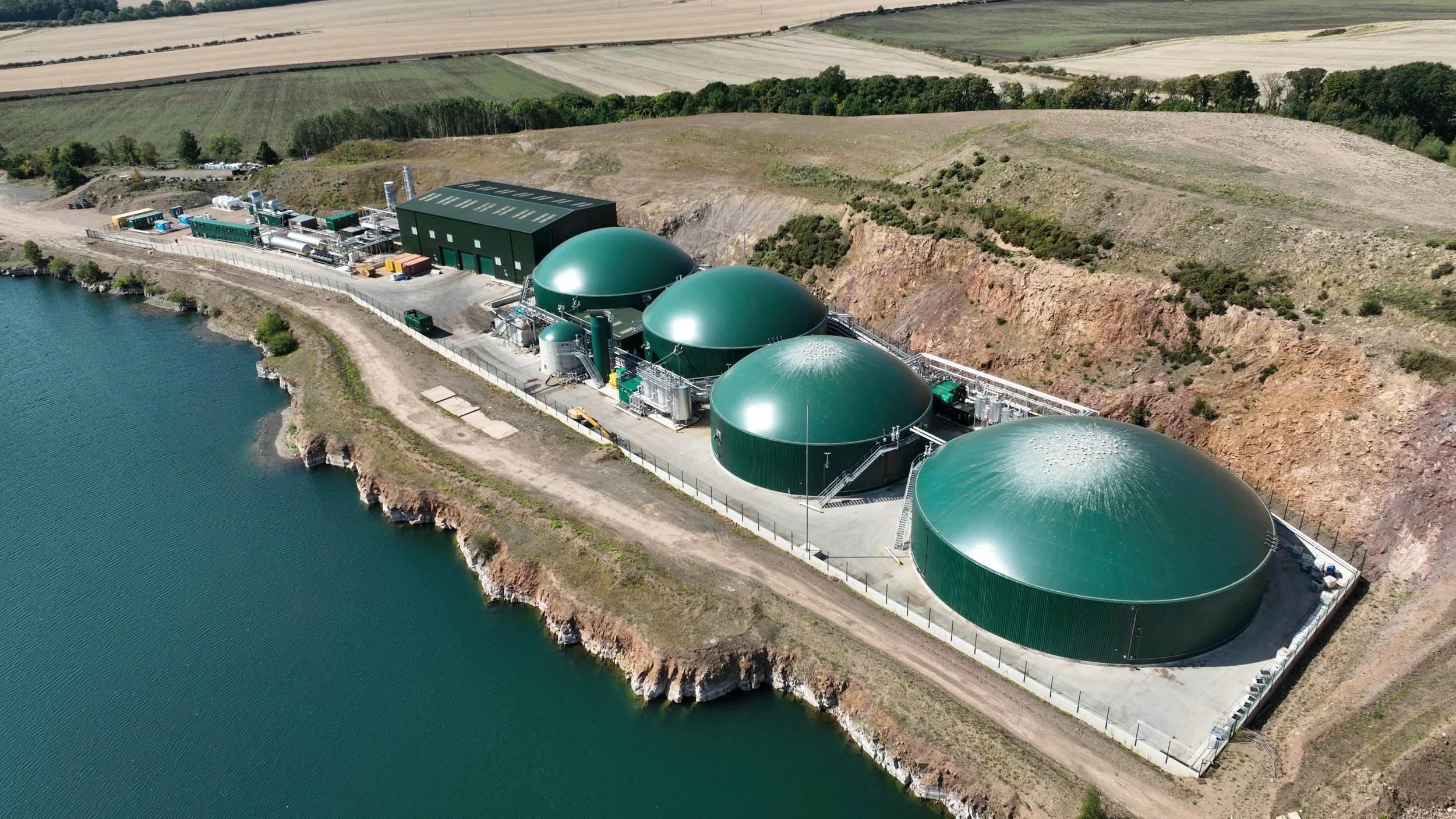
This is not a speculative technology. It is not a distant prospect. The UK already has more than 750 operational commercial AD plants. The feedstocks are here. The infrastructure exists to inject biomethane directly into the national gas grid. What has been missing, until now, is the political urgency and public understanding to match the industrial opportunity.
That moment may finally have arrived.
What is Biomethane, and Why Does It Matter for Energy Security?
Biomethane is a renewable gas produced when organic material, such as food waste, agricultural residues, slurry, manures, sewage sludge, or energy crops, is broken down by microorganisms in the absence of oxygen. This process, known as anaerobic digestion, produces a raw biogas that is typically around 55 to 65% methane. When that biogas is upgraded, meaning the carbon dioxide and trace gases are removed, you are left with biomethane: a gas that is chemically almost identical to natural gas, and which can be injected directly into the existing gas grid.
That last point is significant. Unlike hydrogen or many other emerging energy carriers, biomethane does not require new infrastructure to reach consumers. It uses the pipes, meters, and appliances that already exist in millions of homes and businesses across the country. It can heat homes today, power industrial processes today, and fuel vehicles today.
In energy security terms, that matters enormously. The UK currently produces around 7 terawatt hours (TWh) of biomethane each year, enough to heat roughly 650,000 homes. That is a meaningful contribution, but it represents a fraction of what is technically achievable. Research from Alder Bioinsights, published in September 2025, found that up to 120 TWh of sustainable biomethane could be generated in the UK by 2050. More immediately, industry estimates suggest output could rise to around 9 TWh by next winter if existing plants were operating at full capacity, and that increase alone would replace the entire volume of gas Britain imported from Qatar in 2024.
Why Is the UK So Far Behind Its Potential?
This is the question that sits at the heart of the current debate, and the answer is uncomfortable.
The UK has the feedstocks. It has the technology. It has operational plants. And yet only around 8% of the UK's biogas plants are currently upgraded to inject biomethane into the grid. Only 23% of available AD feedstock is being used at all. Vast quantities of food waste, agricultural residues, and organic material continue to be landfilled, incinerated, or left untreated, despite their potential to generate clean, home-grown gas.
The reasons are partly financial and partly political. Building a biomethane upgrading unit is a significant capital investment. Without long-term revenue certainty, many operators have been reluctant to commit. Planning delays have held back new plant development. And for too long, the policy conversation has focused on electricity and hydrogen, while gas from biological sources was treated as a niche.
The contrast with continental Europe is stark. Italy, which had fewer than ten biomethane plants in 2018, now has more than 137 and is targeting 55 TWh of production by 2030, representing a 315% growth in just a few years. France has overtaken Germany to lead European biomethane production. Across the European Union, installed biomethane capacity reached 7 billion cubic metres (bcm) annually by the end of the first quarter of 2025, as the EU works towards its target of 35 bcm per year by 2030. The UK, by contrast, has largely stagnated, held back by regulatory uncertainty and a policy environment that has been slow to recognise what is at stake.
What Has Changed in 2026?
Several things are converging this year in ways that give the biomethane sector genuine cause for optimism, while also raising the stakes for getting policy right.
The energy price shock has focused minds. Rising gas prices, driven partly by conflict in the Gulf and partly by ongoing global demand pressures, have sharpened the political argument for domestic production. When the cost of imported gas rises sharply, the economic case for home-grown alternatives becomes considerably easier to make.
The Green Gas Support Scheme has been extended. The Green Gas Support Scheme (GGSS), which provides tariff support for biomethane injected into the gas grid, is being extended. New regulations will push the commissioning deadline from March 2028 to March 2030. The application budget cap for 2026 to 2027 has been confirmed at £124.9 million. This is welcome news for developers who need longer planning horizons to make investment decisions.
Mandatory food waste collections are adding feedstock. From 2026, mandatory household food waste collections across England will, for the first time, systematically add to the organic waste streams available for processing through AD. This is a significant structural change. More feedstock means more potential for biogas and biomethane production, provided the infrastructure is in place to handle it.
UK Emissions Trading Scheme recognition is in prospect. Two key policy decisions in 2026 will determine the pace of biomethane growth: the inclusion of biomethane in the UK Emissions Trading Scheme (UK ETS), and its recognition in the greenhouse gas protocol. Positive outcomes on both counts would significantly improve the economics of biomethane production and attract new investment.
These developments do not solve every problem. Planning delays, grid connection costs, and the capital intensity of upgrading infrastructure remain real barriers. But the direction of travel is clearer than it has been for years.
How Does Biomethane Compare to Other Low-Carbon Alternatives?
There is sometimes a tendency to treat biomethane as yesterday's solution, as if newer technologies such as hydrogen or synthetic fuels have made it redundant. That view does not hold up to scrutiny.
Hydrogen remains expensive to produce at scale, requires significant new infrastructure for storage and distribution, and faces a range of technical challenges in existing appliances and pipework. Green hydrogen, produced using renewable electricity, is genuinely promising in certain industrial applications, but it is not a near-term replacement for the gas currently heating homes and running boilers.
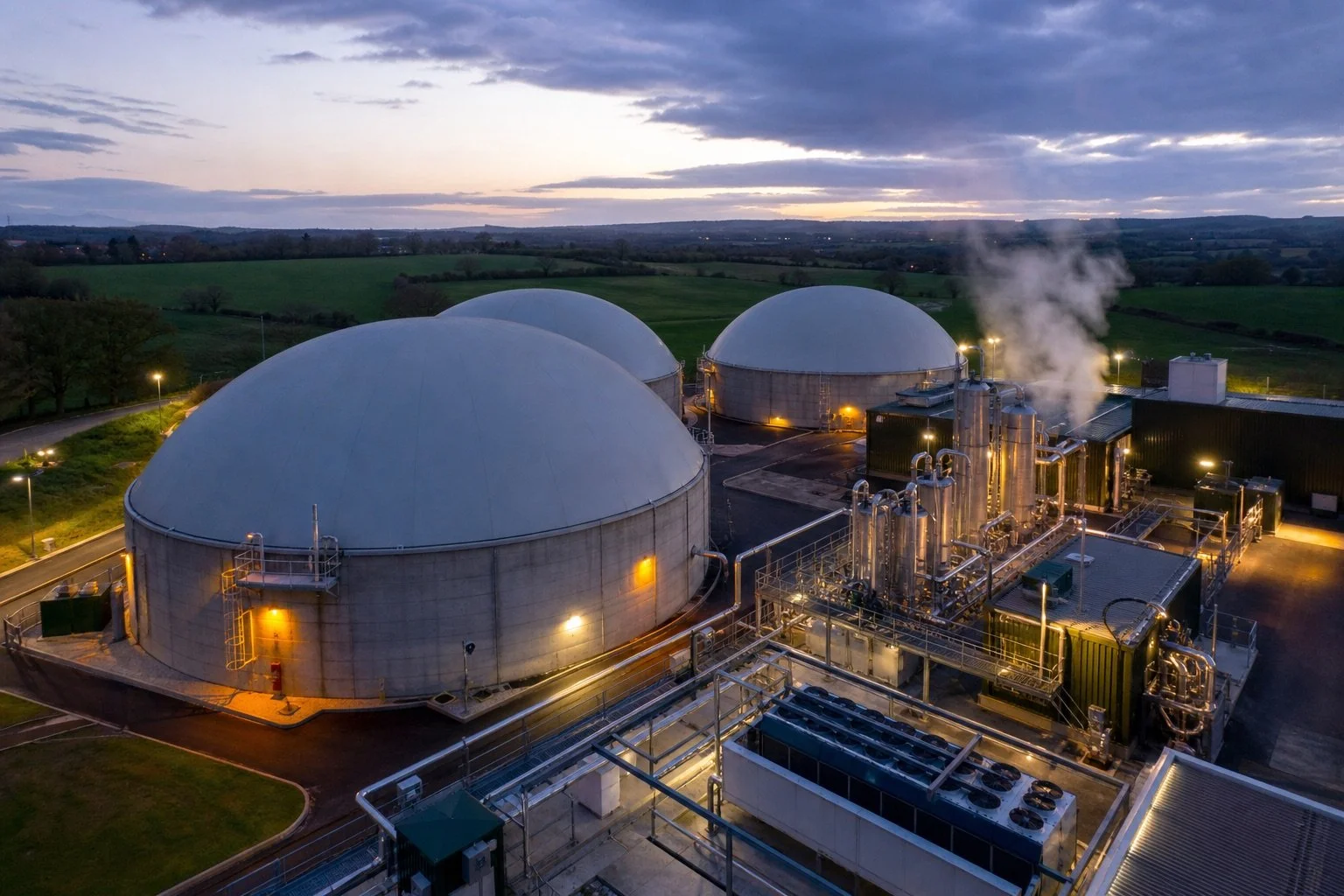
Biomethane, by contrast, is deployable now. It uses existing grid infrastructure. It can be produced from waste streams that would otherwise create environmental problems. And in many cases, it generates negative carbon emissions, particularly when the feedstock is agricultural slurry or food waste that would otherwise decompose and release methane into the atmosphere untreated.
It is not a competition. A realistic UK energy strategy will need multiple tools: offshore wind, solar, heat pumps, hydrogen for specific applications, and green gas for others. But biomethane's ability to decarbonise gas supply without requiring consumers or businesses to change behaviour or replace existing equipment is a genuine and undervalued advantage.
What Would a Serious Biomethane Strategy Look Like?
The UK does not currently lack good intentions. What it has lacked is the co-ordinated, sustained policy commitment needed to turn a promising industry into a reliable energy backbone. A serious strategy would need to address several things.
First, planning reform. The time it takes to build and commission a new AD plant in the UK is too long. Streamlining the consenting process, particularly for smaller, community-scale plants, would allow the sector to grow faster.
Second, grid connection. Costs and delays associated with connecting biomethane plants to the gas distribution network remain a significant barrier, particularly for smaller producers. Ofgem and network operators need to work with the industry to reduce these friction points.
Third, feedstock access. The expansion of mandatory food waste collections is a positive step, but the regulatory framework around what feedstocks can be used in AD plants, particularly around the use of animal by-products, remains complex and sometimes inconsistent. Simplifying this would unlock additional production capacity.
Fourth, long-term revenue certainty. Biomethane producers need to know that the support framework will be stable over the lifetime of their investment. Frequent policy changes, scheme uncertainty, and mid-stream reviews erode investor confidence. The GGSS extension is welcome, but the industry needs a credible long-term trajectory, not just a two-year reprieve.
Fifth, public narrative. Biomethane struggles for visibility in the wider energy debate. It is neither as photogenic as offshore wind nor as futuristic as hydrogen. Part of the job for the sector and for government is communicating clearly what it does, where it comes from, and why it matters. A gas that is produced from food waste and injected into the same grid that heats homes across the country is a genuinely compelling story. It needs to be told more loudly.
BIOCON Group Perspective
At BIOCON Group, we work with AD and biogas operations across the UK and Europe every day. We see the gap between what the sector is producing and what it is capable of producing. We see well-run plants that could be doing more if the economics and the planning framework allowed it. We see feedstocks going to waste that should be generating clean gas and high-quality digestate for agricultural use.
The energy security argument for biomethane is not abstract. It is grounded in operational reality. Every additional tonne of organic waste processed through a well-run AD plant is a small piece of the domestic energy supply that does not need to be imported. At the scale the UK is capable of, those small pieces add up to something substantial.
The question is not whether biomethane can contribute to UK energy independence. The evidence is clear that it can. The question is whether the policy environment, the investment framework, and the public understanding are in place to let it do so at the pace and scale that the current moment demands.
