
AD's Social Licence Problem: Why Some Plants Keep Losing at Planning
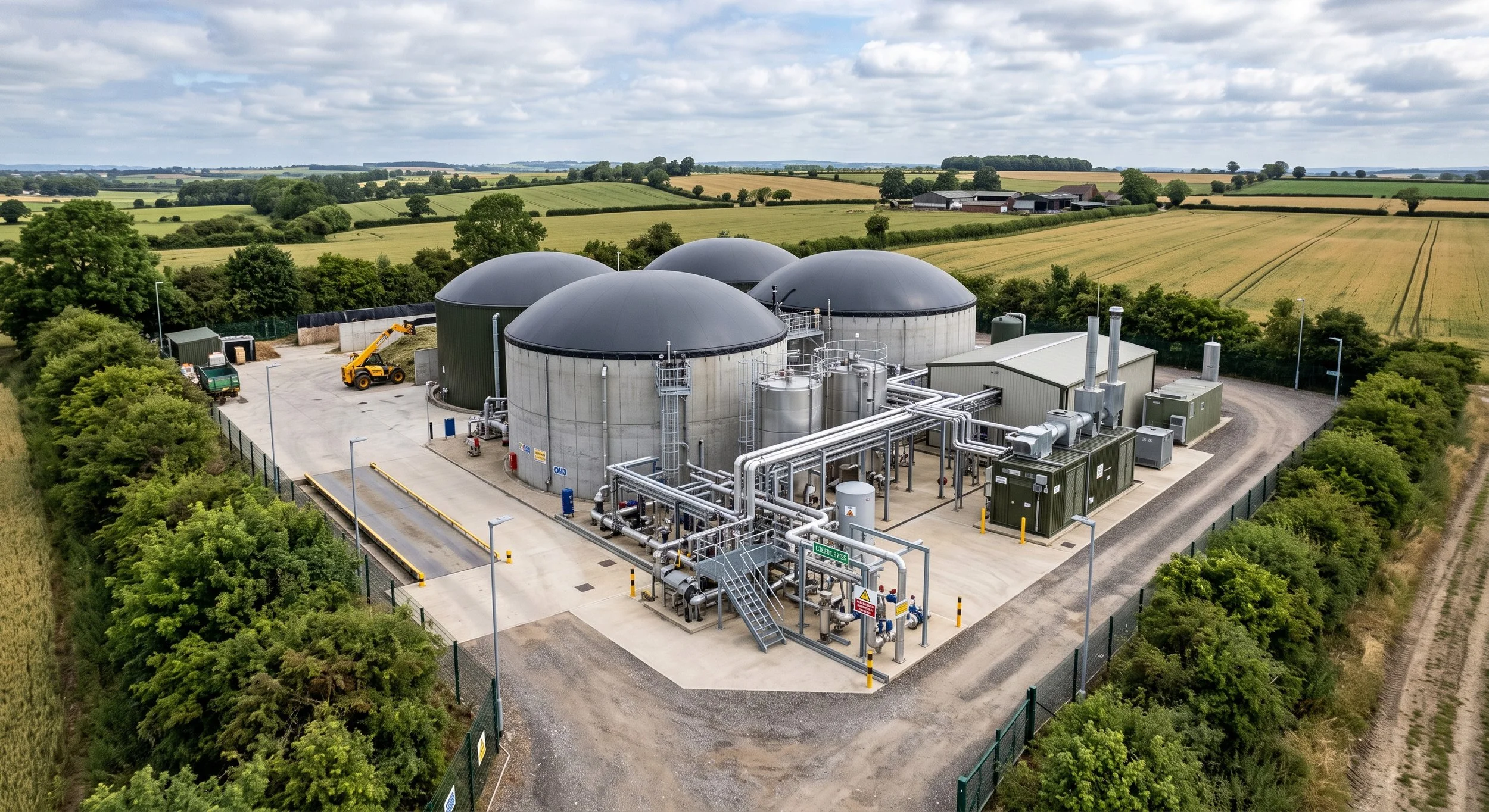
Anaerobic digestion has never had more policy wind behind it. Mandatory food waste collections landed across England on 31 March 2026. The Green Gas Support Scheme has been extended to give developers until March 2030 to commission new plants. The Energy Independence Bill puts domestic green gas at the centre of the government's energy security agenda. By most measures, this should be the best year the AD sector has ever had.
Try telling that to the developers whose planning applications are being thrown out by committees, fought by residents' groups, and dragged through appeal after appeal.
In Lincolnshire, South Kesteven District Council rejected an anaerobic digestion plant near Grantham in January 2025, against its own planning officers' recommendation, after more than 350 formal objections and a petition signed by over 1,200 people. The applicant appealed. A public inquiry is due this summer. Near Bath, plans for a large food waste and crop digester on a former quarry site were thrown out after attracting 847 objections and just ten letters of support. In County Durham, a proposed plant near Sedgefield initially won planning approval, then lost it after a legal challenge, and is still working its way through the Planning Inspectorate.
These are not fringe cases. They are becoming a pattern, and the sector needs to reckon with what that pattern means.
What is a social licence to operate, and why does AD need one?
A social licence to operate is the ongoing acceptance a project has from the people who live and work around it, distinct from the formal permits and consents it holds. You can have full planning permission and an environmental permit and still lack a social licence if your neighbours do not trust you.
For AD, that distinction matters more than in most industries. Plants sit close to communities by necessity, near feedstock sources, near the roads that bring waste in, near the grid connections that take biomethane out. A plant can be technically sound and financially viable and still never get built, because the people deciding its fate are not engineers or investors. They are councillors responding to hundreds of objections from people who live down the road.
Planning committees do not evaluate national energy strategy. They evaluate traffic movements, odour risk, noise, and the visual impact on a specific patch of countryside. That is the arena the sector actually has to win in, and right now, it is losing more often than the policy backdrop would suggest it should.
How often is AD actually losing at planning?
It is worth being precise about what is happening in these cases, because the objections are strikingly consistent.
At Gonerby Moor near Grantham, Ironstone Energy Limited proposed converting around 130,000 tonnes of purpose grown crops into biomethane each year, enough gas for roughly 130,000 homes. Objectors focused on lorry movements and the visual impact on open countryside. The council's planning committee rejected the scheme even though its own officers had recommended approval, a sign of just how much weight local political pressure can carry against a technically sound case.
Near Bath, the proposed facility at a former quarry would have processed around 92,000 tonnes of food waste and crops a year. Highways officers themselves flagged concerns about up to 143 HGV movements a day during harvest weeks. Councillors refused the application unanimously, citing traffic risk, lighting, bioaerosols, and odour, and concluding the development was not needed and would not benefit local residents.
In County Durham, a plant proposed close to Sedgefield and the NETPark development attracted more than 800 objections centred on daily lorry traffic and odour from processing food waste and farmyard manure. The scheme initially received planning approval, but that decision was overturned following a legal challenge, and the case is now back before the Planning Inspectorate.
Three sites, three sets of local objectors, and almost exactly the same list of concerns each time: traffic, odour, noise, and visual impact on the landscape.
"What strikes me looking across these cases is how rarely the objections are actually about anaerobic digestion as a concept…”
"People are not generally against renewable energy or against dealing with food waste properly. They are reacting to a specific plan for a specific road, a specific view, a specific number of lorries. That is a solvable problem if you treat it as one from day one, not a public relations exercise you run once objections start coming in."
Darren Smith, Senior Manager at BIOCON Group.
The policy paradox: more ambition, more friction
This is where the contradiction becomes hard to ignore. The National Energy System Operator has said the UK needs roughly a tenfold increase in biomethane production by 2050, from around 21 terawatt hours today to something closer to 64 terawatt hours. Mandatory food waste collections are adding a wave of new feedstock that needs somewhere to go. The Green Gas Support Scheme extension is designed to give developers the confidence to build.
None of that growth happens without new plants, and new plants need planning permission. Every scheme that gets thrown out at committee, or drags through a multi year appeal, is a direct drag on the numbers the government itself is relying on. A sector that needs to grow tenfold cannot afford to keep losing winnable cases on avoidable grounds.
There is also a reputational cost that compounds over time. Every planning committee weighing up a new AD application is, consciously or not, informed by what they have read about other schemes elsewhere. A string of high profile refusals in Lincolnshire, Somerset, and the North East does not stay contained to those postcodes. It shapes the starting assumptions of the next committee considering the next application, wherever it happens to be.
What are planning committees actually responding to?
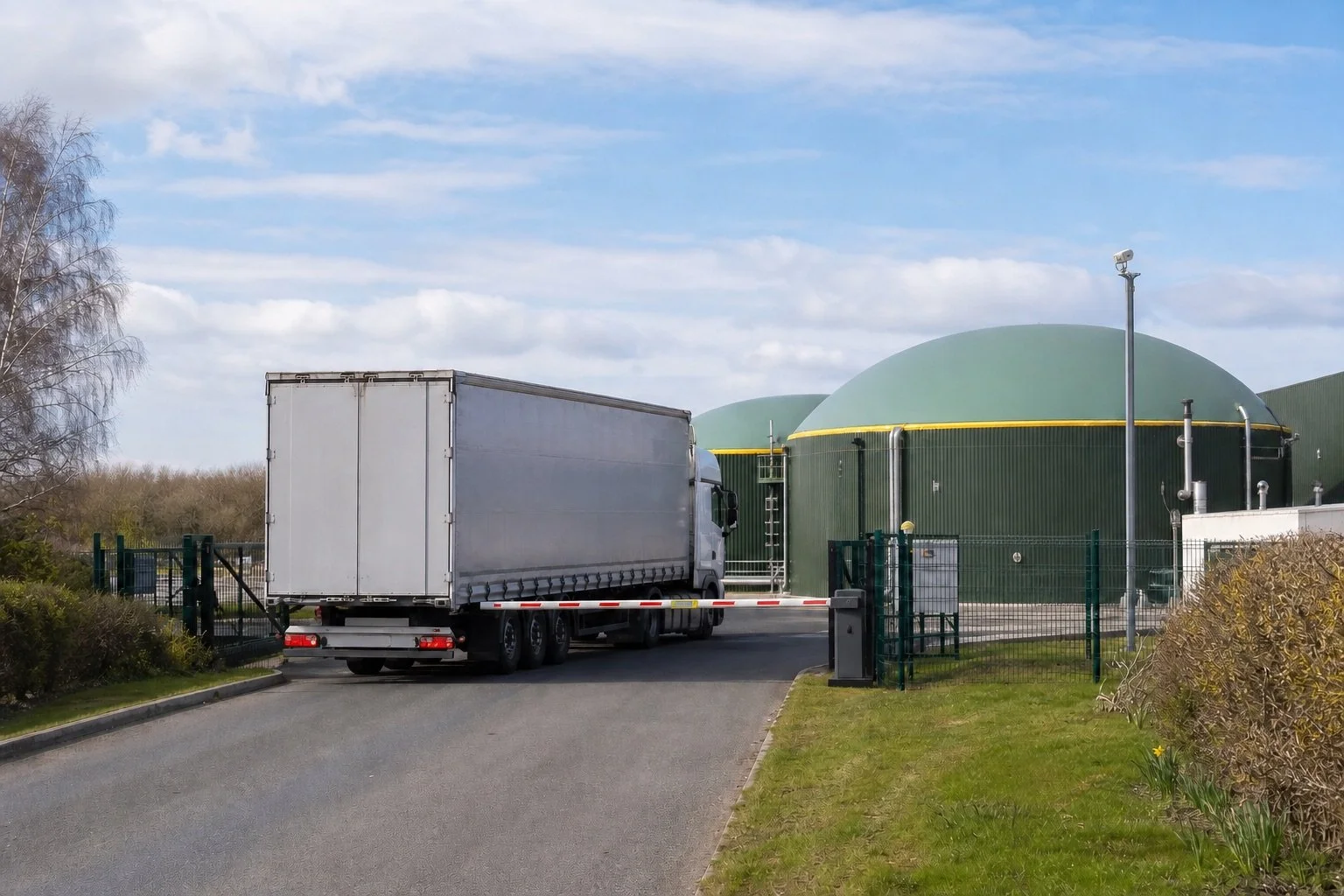
Look closely at the objections in these cases and a pattern emerges that has very little to do with the technology itself. Common concerns raised against AD applications are consistently traffic, odour, noise, and visual impact on the landscape, the same handful of issues showing up almost regardless of location, feedstock, or developer.
That is, in one sense, good news. These are not abstract fears about an unfamiliar technology. They are concrete, addressable concerns about how a specific site will operate day to day. The bad news is that too many applications still arrive at committee stage without having genuinely addressed them.
"Traffic is usually the one that sinks an application, and it is also the one that is easiest to get ahead of," says Adam Nelson, Operations Manager at BIOCON Group.
Odour follows a similar pattern. Communities who have seen coverage of odour complaints or enforcement action at other sites, anywhere in the country, bring that scepticism to a new application before a shovel has gone in the ground. Reassurance after the fact rarely lands as well as a credible plan set out clearly from the start.
What actually earns a social licence for an AD project?
None of this means the objections are unanswerable. It means they need answering earlier, more specifically, and more honestly than a lot of applications currently manage.
Engage before the application, not after the objections. Waiting for a formal consultation period to introduce a project to its neighbours means the first thing most people hear about it is already framed as a fait accompli. Early, informal conversations, however uncomfortable, let concerns surface while the design can still respond to them.
Model traffic honestly and specifically. Vague assurances about "minimising HGV movements" do not survive contact with a transport assessment showing peak day volumes. Give real numbers, real routes, and real mitigation, and be upfront about the worst case, such as harvest season peaks, rather than only the average.
Treat odour as a design question, not a communications problem. Containment, extraction, and abatement decisions made at design stage do more for trust than any amount of reassurance after a complaint has already been made. [link: BIOCON Group odour management guidance for AD operators]
Show, do not just tell, what good practice looks like elsewhere. Site visits, photographs, and named reference plants operating without incident do more to shift scepticism than technical descriptions of abatement systems most residents will never see in person.
Be visible after consent, not just before it. A social licence is not won at the planning decision. It has to be maintained through construction and operation, with a genuine, responsive route for people to raise concerns and see them acted on.
A shared responsibility problem
There is an uncomfortable truth in all of this for the wider sector. Every AD developer who submits a weak transport assessment, underplays odour risk, or treats consultation as a box ticking exercise is not just risking their own scheme. They are making the next scheme, submitted by someone else entirely, harder to win.
Planning committees, local newspapers, and residents' groups do not distinguish between operators the way the industry does. To most people objecting to a plant near Grantham or Bath or Sedgefield, it is simply "another biogas plant," judged in part on the reputation the last one left behind. A sector asking government for a tenfold increase in production cannot afford to let its weakest applications set the tone for how the strongest ones are received.
The policy case for anaerobic digestion has arguably never been stronger. Energy security, food waste diversion, and domestic gas production all point the same direction. But policy support does not overrule a planning committee that has just read 800 objection letters. If the sector wants that tenfold growth to actually happen, winning trust locally, project by project, has to be treated as seriously as winning subsidy nationally.
If your project is heading towards planning, or facing pushback once it is already in for consideration, the way you handle traffic, odour, and community engagement will shape the outcome as much as the technical case. Our team works with developers and operators to pressure test planning submissions, review odour and traffic strategy, and build engagement plans that hold up under scrutiny. Get in touch with the team before you submit, not after the objections start.
