
COMAH Regulations and Anaerobic Digestion: What Every UK AD Plant Operator Needs to Know
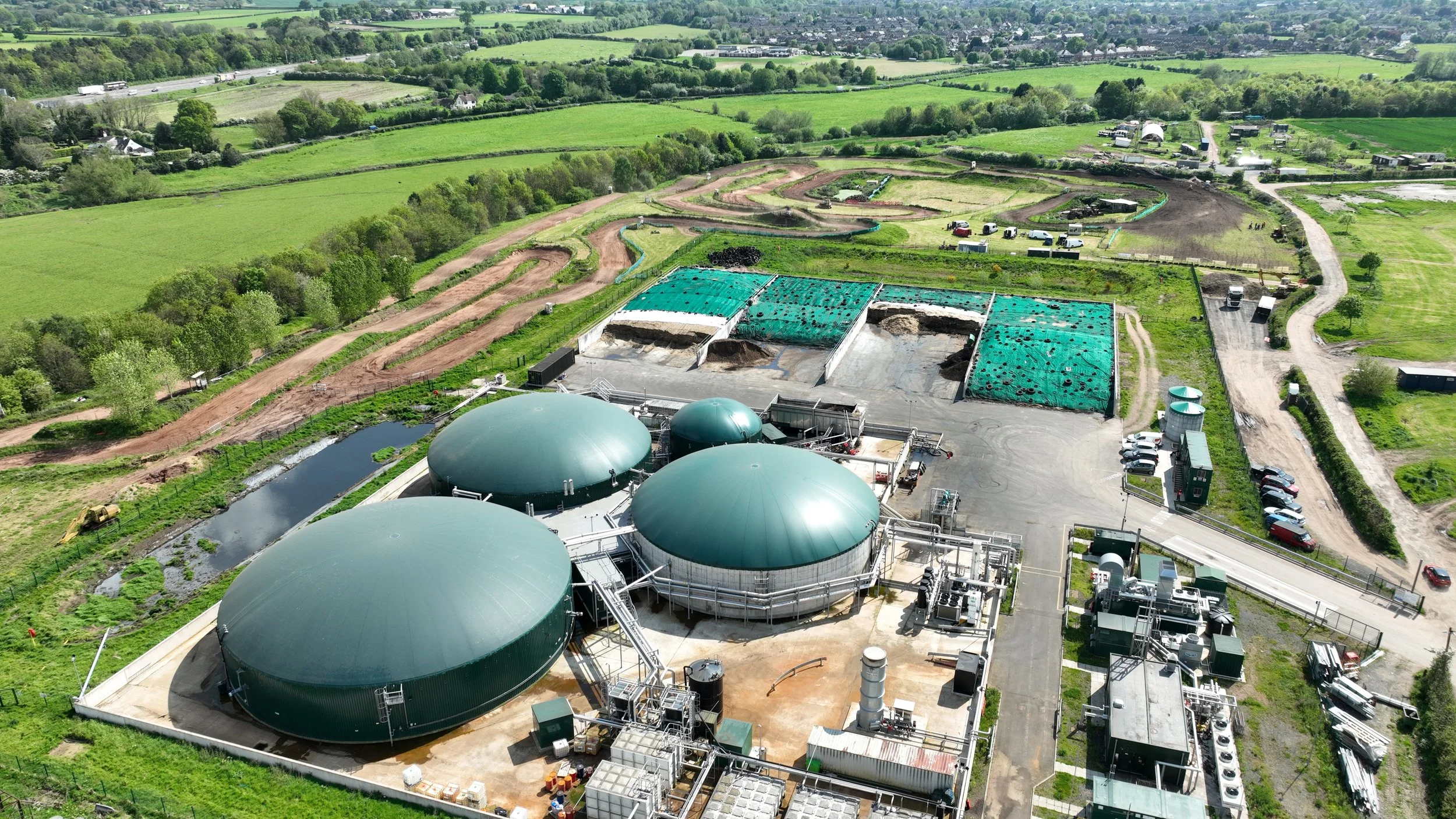
A lot of anaerobic digestion plant operators assume COMAH does not apply to them. They associate it with chemical factories, oil refineries, and large industrial complexes, not with a biogas plant in rural Lincolnshire or a food waste facility on the edge of a trading estate.
That assumption is costing some operators significantly. The Health and Safety Executive (HSE) and the Environment Agency (EA) have both raised concerns in recent years that a meaningful proportion of UK anaerobic digestion (AD) plants may be operating under the Control of Major Accident Hazards (COMAH) Regulations 2015 without their owners being aware of it.
This is not a minor compliance oversight. It is a gap that carries real legal risk, safety consequences, and the potential for significant enforcement action. If your plant stores or handles hazardous substances above certain quantities, including the biogas you generate, COMAH may already apply to you.
This article explains what COMAH is, how to work out whether your plant falls within scope, what your obligations are at each tier, and how a well-structured environmental management system (EMS) supports compliance at every level.
What Is COMAH, and Why Does It Apply to Biogas Plants?
The Control of Major Accident Hazards Regulations 2015 (COMAH 2015) is the primary UK legislation governing sites that hold large quantities of hazardous substances. The regulations implement the Seveso III Directive and are jointly enforced by the HSE and the EA acting together as the Competent Authority (CA). In Scotland, the Scottish Environment Protection Agency (SEPA) joins the HSE in this role.
The core purpose of COMAH is straightforward: prevent major accidents involving dangerous substances and limit their consequences for people and the environment. The regulations apply to any establishment where hazardous substances are present in quantities at or above the thresholds set out in Schedule 1 of the Regulations.
Where does biogas fit in?
Biogas is a mixture of gases produced during the anaerobic digestion process. It is primarily composed of methane (typically 50 to 70% by volume), carbon dioxide, water vapour, and trace amounts of hydrogen sulphide (H2S) and other compounds. Methane is classified as a flammable gas under Schedule 1 of COMAH 2015. It is also a highly explosive substance when mixed with air in concentrations between roughly 5% and 15% by volume. That makes it a hazardous substance under the Regulations.
The inventory of biogas present on your site at any given time includes gas held in digesters under positive pressure, gas stored in gas holders or flexible membrane stores, gas in pipework, and gas in any buffer or conditioning vessels. The total of all these quantities is what determines whether your plant crosses a COMAH threshold.
How Do the COMAH Thresholds Work for AD Plants?
COMAH 2015 uses a tiered approach. Establishments that hold hazardous substances above the lower threshold in Schedule 1 become lower-tier COMAH sites. Those that hold substances above the higher threshold become upper-tier sites, with more extensive obligations.
For flammable gases (Schedule 1, Part 1, which captures biogas as a mixed flammable gas), the thresholds are:
Lower tier: 10 tonnes
Upper tier: 50 tonnes
For named natural gas and methane specifically (Schedule 1, Part 2), the thresholds are higher at 50 tonnes (lower tier) and 200 tonnes (upper tier). However, because biogas is a mixture rather than pure methane, it will typically fall under the generic flammable gas category, making the lower 10-tonne threshold relevant for most sites.
To put that in context: a commercial-scale AD plant with a 1,500 cubic metre gas holder storing biogas at 60% methane content and moderate positive pressure could easily hold 10 tonnes or more of flammable gas at peak inventory. Many plants will also need to aggregate gas held across multiple storage points, digesters, and pipework.
The important point is that COMAH applicability is assessed on the maximum quantity of hazardous substance that can be present on site at any time under normal or reasonably foreseeable operating conditions. It is not based on annual throughput or average production. If your gas holder can hold 12 tonnes of flammable gas when full, that is the figure that matters.
Where a site holds more than one type of dangerous substance, the regulations also include an aggregation rule. Proportionate quantities of different substances can be summed to determine whether thresholds are met, which can bring some sites into scope that would not breach any single threshold on its own.
What Are the Two Tiers, and What Do They Require?
Lower-Tier Sites
If your site is a lower-tier COMAH establishment, your core obligations are:
Notify the Competent Authority. You must formally notify the HSE and EA (or SEPA in Scotland) that you are a COMAH site, providing information about the substances present, the establishment, and the activities carried out.
Prepare a Major Accident Prevention Policy (MAPP). The MAPP is a written policy that sets out how you will prevent major accidents and limit their consequences. It should describe your approach to process safety, your safety management system (SMS), and how you will meet the requirements of the Regulations. It does not need to be a lengthy document, but it must be meaningful and site-specific.
Implement a Safety Management System. The SMS must cover organisational structure and responsibilities, hazard and risk identification, operational controls, management of change, emergency planning, monitoring and audit, and review following major accidents or near misses. Many of these elements overlap directly with a well-developed EMS.
Upper-Tier Sites
Upper-tier sites have all the same obligations as lower-tier sites, plus:
A Safety Report. This is a detailed technical document that demonstrates you have identified all major accident hazards, taken adequate measures to prevent them, and provided sufficient information and training to people working on site. The Safety Report must be submitted to the CA before the site comes into operation (or before the threshold is crossed for an existing site).
An On-site Emergency Plan (OEP). You must prepare and test a written emergency plan covering how you would respond to a major accident, who is responsible for what, how you would raise the alarm, and how you would mitigate consequences.
Liaison with Local Authorities on Off-site Emergency Plans. The Local Authority is responsible for preparing an off-site emergency plan, and you are required to provide them with information to support this.
Informing the Public. You must make safety information available to people in the vicinity of the site.
What Is the Connection Between COMAH and DSEAR?
COMAH does not operate alone. The Dangerous Substances and Explosive Atmospheres Regulations 2002 (DSEAR) runs alongside it and is relevant to every single AD plant, regardless of whether COMAH thresholds are met.
DSEAR requires operators to carry out risk assessments for any dangerous substance present on site and to implement appropriate measures to prevent fires, explosions, and other energy-releasing events. Unlike COMAH, DSEAR has no lower threshold. If biogas is present, DSEAR applies.
In practice, DSEAR drives requirements around hazardous area classification (the mapping of zones around equipment where explosive atmospheres may exist), the selection of appropriately rated electrical and mechanical equipment in those zones, and written procedures for hot work, maintenance, and other activities that could introduce ignition sources.
For a COMAH site, DSEAR compliance forms part of the broader safety management picture. The two sets of regulations reinforce each other, and a robust approach to one tends to support compliance with the other.
What Gaps Do AD Plants Commonly Have?
The HSE and EA have been explicit that AD is a sector where COMAH awareness and compliance is inconsistent. Several common gaps emerge across sites of different types and scales.
Not knowing they are in scope. The most fundamental issue. Many operators built or acquired plants without anyone conducting a formal COMAH applicability assessment. The plant runs, generates gas, stores it, uses it, and no one has ever sat down and calculated the maximum inventory of flammable gas on site at any given time.
Incomplete inventory assessments. Even where operators are aware of COMAH, they sometimes calculate inventory based only on the gas holder, overlooking gas held under pressure in the digesters themselves, in scrubbing or conditioning equipment, or in pipework between units. The true maximum inventory is almost always higher than a simple gas holder calculation suggests.
A MAPP that does not reflect reality. Some operators have a MAPP in place because they know they need one, but it was produced as a one-off exercise and has not been updated to reflect changes in feedstock, plant configuration, or operating procedures. A MAPP that does not match how the plant actually operates provides very limited protection and will not satisfy an inspector.
Weak links between the MAPP and day-to-day operations. The MAPP and SMS must translate into what happens on the ground. If operators and maintenance staff are not familiar with the MAPP, if procedures are not in place, or if training records are incomplete, there is a significant gap between the document and the reality.
Poor integration with the EMS. Environmental management obligations under the environmental permit and safety management obligations under COMAH overlap considerably. Sites that run these as entirely separate systems often end up with duplication, inconsistency, and gaps where neither system addresses a particular risk adequately.
Why Does an EMS Matter for COMAH Compliance?
An environmental management system (EMS) is a structured framework for identifying, managing, and continuously improving environmental performance. Whether built to the International Organization for Standardization (ISO) 14001:2015 standard or to an equivalent internal framework, a well-implemented EMS provides a documented, auditable approach to managing your site's environmental risks.
For AD plant operators, the EMS and the COMAH SMS share significant common ground. Both require hazard identification and risk assessment. Both require documented procedures and trained personnel. Both require monitoring, audit, and management review. Both respond to incidents and near misses. And both need to be kept current as the plant changes over time.
This is why BIOCON Group supports operators in developing EMS frameworks that are designed from the outset to integrate with COMAH obligations. Rather than treating safety management and environmental management as separate disciplines with separate documentation, an integrated approach builds a single coherent system that satisfies both sets of requirements and avoids the gaps that emerge when the two are managed in isolation.
For a lower-tier COMAH site, a well-developed EMS often provides the foundation for the SMS required under the Regulations. For an upper-tier site, the EMS supports the safety report, the emergency plan, and the ongoing monitoring and review activities that the CA will want to see evidence of.
There is also a practical benefit. When an HSE or EA inspector visits a COMAH site, they want to see that the operator understands their hazards, has documented controls, and can demonstrate that the system is being actively maintained. An operator who can point to a live, up-to-date EMS with clear links to their MAPP and operational procedures is in a very different position to one who hands over a folder of documents that have not been touched in three years.
How Does This Affect Different Types of AD Plant?
Farm and Agricultural AD Plants
Smaller farm-scale AD plants processing slurry, manures, and energy crops often operate with relatively compact gas storage. In many cases, the maximum inventory of flammable gas may fall below the 10-tonne lower-tier threshold. However, this should be confirmed by a proper calculation rather than assumed. Plants with flexible membrane gas stores or double-membrane gas holders integrated into the digester cover can hold more gas than operators expect, particularly at high biogas production rates in summer.
Commercial Food Waste and Municipal AD Plants
Larger commercial AD plants processing food waste, source-separated organics, or municipal solid waste often operate at higher throughputs and with larger gas storage capacity. Many plants in this category will meet or exceed the lower-tier COMAH threshold. Some, particularly those with multiple digesters and separate gas holding capacity, will approach or exceed the upper-tier threshold. A detailed inventory assessment is essential.
Industrial and Wastewater AD Plants
AD plants treating industrial effluents, sewage sludge, or co-digestate from mixed industrial sources may also handle other hazardous substances in addition to biogas. Ferric sulphate, ammonia solutions, acids used for pH control, or hydrogen sulphide treatment chemicals can all contribute to the aggregated hazardous substance inventory. This makes a comprehensive COMAH applicability assessment particularly important for industrial and water sector sites.
Practical Steps to Assess and Manage Your COMAH Position
If you have not already carried out a formal COMAH applicability assessment, this should be the first step. The assessment needs to identify every hazardous substance that can be present on site, calculate the maximum quantity of each at any time under normal and reasonably foreseeable operating conditions, and apply the Schedule 1 thresholds to determine whether the lower or upper tier applies.
From there, the practical actions depend on your tier.
For lower-tier sites, prepare or review your MAPP. Make sure it is current, site-specific, and understood by everyone with a role in implementing it. Review your SMS to check it covers all the required elements. Ensure your notification to the Competent Authority is in place and up to date.
For upper-tier sites, the same applies, plus preparation and submission of the Safety Report, development and testing of the On-site Emergency Plan, and engagement with the Local Authority on off-site emergency planning.
For all sites, whether COMAH applies or not, ensure DSEAR compliance is in place. Hazardous area classification drawings should be current and match the as-built plant. Equipment in classified zones should be rated appropriately. Hot work and maintenance procedures should address ignition risk explicitly.
Review your EMS (or develop one if it is not yet in place) to ensure it integrates with your COMAH and DSEAR obligations. Look for gaps between what your documentation says and what actually happens on site. Address those gaps through training, updated procedures, and revised monitoring arrangements.
How BIOCON Can Help
COMAH is one of the most significant and least well-understood regulatory frameworks in the UK AD sector. The HSE and EA have made clear that the industry has a compliance gap, and that gap is not going to be overlooked as the sector grows and regulatory oversight intensifies.
For plant operators, the immediate priority is a clear answer to a straightforward question: does COMAH apply to this site? From there, the path forward is well established. Assess your obligations, build or update your documentation, make sure your team understands their roles, and integrate your COMAH requirements into your broader environmental management approach.
Done properly, COMAH compliance is not a bureaucratic burden. It is the foundation of a well-run, well-documented, and genuinely safe operation.
At BIOCON Group We work with AD operators across the UK to carry out COMAH applicability assessments, develop MAPP documentation, and build EMS frameworks that bring safety and environmental management together in a single, coherent system. Get in touch with the team at BIOCON Group and we will help you understand your position and what needs to happen next.
