
Should AD Plants Publish Environmental Performance?
AD plants are often described through broad sustainability claims. Renewable energy. Circular economy. Lower emissions. Those descriptions can be true, but they do not answer the questions that matter most to neighbours, land managers, customers and investors.
How often does the plant check for methane leaks? What odour incidents have occurred? How many vehicles use local roads? Where does the feedstock come from, and where does the digestate go?
Environmental performance reporting is the voluntary publication of a short, regular account of how a biogas plant manages those issues. It is not a substitute for an environmental permit, regulatory returns or independent audit. It is a way of making selected operational evidence easier for people outside the gate to understand.
Some operators will see that as a sensible next step. Others will see a reporting burden that risks creating heat rather than light. Both positions deserve a fair hearing.
What would environmental performance reporting mean for an AD plant?
The useful version is neither a glossy sustainability brochure nor a live data stream. It is a plain English annual or quarterly summary of a small number of relevant measures, the context behind them, and what the plant did when performance was not as intended.
For a waste or manure based AD plant, the report might cover methane leak detection and repair checks, odour complaints or verified incidents, vehicle movements, feedstock categories and digestate destinations. It could also explain material changes such as a new reception arrangement, covered storage or an alteration to spreading practice.
The information should reflect the actual risk profile of the site. A rural farm plant receiving mainly slurry has different questions from a food waste plant with a busy vehicle schedule and depackaging line. A grid injection plant may have more data on gas quality and upgrading equipment than a small combined heat and power plant.
That distinction matters. A universal scorecard may look tidy but still compare unlike operations. A short site specific report can be more useful if it tells readers what is being measured, why it matters and what has changed since the previous period.
Why are broader sustainability claims becoming less persuasive?
Public confidence is usually built through specifics. A statement that a plant supports decarbonisation may be reasonable. It says little about whether the plant is controlling the impacts that people experience locally.
The UK regulatory framework already requires operators to manage many of these matters. For example, Environment Agency standard rules for some on farm AD operations require a leak detection and repair programme for volatile organic compounds, including methane, with at least annual inspections and a summary report. They also require records of monitoring and operating activities.
Participants in the Green Gas Support Scheme have further sustainability reporting obligations. The scheme uses lifecycle greenhouse gas criteria, quarterly declarations and annual sustainability audit reports. Digestate obligations include retaining details of spreading arrangements and using appropriate low emission spreading methods where the participant spreads digestate.
These are important controls. They are not normally designed as a simple public explanation of site performance. The data may sit in permit records, audit files, contractor reports and operational systems. Voluntary reporting asks whether a concise, carefully prepared summary could make the underlying controls more visible.
The argument is not that every plant must disclose every operational record. It is that claims of good environmental management carry more weight when linked to observable practice.
What could a voluntary report include?
Methane checks and leak repairs
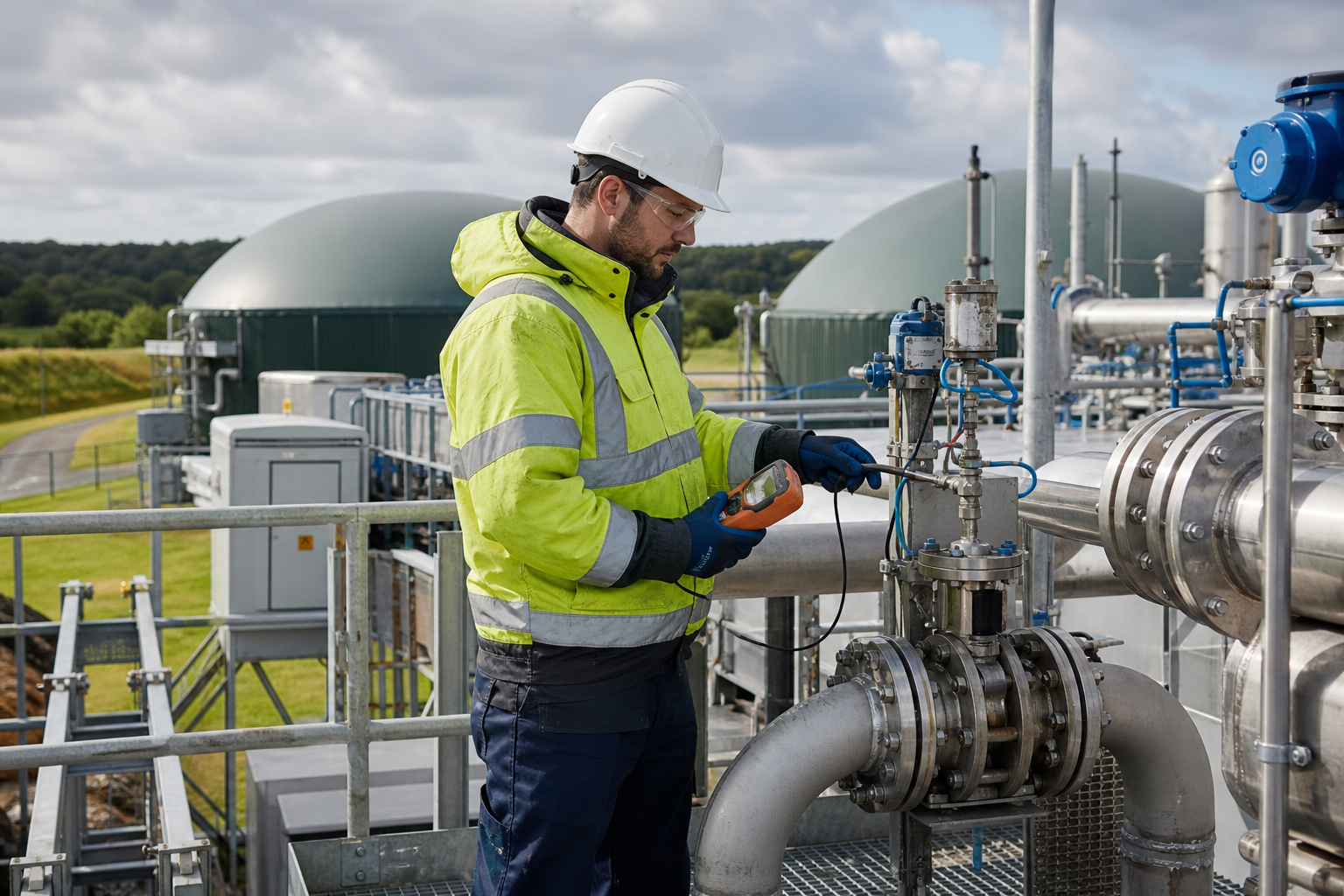
Methane is the central environmental question for a biogas plant. The plant exists to capture and use methane rich biogas. Avoidable releases from gas holders, valves, seals, flanges, pressure relief arrangements or upgrading equipment undermine that purpose.
A helpful report would state the check method and coverage rather than simply saying the site is leak free. For example, it could show the number of planned inspections completed, the percentage of relevant assets covered, leaks identified by category, the typical time to repair, and any follow up verification.
It should also state the limits of the result. A scheduled survey is a snapshot. Different instruments and survey approaches have different detection thresholds. A plant should not imply that a zero finding proves there were no emissions at any point during the year.
This level of honesty is a strength, not a weakness. It tells readers that the operator understands methane management as a continuing task.
Odour incidents, complaints and response
Odour is often the most immediate local concern around an AD plant. It can arise from feedstock reception, doors, storage, digestate handling, abnormal process conditions or work carried out during maintenance.
Publishing a count of complaints without context could be misleading. One complaint may relate to an off site source. Several calls may be about the same short lived incident. A better summary separates complaints received, incidents verified, likely source where established, duration, weather context if relevant, and corrective actions.
The report should not turn a neighbour complaint into a debate about whether the person was right. It should show that the plant logged the concern, investigated it and responded. That aligns with the practical purpose of an odour management plan, which is to identify sources, controls and contingencies before an incident occurs.
Traffic and route management
Vehicle movements are a visible consequence of an AD plant, even when a site performs well technically. Feedstock deliveries, digestate haulage, rejects, maintenance contractors and product collections can affect rural roads and nearby communities.
A voluntary report could state inbound and outbound movements by month, the share using agreed routes, any seasonal peaks, and material route changes. It could also explain practical controls such as booking slots, site queuing arrangements, wheel cleaning, driver instructions and escalation where a contractor repeatedly uses an unsuitable route.
Traffic data has limits. It cannot show the full impact on its own. A tanker passing a school at a sensitive time may matter more than an annual vehicle total. Operators should therefore describe the operating controls, not only publish a number.
Feedstock origin and handling
Feedstock origin is one of the clearest ways to test a circular economy claim. A report need not disclose commercial contracts, supplier prices or individual farms. It can show broad categories, approximate proportions and sourcing geography.
Useful categories might include cattle slurry, poultry manure, source segregated food waste, food manufacturing residues, crop residues and energy crops. An operator can then report the share sourced within an agreed catchment, the main transport modes, and any material change in the mix.
Traceability is already important in permit compliance and support schemes. Publishing an aggregated account may help demonstrate that the site has considered haulage, feedstock quality and the competing uses of material. It can also invite sensible questions about what counts as local and how the plant defines its catchment.
Digestate destinations and nutrient use
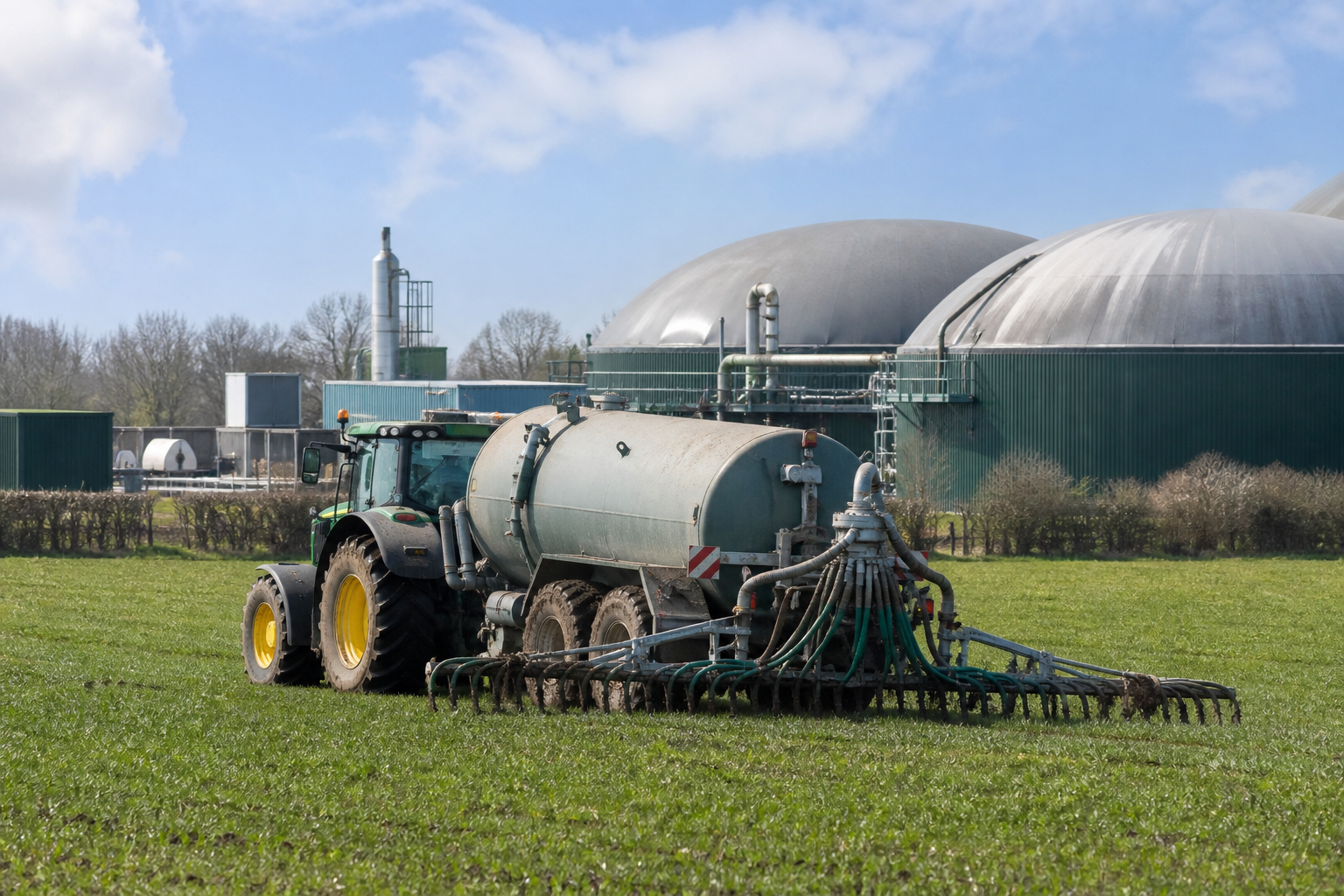
Digestate reporting can complete the story. Digestate is a nutrient rich output, but its environmental value depends on storage, transport, timing and application practice. Poorly matched applications can create ammonia emissions or water pollution risk.
The report could state the proportion of digestate supplied to local agricultural land, separated into whole digestate, fibre and liquor where useful. It could describe storage capacity, use of covers, the broad crop destinations, nutrient planning arrangements and the proportion spread using low emission methods.
It should avoid presenting digestate as automatically beneficial. Nutrient value depends on the analysis, crop requirement, soil condition, weather and application timing. Reporting these controls is more credible than treating every tonne as an unqualified environmental gain.
What are the arguments for publishing environmental performance?
It gives communities something concrete to assess
Planning and permitting discussions can leave local people with a large amount of technical material and little visibility once the plant is operating. A short report gives a regular point of reference. It may not remove disagreement, but it can reduce the gap between what an operator says and what it can show.
It can improve internal discipline
The prospect of explaining performance to an external reader can reveal unclear ownership, gaps in records and measures that look better in isolation than as a trend. That is not a reason to publish weak data. It is a reason to make the internal management information useful first.
It moves the conversation from aspiration to controls
Most operators already carry out checks, retain records and manage incidents. Reporting can make the conversation more specific. The questions become whether inspections were completed, how an issue was resolved, and whether a change reduced recurrence.
This is more persuasive than a general claim that a plant is sustainable. It is also easier to improve over time because the operating team can see a defined measure and action.
It may support commercial and investment conversations
Owners, lenders, offtakers and local authorities increasingly ask how environmental risks are governed. A proportionate report can provide a starting point for due diligence. It is particularly relevant where a plant relies on local feedstock contracts, digestate outlets or a relationship with a nearby community.
That does not mean one template will satisfy every stakeholder. It means there is a record of the issues that are most likely to affect the plant's licence to operate.
What are the arguments against it?
Data without context can be misunderstood
Environmental data is rarely self explanatory. A rise in odour complaints may follow a new reporting channel rather than a decline in site performance. A greater number of methane leaks found may reflect a more thorough survey. A reduction in traffic may result from lower throughput, which is not necessarily good news.
Once a figure is public, it can be repeated without the explanation that makes it meaningful. This concern is legitimate. It is an argument for clear definitions, comparison with the previous period, and a short explanatory note. It is not necessarily an argument for no disclosure at all.
It can create a material administrative burden
Smaller plants may already manage permit compliance, supplier records, maintenance planning and staff cover with a limited team. Creating a polished report could take time away from the checks and repairs that matter more.
The answer may be proportionality. A concise one page report using data already collected can be more valuable than a large annual document that few people read. Where external verification is needed, the cost and purpose should be clear before it is commissioned.
Some information is commercially or operationally sensitive
Feedstock contracts, supplier identity, route details and storage arrangements may carry commercial, security or privacy concerns. Publishing precise locations or individual supplier volumes may be neither necessary nor sensible.
Aggregation can manage much of this risk. A plant can report feedstock types and regional origin without naming every source. It can show movements by agreed route corridor rather than publishing a vehicle tracking record. The boundary should be defined deliberately.
Voluntary reports can become marketing exercises
There is a genuine risk that a report selects only flattering indicators or describes compliance as exceptional performance. If it contains no targets, no trends, no adverse events and no explanation of limitations, readers may reasonably question its value.
Publishing difficult information, with a fair account of the response, is where credibility is earned. A report that has nothing imperfect to say can look less convincing than one that shows a small problem and a completed corrective action.
What good looks like in practice
Good reporting is modest, consistent and capable of improvement. It avoids unsupported claims such as zero impact or carbon neutral operation. It explains what the operator can measure and what it cannot reasonably claim from the available data.
It also separates three things that can easily become confused: legal compliance, operational performance and voluntary disclosure. Meeting permit conditions is essential. Strong operational performance goes further through effective maintenance, training and response. Voluntary publication is a communication choice about how much of that performance to share.
For some sites, publishing a report will be the right choice now. For others, improving internal records, methane management or community contact may be the more useful first step. The decision should be driven by the site's risks, stakeholders and capacity, not by a belief that every plant needs the same public dashboard.

When should you bring in support?
Support can be useful when a plant has the data but does not yet have a clear way to turn it into a meaningful account of performance. It is also useful where a site is reviewing methane controls, odour management, feedstock changes or digestate routes at the same time.
BioConsult can review existing records, permit requirements and operating controls to help identify a proportionate reporting approach. BioContractors can help embed practical inspection, logging and response routines where the underlying data needs strengthening first.
Contact our team today to get help with your plant and understand whether publishing your performance is suitable.
