
Heatwaves Are Becoming an AD Design Condition. Is the Industry Ready?
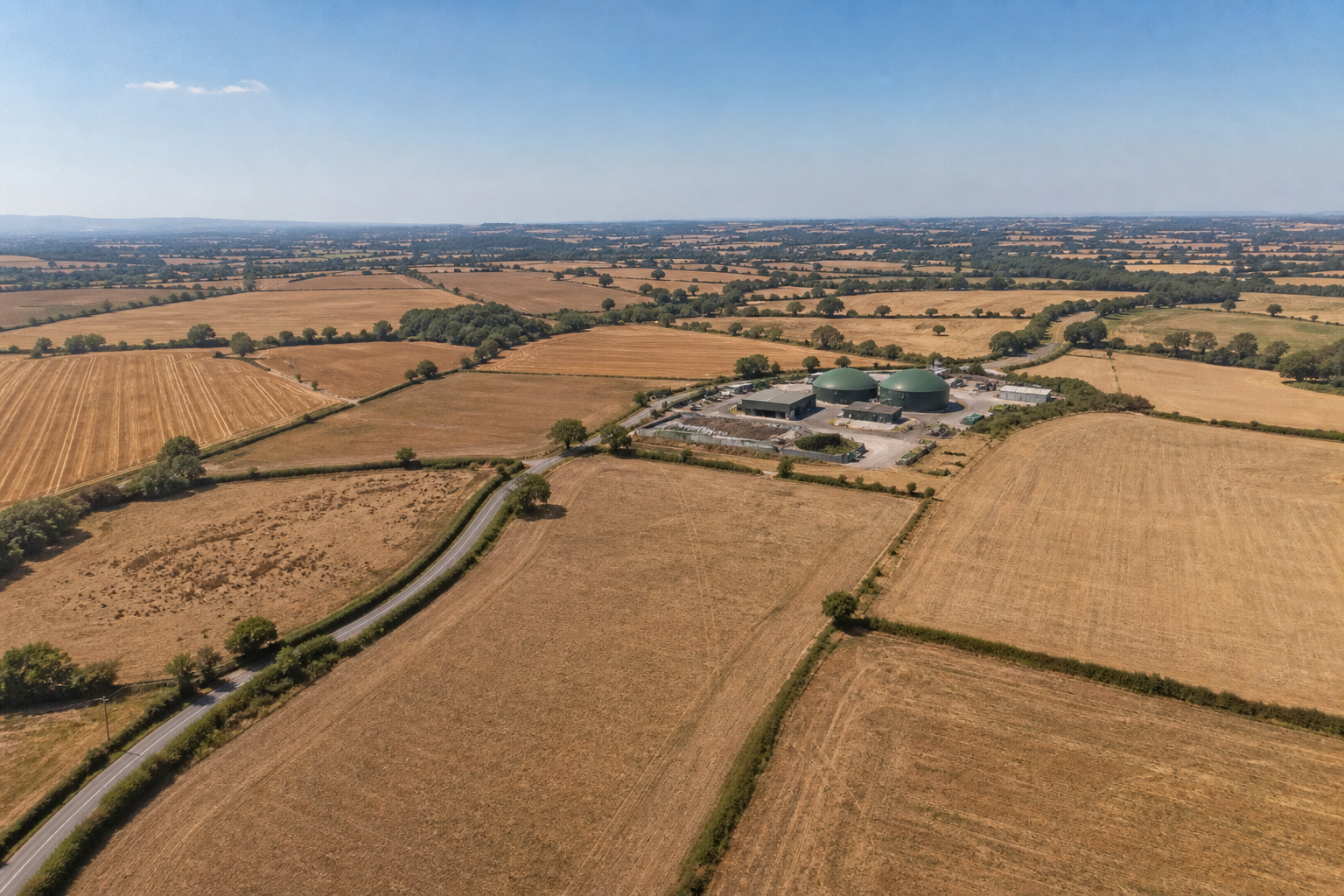
Extreme heat is now an anaerobic digestion plant design issue.
The heat experienced in the UK and across Europe was some of the hottest periods we have ever seen. Refrigeration failures created sudden volumes of spoiled food, while hot weather put extra pressure on the plants expected to receive it. The Anaerobic Digestion and Bioresources Association (ADBA) reported that the Environment Agency contacted operators to identify emergency treatment capacity as sites approached their limits.
At the same time, England's weekly household food waste collections were increasing the normal flow into the sector. Plants that appeared adequately sized against annual tonnage could have very little spare capacity when several suppliers needed help at once.
Heatwave resilience means designing an AD plant to maintain safe reception, stable biology, controlled emissions and reliable gas management during a defined period of high ambient temperature and abnormal feedstock arrivals. It is about peak conditions, not annual averages.
This is the engineering question for plant owners now: can the whole site absorb a hot weather surge without exceeding its permitted limits, overloading the biology or creating an odour problem?
Why did the 2026 heat episode matter for AD plants?
ADBA's account of the June and July event describes a chain reaction. High temperatures contributed to refrigeration failures in the food supply chain. Spoiled and precautionary stock then moved quickly into the waste system, increasing demand for food waste treatment.
The extra tonnage was reported to be a relatively small share of annual arisings. Even so, it was enough to create a national search for spare headroom. That distinction matters. A plant can have acceptable annual utilisation and still be unable to receive a concentrated peak over several days.
The baseline has also changed. Under England's Simpler Recycling requirements, household food waste must be collected at least weekly from 31 March 2026, unless a transitional arrangement applies. Government guidance identifies AD as the preferred treatment route for separately collected food waste where digestate is suitable for use as fertiliser.
That gives the sector a larger and more dependable feedstock stream. It also reduces the unused capacity that might once have absorbed a local refrigeration failure or seasonal peak.
The recent ADBA heatwave case study should therefore be read as a design warning. The weakest point may be the reception hall, depackaging line, buffer tank, digester, gas system, digestate store or odour abatement plant. The site's usable surge capacity is set by whichever of those reaches its limit first.
What makes extreme heat a whole plant problem?
An AD plant is a linked process. Increasing the feed rate at the front end affects retention time, organic loading, gas production and digestate output further downstream.
Hot weather adds a second layer. Incoming feedstock may be warmer and more degraded. Reception doors may open more frequently. Cooling equipment loses performance as ambient temperature rises. Staff work in hotter buildings and in personal protective equipment (PPE). Odour formation and release can become harder to control.
This creates several connected risks:
Reception storage reaches its permitted or physical limit.
Putrescible material remains on site longer and generates stronger odour.
Rapid feeding changes the organic loading rate faster than the biology can adapt.
Digester temperature moves outside the site's validated operating band.
Higher gas production coincides with constrained storage, upgrading or export capacity.
More digestate is produced when output storage or landbank availability is limited.
Staff face heat stress while workload, vehicle movements and callouts increase.
The answer is not simply a larger reception bunker. Extra front-end storage has limited value if the depackaging line, digester, gas holder or digestate store remains the real constraint.
How much reception and buffer capacity does an AD plant need?
Start with a mass and volume balance for the credible peak day and peak week. Test each process stage against that scenario, including normal contracted inputs.
The calculation should cover:
The maximum permitted quantity that can be accepted and stored
Usable reception volume after allowing for safe operating levels and segregation
Unloading and vehicle turnaround capacity
Depackaging and pre-treatment throughput
Liquid buffer capacity and available freeboard
Maximum stable digester feed rate
Gas storage, treatment and export capacity
Digestate processing and storage headroom
The duration for which each constraint can be managed
The Environment Agency's biological waste treatment guidance requires operators to define maximum storage capacities clearly, monitor stored quantities and provide enough capacity for foreseeable changes in feedstock supply. It specifically identifies adverse weather and seasonal peak volumes as conditions that storage arrangements should address.
Design capacity should be stated in operating terms, not only as a tank's nominal volume. A 500 cubic metre tank does not provide 500 cubic metres of surge capacity if normal inventory, mixing requirements, foam allowance and minimum pump levels already occupy most of it.
Separate receipt from digestion
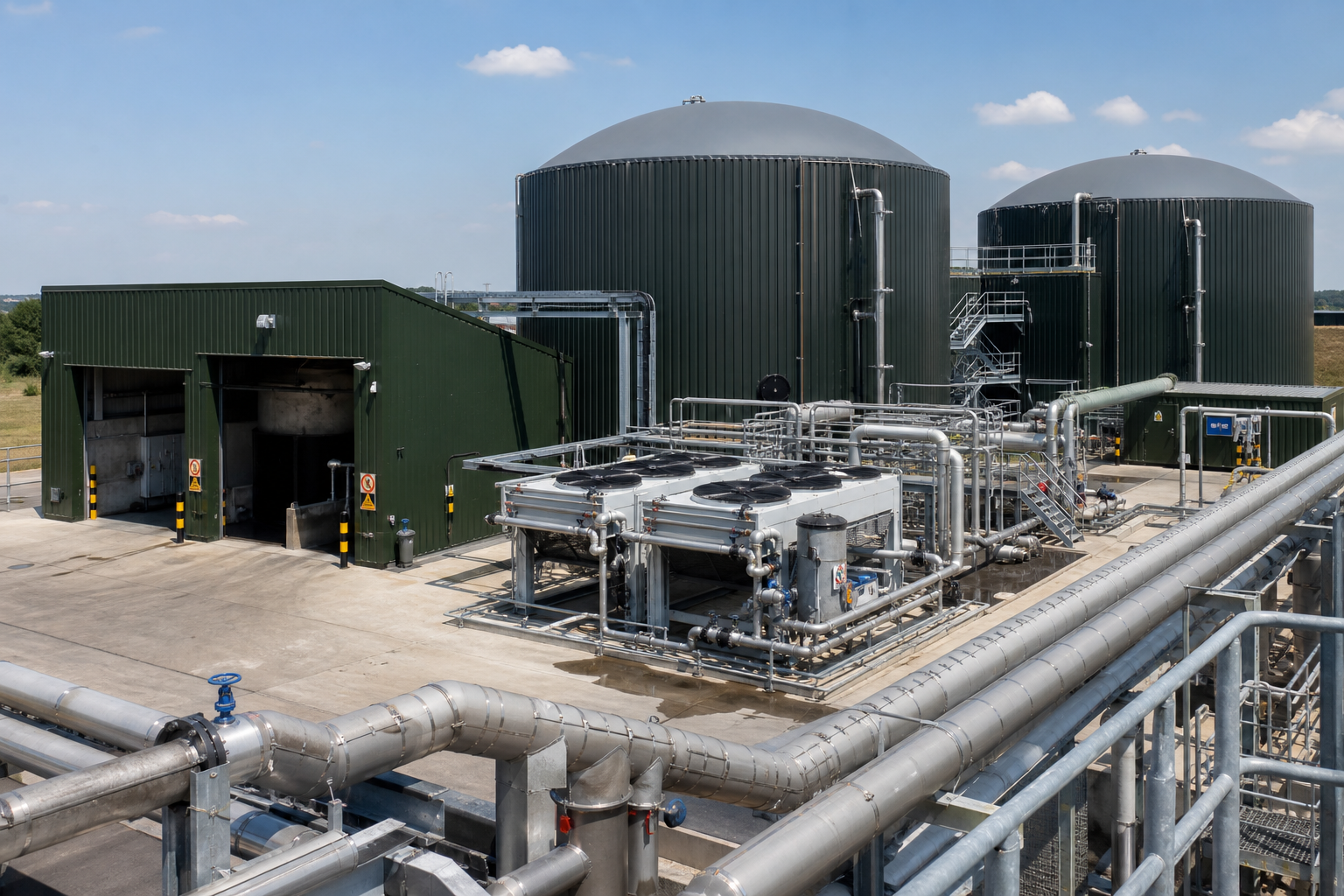
Feedstock buffering gives the biological process time. It allows operators to receive material at the rate imposed by a waste incident while feeding digesters at a rate supported by process data.
For liquid feedstocks, this may mean segregated balance tanks with effective mixing, level monitoring, sampling access and controlled extraction. For packaged food waste, it may mean enclosed reception space and enough pre-treatment resilience to prevent material accumulating in trailers or uncontrolled areas.
Segregation matters during a surge. A large load of spoiled dairy products, fats or easily degradable food can have a very different effect from the plant's normal blend. Operators need the ability to isolate, characterise and meter higher-risk material rather than adding it directly to the routine feed mix.
Define acceptance triggers before the gate becomes congested
Every site should have clear green, amber and red acceptance levels. These should reflect usable storage, pre-treatment availability, biological indicators, gas handling capacity and digestate headroom.
At amber, the site may restrict delivery slots, prioritise contracted material, increase sampling or activate a diversion agreement. At red, acceptance stops for specified waste types. The decision must happen before permitted storage or safe process limits are exceeded.
How should AD plants control biological temperature during a heatwave?
Digester heating receives plenty of design attention in the UK. Heat rejection often receives less.
That assumption needs review. A well-insulated vessel retains process heat in winter, but it can also make unwanted summer heat difficult to remove. Warm feedstock, biological heat generation, recirculation and heat exchanger operation can all affect the temperature balance.
The Environment Agency requires liquid treatment vessels to have continuous temperature and level monitoring linked to alarms for over-heating, under-heating and over-filling. Monitoring is essential, but an alarm alone does not remove heat.
Set a site-specific thermal operating envelope
Designers should calculate the heat balance for a credible hot weather case. Use local design weather data, measured feedstock temperatures, realistic biological heat generation, equipment heat loads and the reduced performance of cooling equipment at high ambient temperature.
The operating envelope should define:
normal digester temperature and the acceptable rate of change
alarm and intervention thresholds
the maximum incoming feedstock temperature
available cooling duty at the design ambient condition
the effect of losing one pump, fan or heat exchanger
the feed reduction needed if cooling capacity is impaired
The correct thresholds depend on the process design, microbial population, feedstock and validation history. Operators should avoid making abrupt temperature or loading changes in an attempt to correct a rising trend. A controlled feed reduction, backed by process monitoring, is usually easier for the biology to tolerate than repeated sharp interventions.
Design cooling as a maintainable duty
Cooling may use a heat exchanger, dry air cooler, cooling tower or another site-specific arrangement. The important point is to size the complete system for the hot weather duty, including pumps, pipework, control valves and the temperature approach at the exchanger.
Provide duty and standby capacity where a single failure would quickly threaten process stability. Make strainers, heat exchangers and temperature sensors accessible for inspection. Confirm that the control logic fails safely and that critical systems remain powered during an electrical interruption.
Review fouling as well as nameplate capacity. A heat exchanger that met the duty when clean may have insufficient margin after months of service. Trending inlet temperature, outlet temperature, flow and heat transfer performance gives earlier warning than waiting for the digester alarm.
How can plants prevent odour during a food waste surge?
Hot, putrescible feedstock deteriorates quickly. Longer storage, more vehicle movements and frequent door opening can overwhelm an odour control system that performs adequately during normal operation.
The Environment Agency requires highly putrescible, odorous, ammonia-rich and animal by-product wastes to be stored in a contained or enclosed building. Its guidance calls for engineered extraction and ventilation, with extracted air directed to suitable abatement.
The odour control design should be tested against surge conditions:
maximum door opening frequency and vehicle queue length
extraction rate with the largest required doorway open
capture at reception pits, depackaging and transfer points
abatement performance at high temperature and high humidity
condensate drainage and corrosion risk
availability of replacement media, chemicals and critical fan parts
arrangements for cleaning spillages and removing rejected packaging
An odour management plan (OMP) should include hot weather triggers and actions. The Environment Agency's 2025 odour guidance says permitted sites may need an approved risk assessment and OMP, must comply with permit conditions and must prevent serious pollution.
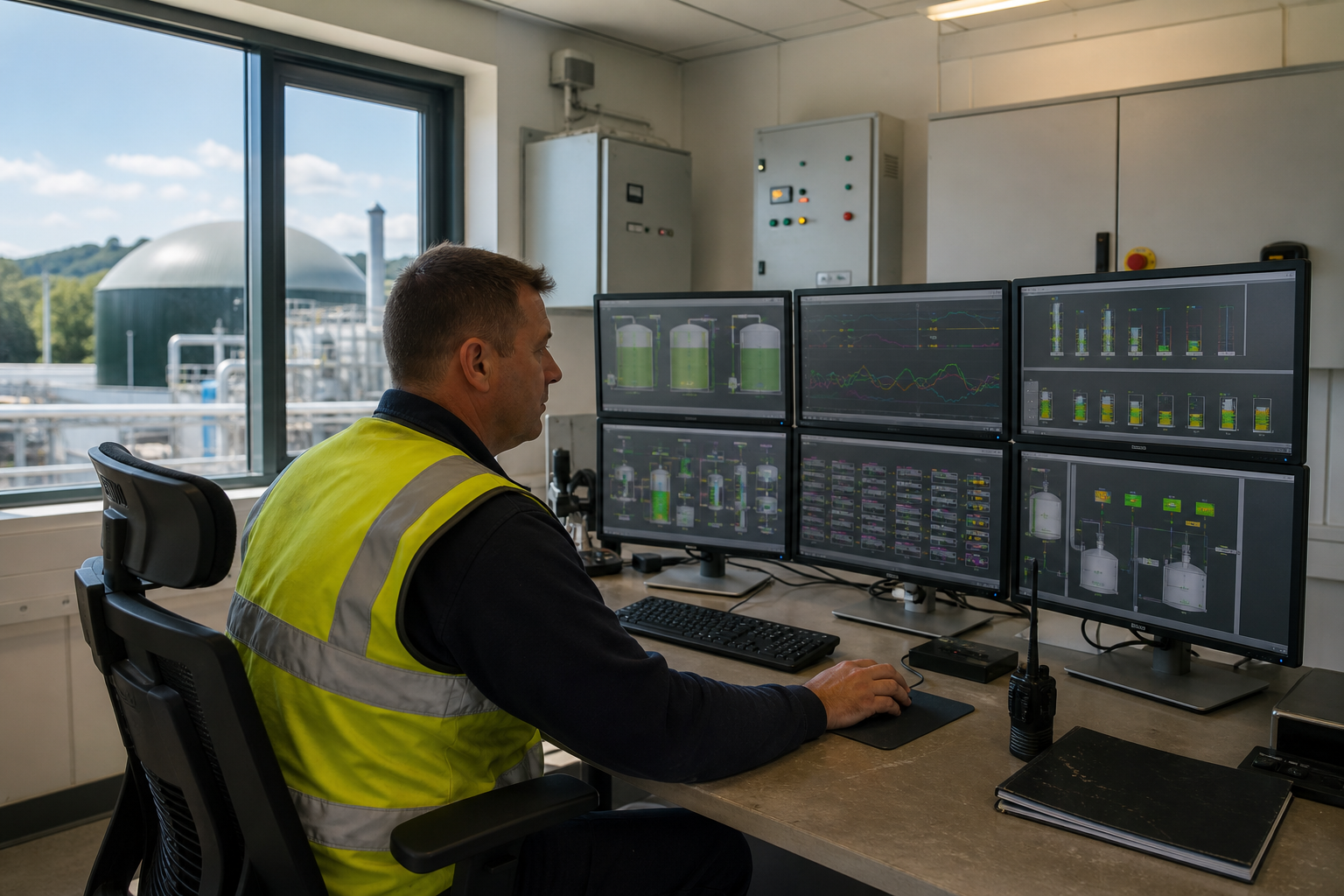
Daily checks should move beyond the control screen during a heat episode. Inspect door discipline, negative pressure, fan operation, drains, reception cleanliness and the external site boundary. Record weather conditions and complaints so the team can distinguish an isolated report from a developing loss of control.
How should gas and digestate systems be checked?
A feedstock surge does not end at the digester inlet. More degradable input may increase gas production and later increase digestate throughput.
The Environment Agency says AD plants must manage gas production within facility constraints. It identifies reducing the loading rate and diverting feedstock as controls when gas demand is compromised. Gas storage design must also consider high summer temperatures, while pressure relief and gas pipework must cope with anticipated maximum flows and pressures.
Review the credible maximum gas rate, not the annual average. Check gas holder volume, upgrading turndown, combined heat and power availability, flare capacity, pressure control and the effect of export interruption. Critical equipment should have suitable backup power in line with permit requirements and the site's risk assessment.
Digestate can become the hidden bottleneck. The surge balance should include separation throughput, covered storage, tanker availability and landbank restrictions. A plant that can receive and digest extra material may still have to refuse it if there is nowhere compliant to put the resulting output.
How do plant teams work safely in extreme heat?
Heatwave response increases manual work at the same time that staff may be less able to perform it safely. Reception cleaning, hose handling, sampling, vehicle control and maintenance can involve physical effort, PPE and exposure to hot enclosed spaces.
The Health and Safety Executive (HSE) says heat stress risk depends on work rate, climate, clothing and personal factors. Its controls include engineering measures, reducing exposure time, scheduling work for cooler periods, rest breaks, cool drinking water, training and attention to workers who may be more susceptible.
There is no single outdoor temperature that makes all work unsafe. The control decision should reflect humidity, radiant heat, air movement, workload and PPE as well as the air temperature.
What good heatwave readiness looks like on a well-run site
A resilient plant knows its usable headroom hour by hour. Its team can explain which constraint will be reached first, what action occurs at each threshold and who has authority to stop acceptance.
Instrumentation supports that judgement. Useful trends include reception inventory, tank levels, feedstock temperature, digester temperature and rate of change, volatile fatty acid and alkalinity indicators, gas production, gas holder level, oxygen and hydrogen sulphide where relevant, abatement differential pressure, digestate storage and planned deliveries.
The response should be rehearsed across commercial and operational teams. A salesperson cannot promise emergency tonnage without checking the site's current position. A control room operator should not have to search for a director before applying a pre-agreed safe acceptance limit.
BIOCON perspective
Heatwave resilience is best treated as a capacity study across the complete process. The useful answer is rarely a single larger tank or cooler.
Start with measured site data and a credible peak scenario. Identify the first limiting stage, check permit constraints and then compare operational changes with targeted capital work. This approach usually reveals lower-cost improvements, such as revised delivery control, better tank level management or a tested diversion agreement, alongside any equipment upgrades that are genuinely required.
If your plant has limited reception headroom, rising summer digester temperatures or no tested route for diverting excess food waste, it is worth reviewing the full process before the next heat episode. BioConsult can assess operational capacity and contingency arrangements, while BioConstruct NewEnergy can develop practical cooling, storage and process upgrades. Speak to the BIOCON Group team to arrange a focused heatwave resilience review.
