
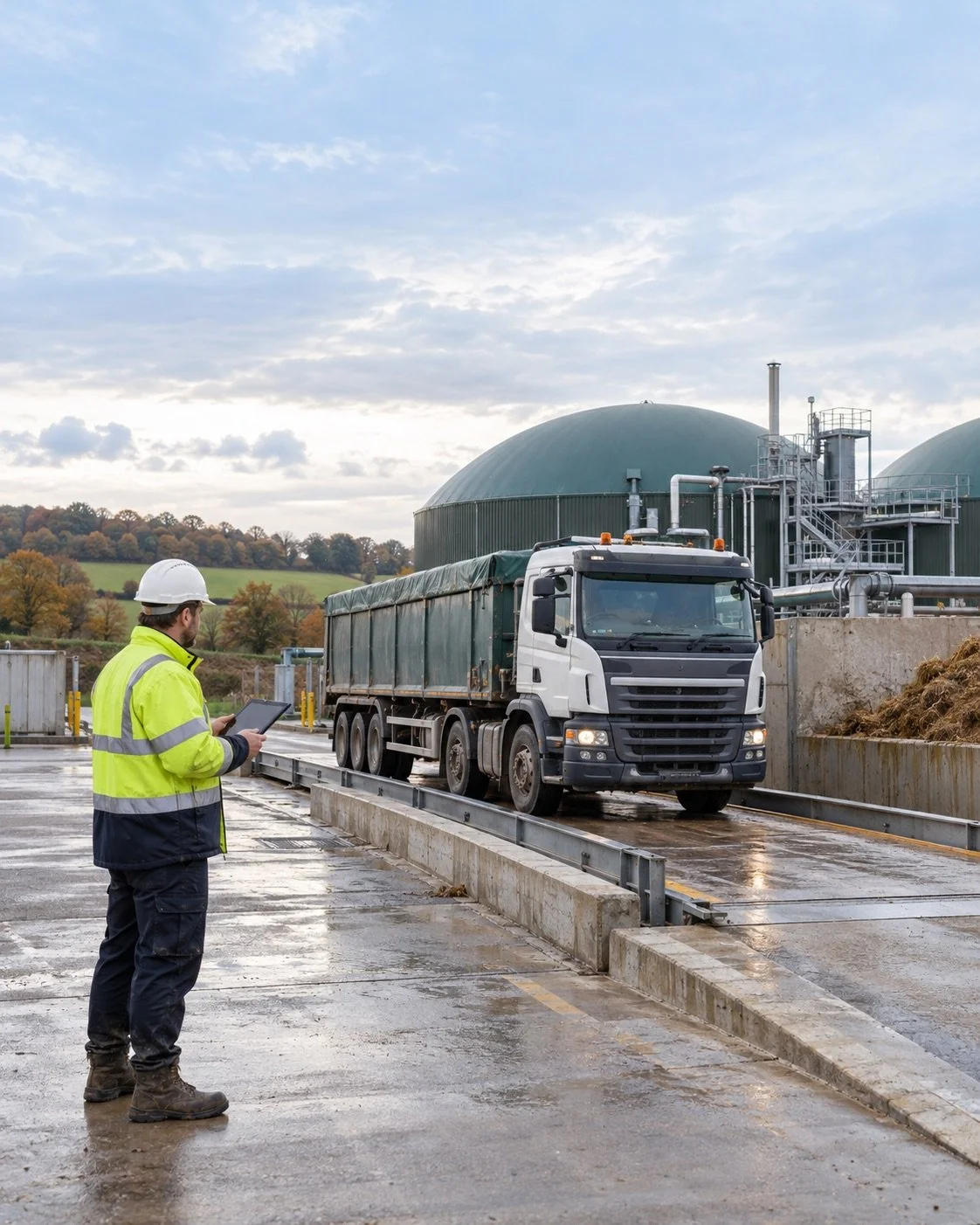
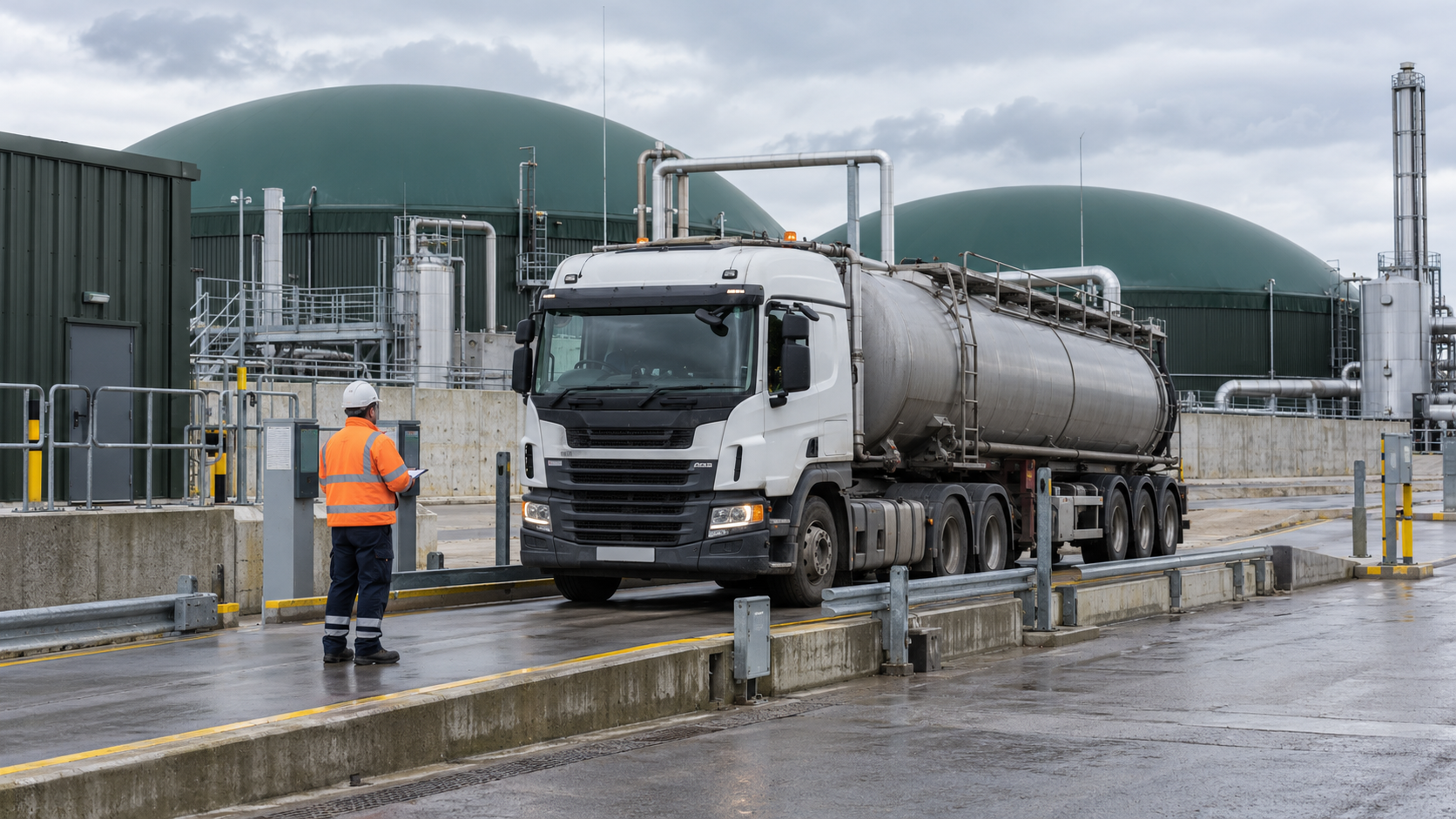
A load arrives at the gate. The driver has the paperwork, the weighbridge has a weight, and the reception team knows where the material will go. For a permitted waste receiving site, that is no longer the end of the record keeping process.
Digital waste tracking for anaerobic digestion (AD) plants means recording each qualifying receipt in the government’s Report receipt of waste service. In England and Wales, the requirement began on 1 October 2026. It applies to permitted or licensed sites receiving controlled waste, including some farm AD plants and composting operations. It does not apply to every farm plant. Department for Environment, Food and Rural Affairs (Defra) sets out the test.
The practical issue is timing. An operator normally has two working days, starting the day after receipt, to submit the required information and obtain a waste tracking reference. A good gate record therefore needs to become a complete, checked digital record quickly. This guide explains where the first phase applies and how to make that handover work on a busy site.
What is digital waste tracking, and who must use it?
Digital waste tracking is a government system for recording controlled waste movements. Its first mandatory phase focuses on the organisations receiving waste at permitted or licensed sites. The relevant legal instruments are the Digital Waste Tracking (England) Regulations 2026 and the Digital Waste Tracking (Wales) Regulations 2026, alongside the service guidance for operators.
For AD and composting operators, the important questions are whether the receiving activity is permitted or licensed, and whether the incoming material is controlled waste. Defra says the first phase also covers permitted operations, installations and mobile plants, including sites on the same premises where the waste is produced. It is unsafe to assume that an internal movement is outside scope merely because no third party delivered it. Check the official scope guidance against the activity and material involved.
A farm plant operating solely under a registered waste exemption is outside this first phase. Defra plans to bring waste exemptions into a later phase. A crop only plant should also assess whether its inputs are waste before assuming it has reportable receipts. The name of the feedstock or the fact that it came from a farm does not, by itself, settle the classification. Defra’s implementation policy explains the phased approach.
If a site has a mixed feedstock portfolio, assess each incoming stream and the authorisation used to receive it. Food waste, agricultural residues, manure, slurry and purpose grown crops can sit under different legal and commercial arrangements. Record the basis for the decision. If a stream is uncertain, raise the classification or permit question with the relevant regulator before relying on an exemption from reporting.
When did the rules start across the UK?
Permitted waste receiving sites in England and Wales have had to use the service since 1 October 2026. Government policy currently schedules the first phase for receiving sites in Northern Ireland and Scotland from January 2027. A later phase for carriers, brokers and dealers is planned from October 2027. Those dates describe different duties for different actors, so an AD plant should not wait for the carrier phase before reporting its own receipts.
For an English or Welsh site, the reporting deadline is the end of the second working day after the day a load arrives. Weekends and bank holidays are excluded. Defra’s example is a load received on Monday, which must be submitted and have a unique reference by 11:59 pm on Wednesday. This is a two working day rule, not a general 48 hour window. Defra’s reporting guidance also gives special timing rules for waste received by pipeline.
What information does an AD plant need for each load?
The digital record draws on information many operators already collect, but it needs to be complete and consistent. Defra lists waste movement, carrier and receiver details, waste classification codes, recovery or disposal codes, and additional information where hazardous waste or persistent organic pollutants are involved. The precise fields are in Schedule 1 of the relevant regulations and in Defra’s receipt of waste spreadsheet template.
At the gate, make sure the team can identify the producer and source, the waste description and code, the carrier, the vehicle and movement, the quantity, the receiving site and the intended treatment route. Check those details against the transfer documentation and the approved feedstock specification. Do not let a familiar supplier name stand in for a correct waste code or a current carrier detail.
The Environment Agency’s biological waste treatment guidance already expects operators to assess new waste streams before arrival, verify transfer documents on receipt, record nonconformances and track waste through the site. The new submission should use that established evidence, rather than create a second, disconnected version of the truth.
Where a delivery differs from its preacceptance description, stop and resolve the discrepancy through the site’s waste acceptance procedure. A digital submission cannot make an unsuitable or unpermitted load acceptable. If a load is rejected or partly accepted, retain the decision and supporting evidence so the regulatory record reflects what actually happened.
How should operators build the reporting process?
Treat reporting as a short extension of waste acceptance. The clearest process has one owner for capture, one for review and a named backup for absence or system failure.
1. Confirm scope for each stream. Compare the permit or licence, the feedstock agreement and the waste classification. Keep a short register of which receipts must be reported and why.
2. Register the right organisation. Access the Report receipt of waste service through the organisation’s account. Do not use an employee’s personal Government Gateway account.
3. Choose a submission route. Use compatible software connected to the service, Defra’s spreadsheet template, or a combination. The spreadsheet must keep Defra’s format. A new file is needed after each submitted spreadsheet, although one file can hold several movements before submission.
4. Capture data when the load arrives. Give the gate or weighbridge team a simple list of required fields. Escalate missing documents, inconsistent codes or unexpected material before the vehicle is tipped.
5. Review and submit daily. Have the responsible person compare arrivals with submitted records, then check for the unique waste tracking reference. A file upload or software send is not the same as a confirmed entry.
6. Reconcile the records. Match the service reference to the weighbridge ticket, transfer note, acceptance decision and site inventory. Keep an exception list for missing references and corrections.
Defra charges £26 a year per organisation using the service, covering all its waste receiving sites. The first payment is due by 31 January 2027 under current guidance. Separate legal organisations must be registered separately, even if they share an account. The service fee is small, but the time spent correcting poor source data can be much more significant.
What are the main risks, and how can a site control them?
The immediate compliance risks are missing a load, submitting an incomplete record, using the wrong classification or failing to notice that a submission was rejected. Defra says errors flagged on submission must be corrected within the original two working day period. Other discovered errors must be corrected as soon as possible and within one month. Set a daily exception check and make one person responsible for closing each item.
An outage needs a defined fallback. Defra instructs operators to notify the regulator where required, record the receipt information in writing within the normal deadline, retain it and enter it into the service after the outage. Check the current official guidance and the applicable regulations for the recovery deadline before using the fallback. A blank spreadsheet and a paper capture form should be available to the gate team, with a clear route for handing records to the reporting lead.
Operational controls still come first. A vehicle with the wrong material should not be accepted simply to keep the digital record tidy. Keep the normal checks for permit limits, storage capacity, odour, contamination and process suitability. If a load needs quarantine or rejection, follow the site procedure and record the outcome.
Does digital reporting replace waste transfer notes and permit returns?
No. Defra says waste transfer notes, hazardous waste consignment notes and Annex VII forms continue where required. Sites must also continue waste returns under their environmental permits, and hazardous waste consignee returns where relevant. The new service adds a digital receipt record during this transition. It does not remove the need for a sound waste acceptance process or the existing paperwork.
For an AD plant, this matters because the same load may appear in several systems: the supplier’s paperwork, the weighbridge, the preacceptance file, the plant inventory, the digital tracking service and the permit return. Differences in weight, waste code, date or site identity can be difficult to unwind later. A daily reconciliation is easier than a quarter end search through paper tickets.
What changes between farm, food waste and industrial AD sites?
Farm AD plants should start with permit status and material classification. A plant taking only its own crops and slurry may have a very different reporting position from a permitted plant taking controlled waste from outside suppliers. A registered exemption alone is not in the first phase, but the operator should keep watching for later changes.
Food waste plants often have several suppliers, carrier arrangements and deliveries each day. The pressure point is frequently the handover between gate staff and the person making submissions. Use a consistent supplier record, check waste descriptions before the first load from a new source, and plan cover for weekends and bank holidays.
Industrial or mixed input plants may receive variable materials under bespoke agreements. Keep preacceptance information current, including composition and the source process. Where classification or hazardous properties are in doubt, obtain the necessary evidence before receipt. The digital record should reflect the actual load and treatment route, not a default copied from the previous delivery.
Composting operations face the same first phase test when permitted or licensed to receive controlled waste. Green waste can look routine at the gate, but contamination, an incorrect code or a change in source still needs an acceptance decision and a reliable record. The Environment Agency’s biological treatment guidance applies practical preacceptance and tracking principles to aerobic sites as well as AD plants.
BIOCON’s Perspective
The strongest starting point is a clean line from feedstock approval to gate ticket to confirmed digital receipt. On many AD plants, those steps sit with different people. A short walk through of one real delivery, including what happens when a field is missing, will expose more useful problems than a long procedure written at a desk. The aim is a record the operator can trust when an inspector, supplier or plant manager asks what entered the digester.
If your AD plant is taking waste from several suppliers and you are unsure whether the gate records will support the new reporting deadline, BioConsult can review the route from acceptance to confirmed digital receipt. We can help you identify missing data, unclear responsibilities and permit questions before they become recurring errors.
