
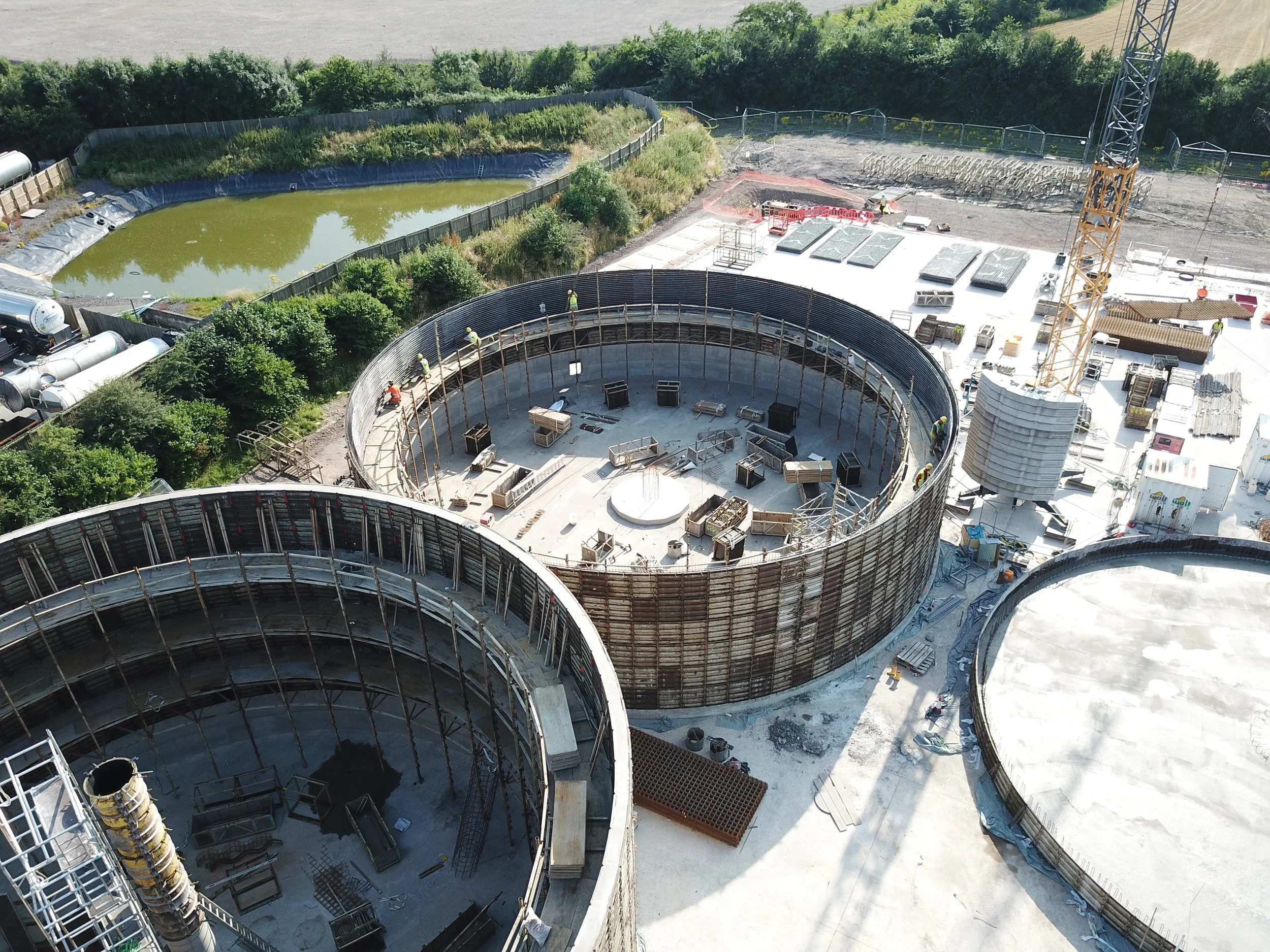


ADRisk360: The Anaerobic Digestion and Biogas Risk Survey
AD Risk360 is BIOCON's standardised risk survey for anaerobic digestion (AD), biogas and biomethane plants. It scores risk across five categories, sets out prioritised risk actions and assesses business interruption exposure.
Every site is surveyed the same way, insurers, brokers and asset owners can compare risk from site to site and year to year.
Why do insurers need a standardised AD risk survey?
AD plants are a small, technically dense insured class, and survey reports on them vary widely in scope and format. That makes sites hard to compare and renewals hard to price. A standardised survey uses the same categories, scoring and outputs every time, so an underwriter can see what has changed and what hasn't.
We built AD Risk360 around the questions an underwriter, broker or loss adjuster actually asks about an AD plant: what could fail, what would that do to the process, how long would it take to recover, and what should be fixed first.
We do not simply ask "Is the item compliant?" We ask what happens to the plant, the policyholder and the loss exposure if this asset fails.”
Who is ADRisk360 for?
ADRisk360 is written for the people who insure, broker, own and invest in AD assets, and its outputs are shaped around the decisions each of them has to make.
-

Insurers and Underwriters
Portfolio-level risk scoring, a consistent methodology year to year and technical input to underwriting referrals.
-
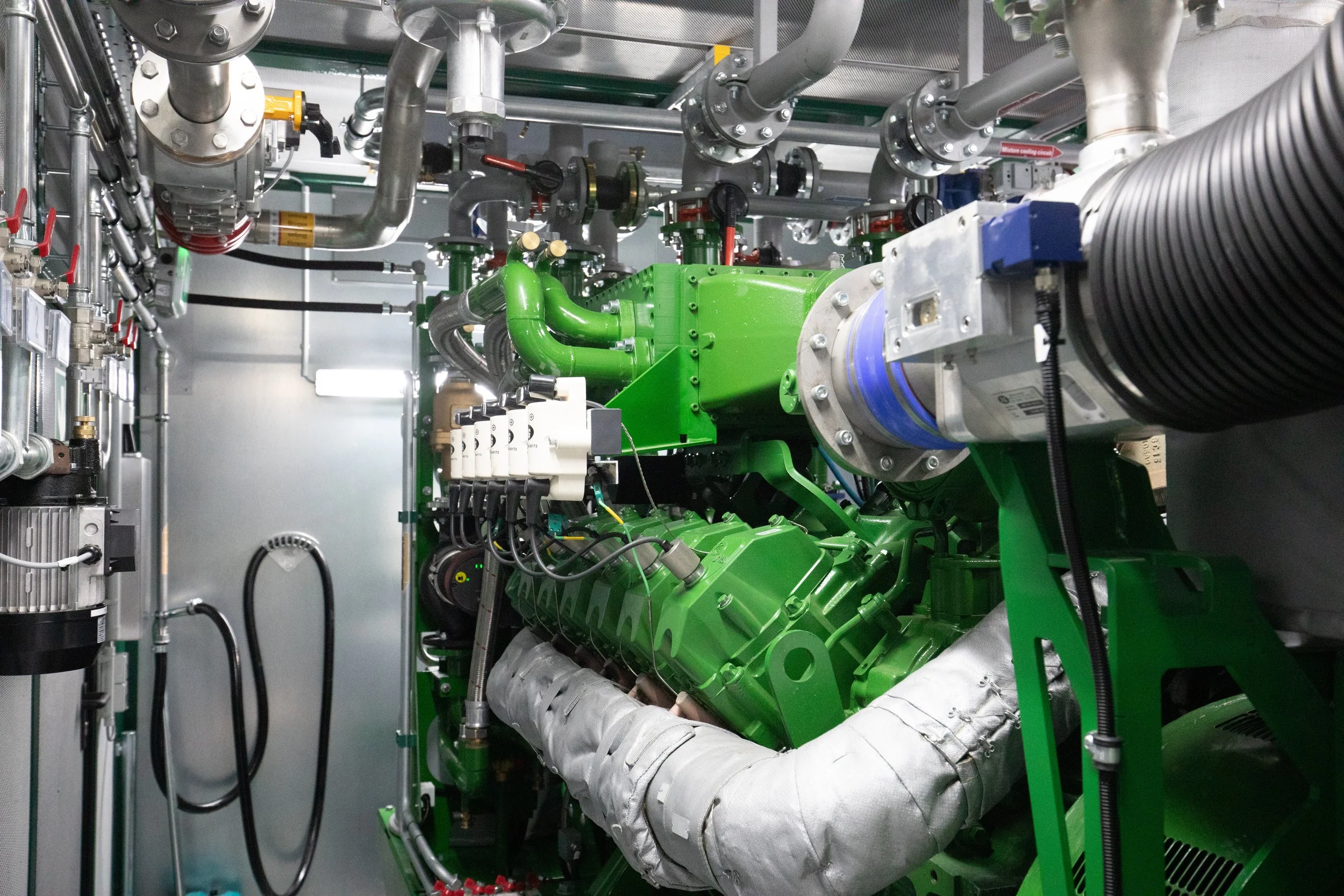
Brokers
Pre-renewal risk reviews that strengthen the presentation to market, and costed client improvement plans.
-
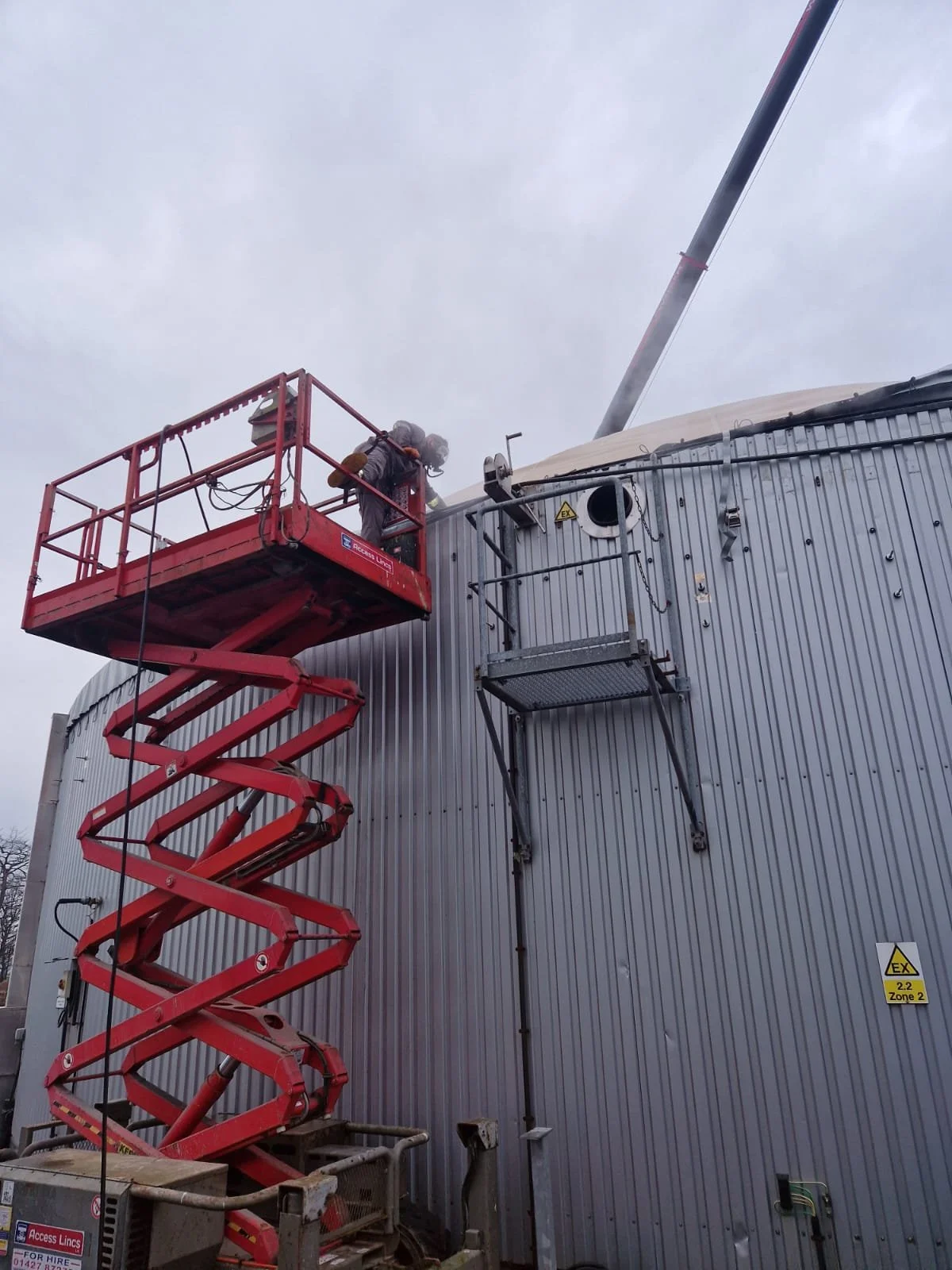
Asset owners and Investors
Compliance and integrity assurance, lifecycle investment planning and, at Level 3, technical due diligence at acquisition or refinancing.
What does an ADRisk360 survey cover?
Every ADRisk360 survey assesses the plant across five categories, from process stability and gas containment through to critical spares and recovery planning. Each category is scored separately, so an insurer can see where the risk sits, not just how much of it there is.
| Category | Typical scope | Why it matters to the insurer |
|---|---|---|
| Process and gas | Process stability, gas containment, upgrading, injection, flare and CHP | Process upsets and gas release drive both fire and explosion risk and lost production |
| Mechanical and pressure | Mixers, pumps, blowers, compressors, vessels, PRVs, pipework | The main source of machinery breakdown claims and pressure system failures |
| Electrical and ATEX | HV and LV, transformers, MCCs, thermography, DSEAR, hazardous areas | Electrical faults are an ignition source in a flammable gas environment |
| Fire and environment | Fire loading, detection, firewater, containment, drainage, pollution pathways | Determines how far a loss spreads and whether it becomes an environmental liability |
| Resilience and BI | Critical spares, redundancy, OEM support, lead times, recovery planning | Decides how long the plant is down, which is usually where the largest part of the loss sits |
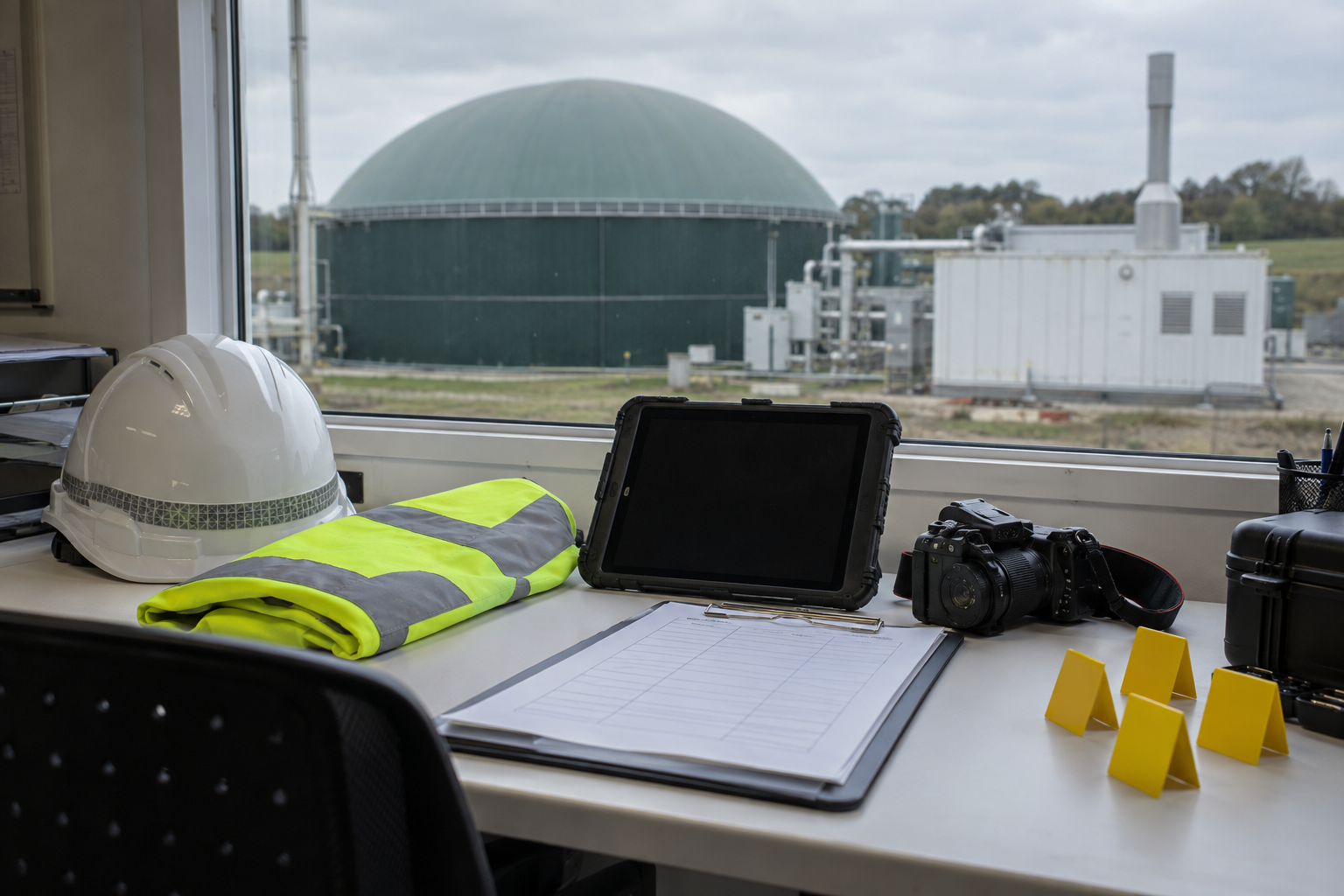
What do you get from an ADRisk360 survey?
Every ADRisk360 survey produces three insurer-ready outputs: a risk score, a prioritised list of risk actions and a business interruption exposure assessment.
Risk score
Consistent site and category scoring to support underwriting, renewal and portfolio comparison.
Top risk actions
Prioritised recommendations with a clear rationale, an owner and a close-out status, so progress can be tracked to the next renewal.
BI exposure
Critical equipment, single points of failure, replacement lead times and recovery scenarios, set out in a Critical Equipment Register.
Which ADRisk360 survey level do you need?
Level 1
Insurance Risk Survey
- Typical scope
- Risk score, major defects, BI exposure, recommendations
- Use
- Renewal and underwriting
- Who usually commissions it
- Insurers and brokers
Level 2
Asset Integrity Survey
- Typical scope
- Level 1, plus condition monitoring, compliance review and maintenance maturity
- Use
- Risk improvement and lifecycle planning
- Who usually commissions it
- Asset owners, often at an insurer's request
Level 3
Technical Due Diligence
- Typical scope
- Level 2, plus CAPEX, remaining life, BI scenarios, and regulatory and process exposure
- Use
- Acquisition, refinancing and insurer engineering
- Who usually commissions it
- Investors, lenders and insurers
How does ADRisk360 work across the policy lifecycle?
ADRisk360 is designed to be repeated, not run once. The same method, and where possible the same named engineer, follows a site from its first survey through each renewal, so risk improvement is measured against a consistent baseline.
Frequently Asked Questions
-
ADRisk360 is BIOCON Group’s standardised risk survey for anaerobic digestion, biogas and biomethane plants. It scores risk across five categories, sets out prioritised risk actions and assesses business interruption exposure. Because the method is consistent, insurers, brokers and asset owners can compare risk from site to site and year to year.
-
ADRisk360 surveys are carried out by BIOCON Technical Services engineers, drawing on BIOCON Group's experience in AD process, mechanical, electrical, pressure systems and DSEAR work. Where a survey needs a specialist or accredited inspection, we coordinate it as part of the survey rather than leaving a gap in the report.
-
Choose Level 1, the Insurance Risk Survey, for renewal and nderwriting. Choose Level 2, the Asset Integrity Survey, to improve the risk and plan maintenance. Choose Level 3, Technical Due Diligence, for acquisition, refinancing or detailed insurer engineering. If you are unsure, tell us the purpose and the renewal date and we will recommend a level.
-
No. ADRisk360 is a risk engineering survey, not a statutory examination under PSSR, LOLER or similar regimes. It reviews statutory compliance as one input, then looks at how the whole plant could fail, how long recovery would take and which actions reduce the risk most. It complements statutory inspection rather than replacing it.
-
ADRisk360 builds a Critical Equipment Register covering items such as the CHP engine, gas upgrader, digester mixers and grid entry unit. Each item is assessed on failure likelihood, replacement or recovery time and process consequence. Together these give a credible view of outage duration and business interruption exposure, and identify single points of failure.
-
Yes. Every ADRisk360 survey uses the same five categories, scoring and outputs, so results can be compared site to site across a portfolio and year to year at each renewal. Where a portfolio is surveyed over successive cycles, we aim to keep the same named engineer so site knowledge is retained.
-
Yes, if you want it to. BIOCON Group can deliver remedial work through BioContractors, with BIOCON Technical Services verifying the close-out. Where a statutory role or an insurer's governance requires separation between the party doing the work and the party verifying it, Technical Services operates independently of the rest of the Group.
-
ADRisk360 covers anaerobic digestion, biogas and biomethane plants, including sites with CHP engines, gas upgrading, grid injection and flare systems. It applies to agricultural, food waste and commercial waste AD sites across the UK, at any stage from newly commissioned plant to ageing assets approaching refinancing or sale.
Still have a question? Speak to our Technical Services team to find out more
Speak to the team
Get a consistent view of AD risk
Whether you are pricing a renewal, improving a site or buying one, ADRisk360 gives you one method, one score and a clear list of what to fix first. Tell us about the site or portfolio and we'll recommend the right survey level.