
Odour in Anaerobic Digestion: What Causes It and How to Prevent It
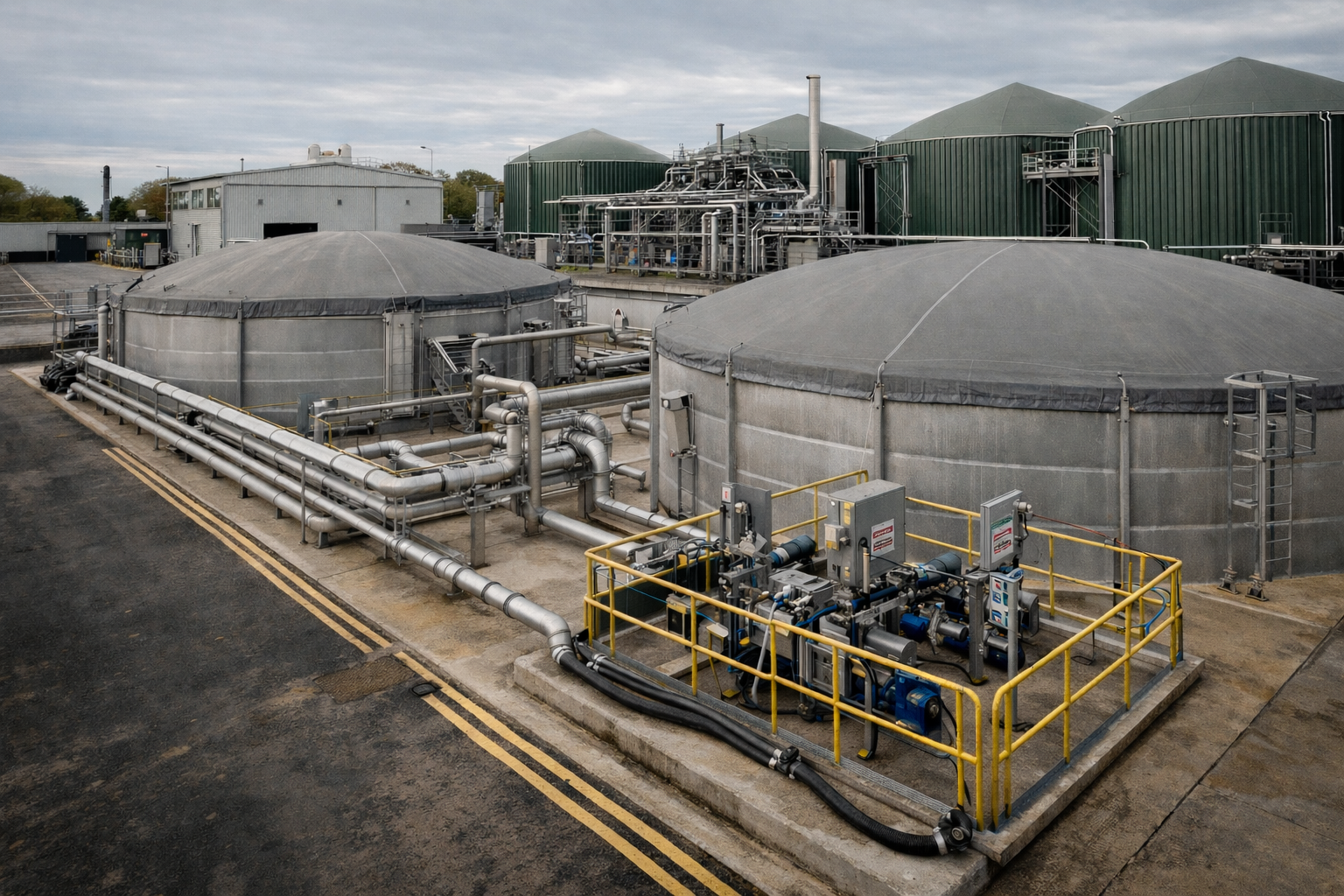
Odour is one of the quickest ways for an anaerobic digestion project to lose trust.
You can have a technically sound plant, a strong business case, and a well-managed delivery programme, but if neighbours, planners, or local stakeholders believe odour is not being taken seriously, confidence can disappear fast. In the AD and biogas sector, that matters. Odour concerns can influence planning, trigger complaints, affect regulatory attention, and shape how a site is talked about long after commissioning.
The good news is that odour is not a mystery. In most cases, it can be understood, reduced, and managed with the right mix of design, operations, monitoring and communication. Regulators are clear that odour control is not about vague promises. It is about using appropriate measures, identifying risks, responding quickly, and showing that you understand how odour might affect nearby receptors.
This is where a lot of projects go wrong. They either underplay the issue, or they talk about it in generic terms that do not sound convincing. If you want to speak credibly about odour in AD, you need to explain three things well.
What causes it, what prevents it and what happens when things do not go to plan.
Why odour matters so much in AD and biogas
Odour is highly local and highly human. People do not experience it as a spreadsheet risk. They experience it from their garden, driveway, footpath or window. That is why odour often becomes a trust issue before it becomes a technical one.
In England, the Environment Agency expects permitted operators to prevent or minimise odour using appropriate measures, and local authorities must investigate complaints about smells from industrial, trade, or business premises where they may amount to statutory nuisance. For planning and assessment, receptor sensitivity also matters. Homes, schools, and public spaces are generally treated as more sensitive than industrial locations.
For AD developers and operators, the takeaway is simple. Odour is not just an operations issue. It is a design issue, a permitting issue, and a communications issue.
What actually causes odour at an AD site?
Odour is usually linked to the release of volatile compounds from organic materials, especially where wastes are delivered, stored, agitated, processed, or left exposed longer than intended. In AD, that means odour risk is often highest around feedstock reception, pre-treatment, storage, digestate handling, and abnormal operating conditions such as spills, delays, equipment failure, or poor housekeeping. EA guidance requires operators to identify all significant odour sources and use appropriate measures to control them. Site odour plans for AD facilities commonly identify waste reception, storage, building air extraction, digestate handling, and emergency or breakdown scenarios as priority risks.
| Common odour source | Why it smells | Typical risk point |
|---|---|---|
| Feedstock deliveries and reception | Fresh organic wastes can release strong odorous compounds when unloaded or disturbed | Vehicle tipping, bunker opening, slow turnaround |
| Pre-treatment and mixing | Shredding, depackaging, pulping, and agitation increase exposure and air movement | Open or poorly ventilated treatment areas |
| Storage of feedstocks | Material held too long can degrade further and intensify odour | Queueing, warm weather, poor stock rotation |
| Digestate handling and storage | Digestate is often less odorous than raw waste, but can still generate odour if exposed or poorly managed | Tank vents, lagoons, loading, landspreading interface |
| Process upsets and leaks | Unplanned releases quickly undermine confidence | Door failures, negative pressure loss, spills, maintenance events |
It is also worth being precise here. AD itself can stabilise biodegradable material and in many cases reduce odour potential compared with untreated waste. SEPA guidance notes that AD can produce a more stable material with less odour. That does not mean every part of an AD facility is automatically low-odour. The reality depends on feedstock type, containment, residence time, housekeeping, and how the site is operated day to day.
What prevents odour, in practice?
The most credible way to talk about odour prevention is to show that you understand the hierarchy of control.
The strongest odour strategy is not masking or reacting to smell after the fact. It is preventing release in the first place. The Environment Agency’s guidance focuses on appropriate measures such as containment, ventilation, extraction, treatment, maintenance, monitoring, and management procedures.
1. Keep odorous materials contained
This is the foundation. Reception halls, tipping areas, and pre-treatment spaces should be enclosed where appropriate, with fast door management and controlled vehicle movements. The aim is to minimise the time odorous material is exposed to open air.
2. Maintain negative pressure and controlled air extraction
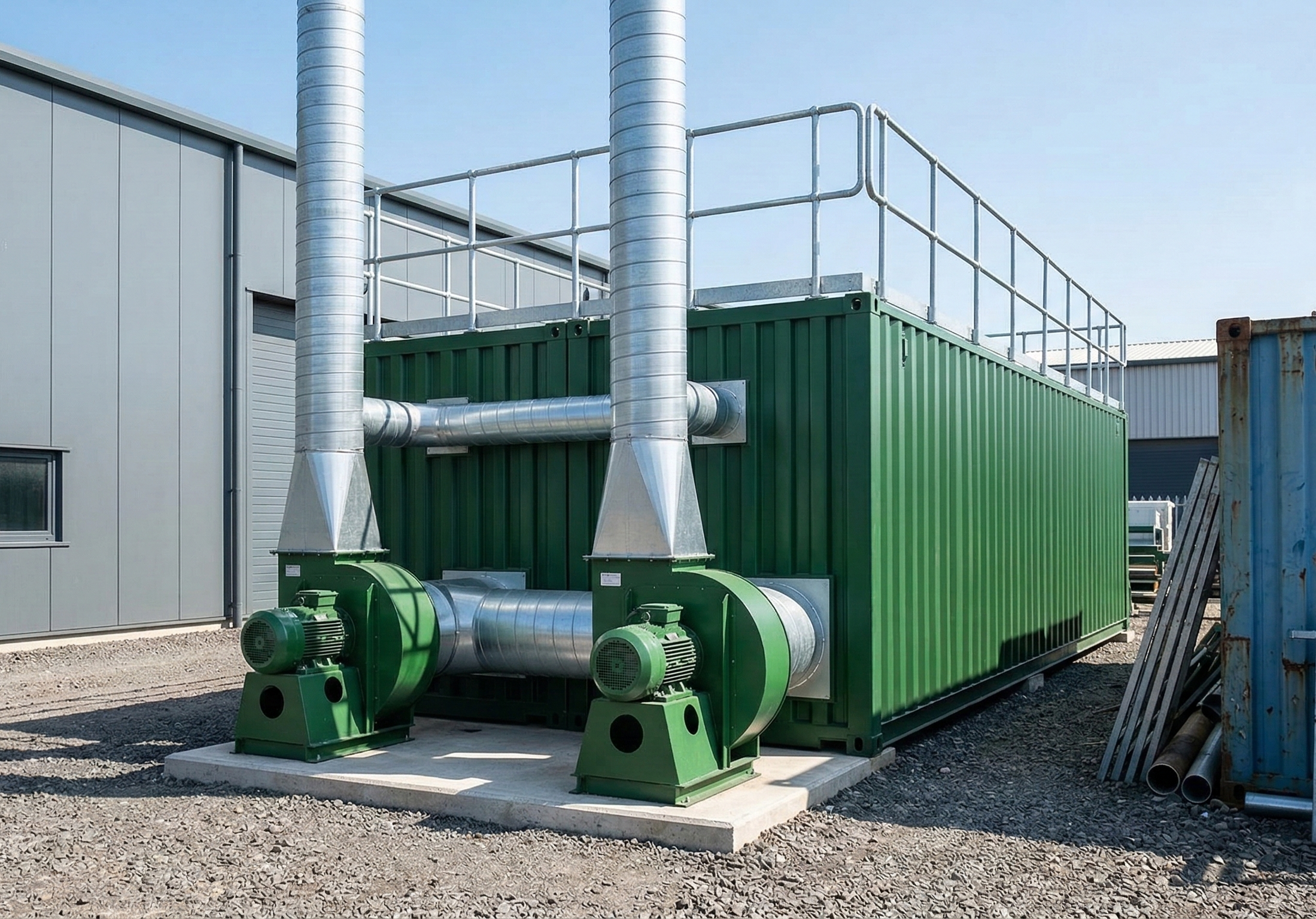
Where buildings handle odorous waste, extracted air should be pulled into treatment systems rather than escaping uncontrolled. In permitted facilities, odorous air from reception buildings is often routed to control systems such as biofilters before release.
3. Use the right odour abatement technology
There is no single answer for every site. Depending on airflow, contaminant profile, and layout, odour control may involve biofilters, scrubbers, activated carbon, or a combination. The key is not naming a technology. It is demonstrating that it has been specified, operated, and maintained properly. EA guidance is explicit that operators must assess emissions from stacks, vents, and relevant surfaces using suitable monitoring approaches.
4. Reduce storage time and improve housekeeping
Many odour events come from delay rather than design. Loads waiting too long, residues left behind, dirty hardstanding, standing liquids, and poor cleaning routines all increase risk. Good odour control often looks unglamorous. It is about fast handling, disciplined cleaning, and operational consistency.
5. Plan for abnormal conditions
This is where credibility is won or lost. A strong odour management approach explains what happens during breakdowns, backlog, weather changes, maintenance, or temporary failure of plant and equipment. Regulators expect odour management plans to cover both normal operations and reasonably foreseeable abnormal situations.
What good odour management looks like on a real site
The best-run sites do not wait for complaints to work out where the problem is. They already know their likely sources, their sensitive receptors, and their escalation process.
A robust odour management approach usually includes:
A site-specific odour management plan
Clearly identified odour sources and risk points
Routine inspections and sniff testing by trained staff
Weather and wind awareness
Maintenance schedules for doors, ducting, fans, filters, and abatement plant
Rapid complaint logging and investigation
Contingency actions when thresholds or complaints indicate a problem
The Environment Agency also expects operators to investigate complaints, verify whether the odour is linked to the site, determine the cause, and check whether appropriate measures are being used.
Common mistakes that make odour concerns worse
A few patterns come up again and again:
Treating odour as a planning-stage problem only
Odour needs attention from concept design through operation. If layout, airflow, traffic routing, and contingency planning are left too late, the site may inherit avoidable risk.
Hiding behind technical language
Stakeholders do not need a chemistry lecture. They need a clear explanation of what can smell, what stops it, and what you will do if something goes wrong.
Failing to separate normal operations from abnormal events
Most complaints are driven by breakdown, backlog, exposure, or poor timing. If your messaging ignores these scenarios, it will feel incomplete.
Responding to complaints defensively
A fast, factual response builds confidence. A dismissive one destroys it.
Odour in anaerobic digestion is manageable, but only when it is treated as both a technical and human issue.
For operators, the core job is straightforward. Identify the real sources, prevent release where possible, contain and treat what cannot be avoided, and have a clear response plan for abnormal conditions.
For developers and project teams, the communications lesson is just as important. Credibility comes from specificity. Do not promise the impossible. Show that you understand the risks, the controls, the monitoring, and the response process.
That is how you reassure planners, neighbours, regulators, and investors without sounding evasive. And in a sector where trust matters, that can make all the difference.
Need support reviewing odour risk?
If you are reviewing odour risk for a new AD project, updating an odour management plan, or trying to communicate site controls more clearly to planners and local stakeholders, BIOCON Group can help. From technical advisory support and plant design input to operational review and stakeholder-facing content, we help AD projects turn complex site risks into practical, credible strategies.
