
AI in Anaerobic Digestion: Smarter Monitoring, Prediction and Remote Control
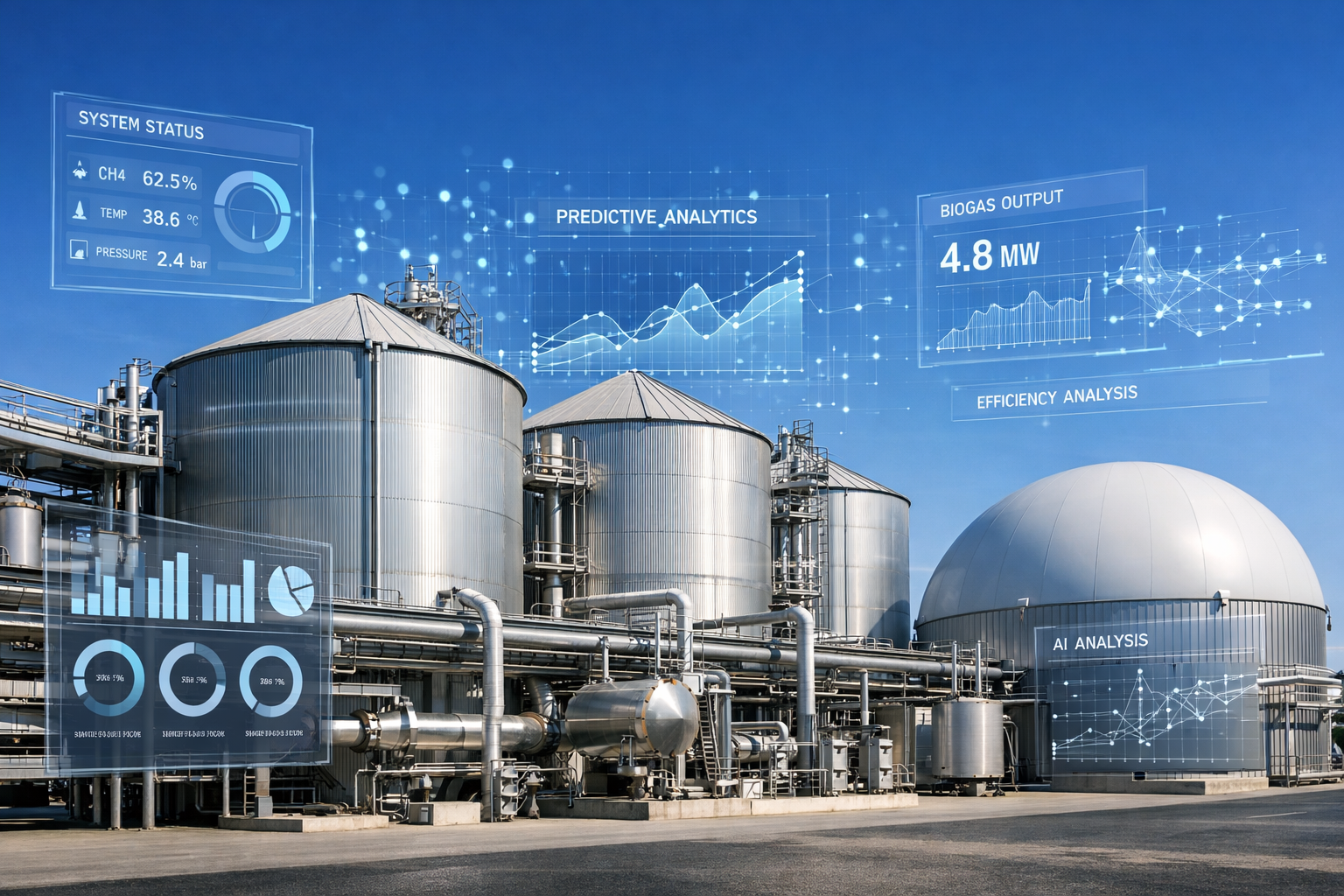
Most anaerobic digestion (AD) plants generate a lot of data. Flow rates, gas yields, pH readings, volatile fatty acid (VFA) concentrations, temperature logs, feedstock records. The challenge for many operators is not collecting that data. It is making sense of it quickly enough to act on it.
Traditional monitoring relies on periodic sampling, manual log sheets, and the experience of whoever happens to be on shift. That works well enough when things are stable. But AD is a living biological process, and the gap between something shifting and something going wrong can close faster than a weekly sample can reveal.
This is where artificial intelligence (AI) and digital monitoring are starting to make a real difference across the industry. Not as a replacement for skilled operators, but as a powerful layer of support that spots patterns earlier, reduces unnecessary callouts, and gives teams the confidence to manage plants more remotely and more efficiently.
This insight post covers what AI-driven monitoring actually looks like in practice, how predictive tools are being used to protect digester health, and what automation and remote operation can realistically deliver for UK and European AD operators today.
What does AI-driven monitoring actually mean for an AD plant?
AI in the context of biogas plant management does not mean robots or science fiction. It means applying machine learning and data analysis tools to the continuous streams of sensor data your plant already produces, or could produce with modest upgrades to instrumentation.
At its core, an AI-driven monitoring system does three things:
Collects data continuously from sensors across the plant, feeding it into a central platform in real time.
Identifies patterns across that data, including relationships between variables that a human operator might not spot easily across hundreds of data points.
Flags anomalies or predicts changes before they become operational problems, often hours or days ahead of when a manual check would catch them.
The difference between a basic SCADA (supervisory control and data acquisition) system and a genuinely AI-powered platform is in that third capability. SCADA tells you what is happening now. AI starts to tell you what is likely to happen next, and why.
Platforms being deployed across European AD and biogas plants now use combinations of continuous online sensors, cloud-based data processing, and machine learning models trained on operational history to provide this kind of forward-looking insight. Some are built specifically for the AD sector. Others are adapted from broader industrial monitoring tools. The underlying principle is the same: use data smarter, act earlier.
Predicting digester health before problems take hold
Digester instability rarely arrives without warning. The warning signs are there in the process data. The challenge is detecting them reliably and quickly, especially when a plant is running multiple digesters or handling variable feedstocks.
AI-based prediction tools are particularly valuable for monitoring three of the most common sources of instability:
1. Ammonia inhibition
Free ammonia nitrogen (FAN) is one of the most significant inhibitors in high-nitrogen feedstocks such as slurry, poultry litter, and food waste. As FAN concentrations rise, methanogen activity slows, VFAs accumulate, and pH begins to shift. By the time this is visible in a weekly grab sample, the process may already be stressed.
AI monitoring platforms that integrate continuous pH, alkalinity, and conductivity data alongside historical feedstock composition can begin to flag rising ammonia risk earlier, allowing operators to adjust loading rates or feedstock blends before inhibition takes hold.
2. VFA accumulation and acidification risk
VFA to total alkalinity (TA) ratios are one of the most reliable indicators of digester stability. When VFAs start to outpace alkalinity buffering, the risk of acidification increases significantly. Continuous monitoring of biogas composition (particularly CO2 fraction) and pH trends, interpreted through a predictive model, can give operators hours or days of lead time to respond, rather than minutes.
3. Feedstock variability and seasonal shifts
Feedstock composition changes with seasons, suppliers, and blending decisions. A model that has learned the relationship between incoming feedstock characteristics and downstream process behaviour can help operators anticipate the impact of a new batch or a seasonal shift in slurry chemistry, rather than discovering it reactively through gas yield drops or pH instability.
A practical example of predictive value: A large agricultural AD plant processing dairy slurry and co-substrates began using an online monitoring platform with predictive modelling in 2022. The system identified a correlation between incoming dry matter content above 9% and a lagged pH depression 48 to 72 hours later. The operations team adjusted their blending protocol during high-DM periods, reducing the frequency of process corrections and improving gas yield consistency by around 8% over the following 12 months. Results like this depend heavily on site conditions, feedstock profile, and how well the system is calibrated, but the directional benefit is well established.
Traditional monitoring vs AI-assisted monitoring: a comparison
| Factor | Traditional Monitoring | AI-Assisted Monitoring |
|---|---|---|
| Data collection frequency | Weekly or fortnightly grab samples | Continuous, real-time sensor feeds |
| Anomaly detection | Reactive, after the event | Predictive, hours or days ahead |
| Ammonia / VFA tracking | Lab analysis with lag time | Pattern-based inference from live data |
| Operator requirement | High on-site presence | Remote oversight with targeted alerts |
| Feedstock impact awareness | Observed retrospectively | Modelled prospectively from incoming data |
| Capital cost to implement | Low (existing equipment) | Moderate (sensors, platform, integration) |
| Ongoing value | Baseline compliance | Stability, efficiency, and uptime improvements |
Could Monitoring Gaps Be Costing You?
Many AD plants are collecting data but not fully using it to prevent instability, lost yield or reactive callouts.
Our free toolkit helps you:
• Identify monitoring blind spots
• Assess AI readiness
• Quantify potential operational benefit
Download our AI Monitoring Toolkit and assess your plant’s position
Remote operation and automation: what is realistic today?
Remote monitoring and automation are not new in the AD sector. Most plants built in the last decade include some level of remote access to SCADA systems. What has changed is the depth of insight available remotely, and the degree to which routine control actions can be automated safely and reliably.
For operators managing multiple sites, or smaller plants where full-time on-site staffing is not economically viable, this shift matters significantly.
What can be automated on a well-instrumented AD plant?
Feedstock dosing: Automated pump control linked to biogas yield and process sensors allows loading rates to be adjusted without manual intervention. This is particularly useful for overnight or weekend periods.
Trace element and additive dosing: AI systems can adjust micronutrient addition schedules based on biogas output trends and VFA ratios, reducing waste and maintaining biological balance.
Gas handling and flare management: Automated responses to gas pressure and quality changes reduce the risk of unplanned flare events or gas quality exceedances, which matter for biomethane plants supplying to the gas grid.
Alert triage and prioritisation: Rather than generating hundreds of low-level alarms, AI-assisted platforms can rank alerts by severity and likely cause, reducing alarm fatigue and helping on-call engineers focus their response.
Reporting and compliance data: Automated generation of daily and monthly operational reports, feedstock records, and Environmental Permit (EP) compliance data reduces administrative burden on site teams.
It is worth being clear about what cannot yet be fully automated on most AD plants. Mechanical maintenance, physical inspections, feedstock reception, digestate management, and the judgement calls that come from experience all still require skilled people on site. AI supports operators, it does not replace them.
| Scenario | Without AI Monitoring | With AI Monitoring |
|---|---|---|
| Single Site, Overnight | Operator on-call, reactive response | Automated alerts prioritised by severity, fewer callouts |
| Multiple Sites | Separate SCADA logins, inconsistent data formats | Unified dashboard, cross-site performance benchmarking |
| Seasonal Feedstock Change | Manual observation, reactive adjustment | Predictive alert ahead of expected process shift |
| Grid Biomethane Supply | Manual gas quality checks, delayed intervention | Continuous quality monitoring, automated flow management |
| Compliance Reporting | Manual extraction from SCADA logs | Automated report generation from integrated data |
The real-world benefits operators are seeing
The commercial and operational case for AI-assisted monitoring in AD is growing, but it is important to frame benefits honestly. Results vary depending on plant age, feedstock profile, existing instrumentation, and how well the technology is integrated into day-to-day operations.
That said, the areas where operators typically report measurable improvement include:
Fewer unplanned shutdowns: Earlier detection of process stress means teams can intervene before problems escalate to full digester instability or equipment failure.
Reduced callout costs: Smarter alert prioritisation cuts unnecessary engineer visits, which is particularly valuable for plants in rural locations with long travel times.
Improved gas yield consistency: Tighter process control, particularly around loading rates and trace element dosing, supports steadier biological performance.
Better feedstock utilisation: Understanding how different feedstocks perform within the model allows blending decisions to be optimised rather than estimated.
Stronger compliance confidence: Continuous monitoring and automated logging supports permit compliance and provides better evidence in the event of an inspection or incident.
Operator confidence: Teams report feeling more in control when they have better data, particularly for plants processing difficult or variable feedstocks.
| Benefit Area | Typical Impact | Key Variables |
|---|---|---|
| Unplanned shutdowns | Reduction in frequency and duration | Plant age, feedstock variability, sensor quality |
| Callout frequency | Fewer out-of-hours callouts over time | Alert system calibration, operator responsiveness |
| Gas yield | Marginal to moderate improvement | Baseline stability, loading rate discipline |
| Compliance reporting | Significant time saving | Level of automation and integration |
| Operator capacity | More remote oversight is viable | Staff skill level, training, trust in the system |
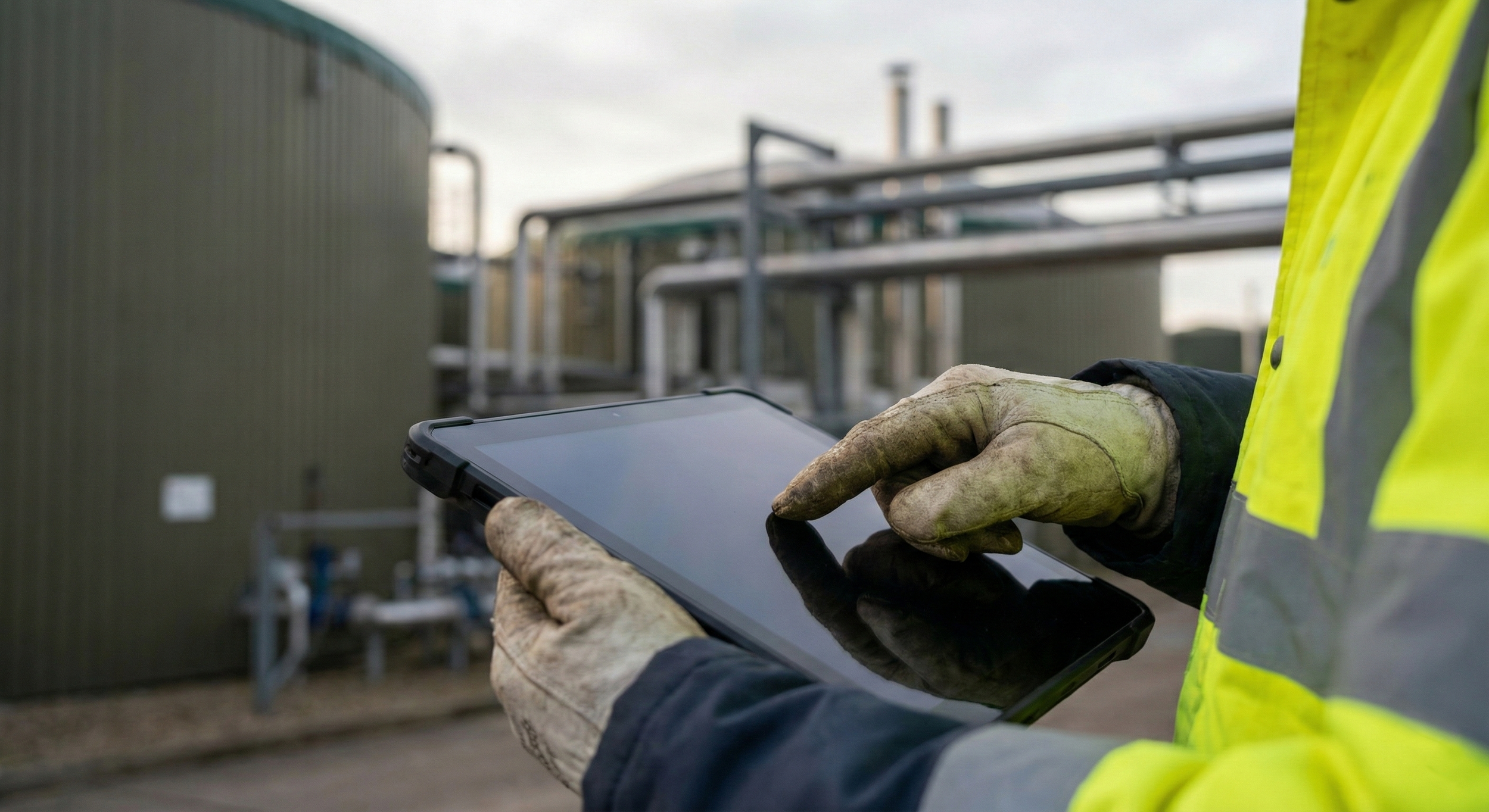
Automation and remote operation, getting efficiency without losing control
Automation in AD sits on a spectrum. At one end you have remote visibility and better alarms, at the other end you have AI-assisted control strategies that continuously recommend or adjust setpoints.
In the biogas industry, this is almost always delivered through SCADA and related industrial control systems. There are two important points to get right:
Safety and resilience first: SCADA can control or monitor safety-critical functions, so automation must be engineered with “how could this fail” as the first question.
Human-in-the-loop by default: Many credible AI deployments explicitly frame AI as decision support, not a replacement for operators.
A UK industry publication produced by Anaerobic Digestion and Bioresources Association highlights that SCADA can control important safety functions on AD infrastructure, including flow rates, pressure, temperature levels, and monitoring toxic substances like hydrogen sulphide and ammonia, it also notes that cyber breaches could create severe safety risks.
From a regulatory safety perspective, the UK Health and Safety Executive notes that industrial automation and control systems are programmable and vulnerable to cyber threats, and that such threats can lead to undetected faults, downtime, and increased major accident risk, it also points to its OG86 guidance for IACS cyber security expectations.
If remote operation involves cloud connectivity, UK organisations should also be aware that the National Cyber Security Centre has published guidance aimed at OT organisations considering cloud-hosted SCADA.
Considerations before you invest
AI and digital monitoring platforms are not a plug-and-play solution that works equally well on every plant. Before investing, it is worth understanding the practical requirements and limitations.
Sensor infrastructure comes first
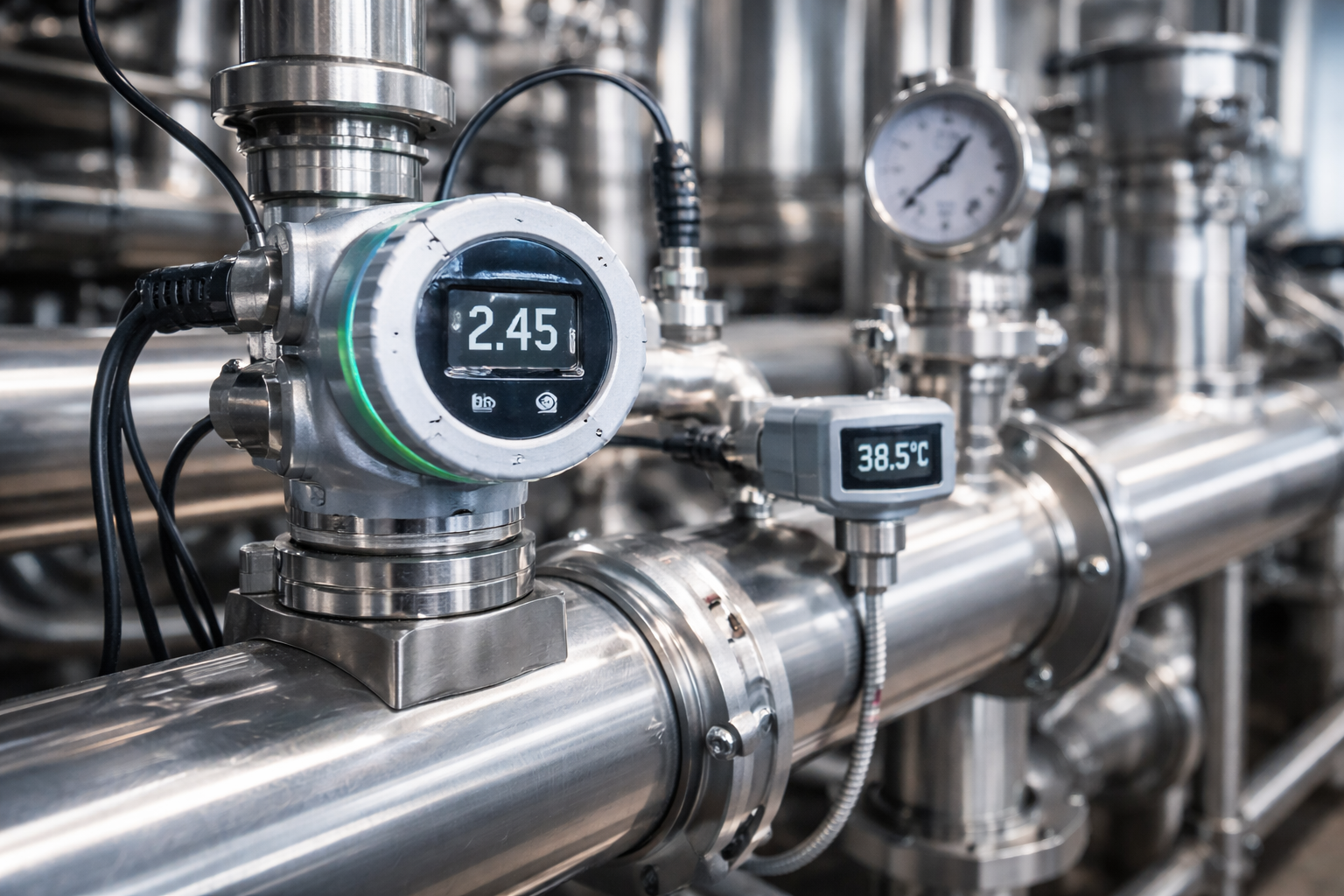
AI models are only as good as the data they receive. Many older AD plants have limited online instrumentation, relying on periodic manual sampling rather than continuous sensor feeds. Upgrading to continuous pH, temperature, gas flow, gas quality (CH4/CO2/H2S), and pressure monitoring is often a prerequisite for meaningful AI-assisted analysis. The cost of this instrumentation varies considerably, but it is the foundation everything else builds on.
Data quality and calibration matter
Poorly maintained sensors produce poor data. A predictive model fed unreliable pH readings or gas flow data will generate unreliable predictions. Any AI implementation should be paired with a robust sensor maintenance and calibration programme, and operators should understand how to recognise when sensor drift is affecting model output.
Training and operator buy-in
Technology without trained people is technology that does not get used. Operators need to understand what the monitoring platform is telling them and why, how to respond to different alert types, and when to trust the model versus their own judgement. Investment in training alongside the technology is not optional. It is what determines whether the system delivers value.
Start with the right problem
The most successful AI monitoring implementations tend to start with a clearly defined operational problem: reducing acidification events, improving overnight stability, managing a difficult feedstock blend. Platforms that try to monitor everything simultaneously without a focused use case often generate noise rather than insight. Define the problem first, then build the monitoring around it.
UK and European regulatory context
For UK AD operators, continuous monitoring and digital records increasingly support compliance with Environmental Permit conditions, which typically require evidence of operational control and process monitoring. The Environment Agency (EA) in England and SEPA in Scotland have both published guidance on monitoring frequency and record-keeping requirements that align well with what a digital monitoring platform can provide.
For plants producing biomethane for injection into the gas network, Gas Quality Specification requirements under the relevant Gas Safety (Management) Regulations and offtake agreements add further incentive for continuous gas quality monitoring, rather than periodic testing alone.
In the European context, the Renewable Energy Directive (RED III) and increasing national biomethane targets are driving investment in more sophisticated plant management, with AI and digital monitoring forming part of the technical case for qualifying projects and demonstrating sustainability criteria.
It is worth involving your compliance and environmental advisors when specifying a monitoring system, to ensure the data it captures is formatted appropriately for permit reporting and can be produced in a form that satisfies regulatory requirements if needed.
When to bring in specialist support
Not every plant needs the most sophisticated AI monitoring platform available. The right level of technology depends on plant size, feedstock complexity, staffing model, and the specific operational challenges you are managing.
Consider bringing in specialist advice if:
You are experiencing regular digester instability and struggling to identify root causes through existing monitoring.
You are moving to remote operation or managing multiple sites and need a more structured approach to oversight.
You are planning to introduce new feedstocks and want to understand the process risk before changing loading rates.
You are considering upgrading to biomethane production and need to understand the monitoring requirements for grid injection.
You have invested in sensors or a platform but are not confident your team is getting the full value from the data.
A good starting point is a process audit combined with a review of your current instrumentation and data infrastructure. This will give you a clear picture of where the gaps are and what the most cost-effective improvements would be for your specific situation.
BIOCON perspective
At BIOCON Group, we work with AD and biogas plants across a wide range of scales, feedstocks, and operational models. What we see consistently is that the plants which get the most from digital monitoring are those where the technology is introduced alongside good process understanding, not as a substitute for it.
AI tools are genuinely useful. They can surface patterns that are hard to spot manually, reduce the cognitive load on operators managing complex or variable processes, and make remote management more viable for sites where full-time staffing is not practical. But the biology still needs to be understood. The sensors still need to be maintained. And the people running the plant still need to trust and understand what the data is telling them.
Our team at BioConsult supports operators and developers with process audits, monitoring system design, operator training, and troubleshooting. If you are thinking about how AI and digital monitoring could work for your plant, we are happy to have a practical conversation about what is realistic for your specific situation.
Ready to Evaluate Your Plant’s Digital Monitoring Potential?
If this article has highlighted areas for improvement, the next step is a structured review.
Want a clearer picture of how AI monitoring could work for your plant?
BioConsult can support with process audits, monitoring system reviews, and operator training. Whether you are exploring the technology for the first time or looking to get more from an existing platform, we can help you work out what makes sense for your specific operation. Drop us a message and we will point you in the right direction.
