
Christmas Trees, Food Waste and Anaerobic Digestion: Turning Festive Waste into Biogas
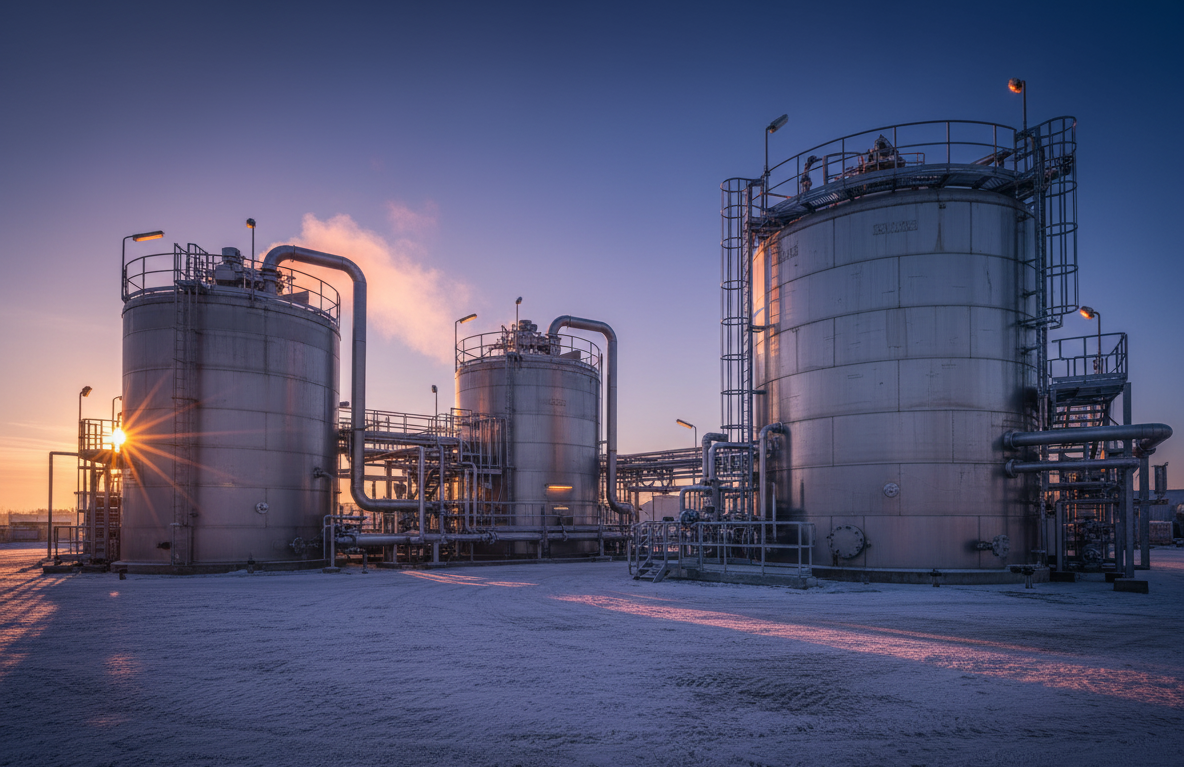
Christmas has a habit of turning the UK into a short, sharp waste factory. Extra packaging, extra collections, extra leftovers and a very familiar question in early January, “What on earth do I do with this tree?”
It turns out that a big chunk of that festive “waste” is actually a useful, energy rich feedstock. If it is captured properly, anaerobic digestion (AD) can turn seasonal food waste into biogas or biomethane, plus a nutrient rich biofertiliser that supports farming and land restoration.
We break down what can realistically go into AD over the festive period, what cannot, where Christmas trees fit in and the UK policy changes that are about to make food waste recycling the default for everyone.
Why festive waste matters more than you think
Defra has put the UK’s additional Christmas waste at over 3 million tonnes, year after year. At the same time, Defra has said around 30% more waste is generated at this time of year, which is a serious pressure test for local authority services and waste contractors.
Food waste is the headline act. Recent industry reporting, based on Bio Capital analysis, suggests the UK’s Christmas food waste could reach around 230,000 tonnes, and if diverted to AD it could produce enough renewable energy to power around 36,000 homes. That’s why you see operators running seasonal campaigns, like Severn Trent Green Power highlighting how unavoidable festive leftovers can become homegrown clean energy across its AD sites.
The takeaway is simple. Christmas creates a predictable spike in organic waste, and AD is one of the most practical ways to turn that spike into value.
Anaerobic digestion, explained
Anaerobic digestion is a controlled biological process where microorganisms break down organic material in the absence of oxygen. The outputs are:
Biogas (mainly methane and CO₂), used for electricity and heat, or upgraded to biomethane and injected into the gas grid
Digestate, a biofertiliser that can return nutrients to land when managed correctly
For local authorities and waste managers, AD is a route to divert food waste away from landfill and capture energy. For farmers and operators, it is also a way to stabilise organics and recover nutrients.
Festive feedstocks that work well in AD
1. Food waste, the festive hero feedstock
From an AD perspective, the festive period is packed with high energy material. Think fats, carbohydrates, proteins, and sugars. Yes, that includes the things people often assume are “not allowed”.
Severn Trent Green Power’s campaign from 2024 is a good reminder that mince pies, leftover turkey, sprouts, and other unavoidable scraps can be processed through AD to generate renewable energy and fertiliser.
If you want a practical rule of thumb for household collections, many councils and campaign messages boil down to this, if it was food, it belongs in the food waste caddy, as long as it is not in packaging.
2. What AD operators like, consistency and contamination control
The technical win is not “more feedstock at any cost”. The real win is clean feedstock.
Over Christmas, contamination often rises because people are tired, distracted and dealing with messy kitchen waste. That is why operators care so much about front end housekeeping, pre treatment and clear comms.
Compostable plastics are still a problem. Reviews and studies repeatedly note that common bioplastics, including PLA, often do not break down fully under typical AD conditions, especially at mesophilic temperatures and can create digestate quality risks.
So, if your food waste is wrapped in “compostable” film or served on a compostable plate, do not assume it is AD friendly unless your local scheme explicitly says so.
Where Christmas trees fit, and what’s realistic for AD
Most Christmas trees are not a straightforward AD feedstock. They are woody, lignocellulosic biomass. That means a lot of cellulose and hemicellulose locked up behind lignin, which is hard for microbes to access in a normal digester. Research into wood waste and lignocellulosic materials consistently highlights that high lignin content makes digestion challenging without pre treatment.
So what happens to trees today? In many places they are collected and chipped, then used for composting, mulching, or biomass energy. Birmingham’s council scheme, for example, has previously chipped collected trees to create biomass electricity.
Could trees ever play a role in AD? Potentially, but usually with caveats:
Mechanical size reduction (proper shredding)
Co digestion with wetter, more biodegradable feedstocks (like food waste or slurry)
Pre treatment (thermal, hydrothermal, steam explosion, or other approaches) to improve biodegradability, while managing inhibitors.
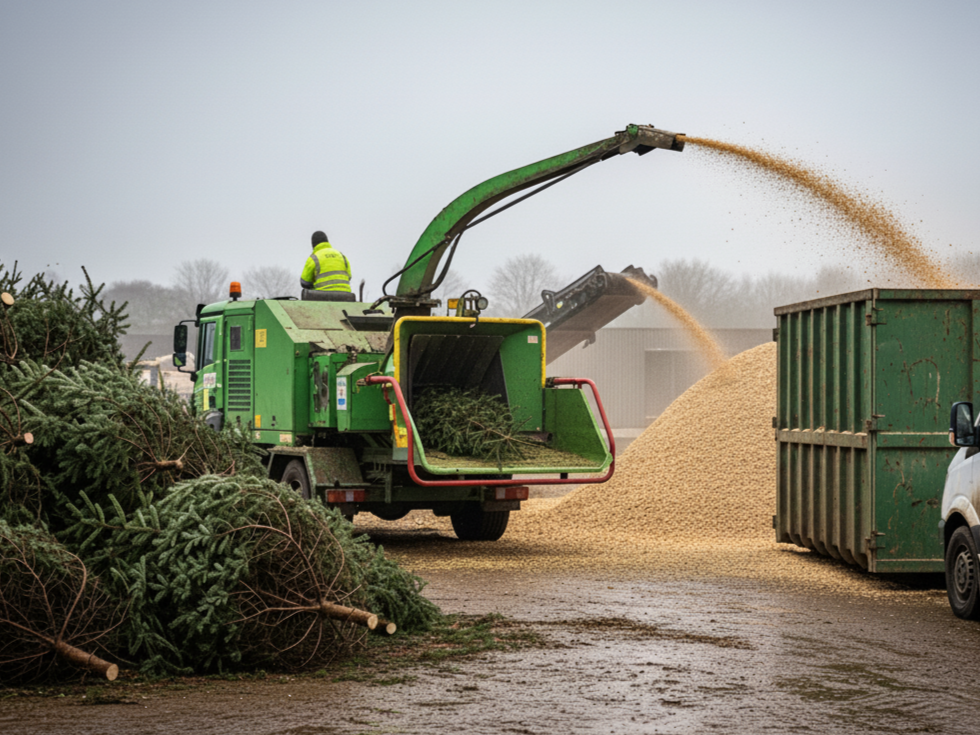
If you want to explore using Christmas trees in AD, there are a few realistic pathways.
1.Co-digestion at low inclusion rates (wet AD)
Blend finely shredded tree material into an existing mix of food waste, slurry, or other wet organics
Keep inclusion conservative, treat it as a fibre supplement rather than a core feedstock
Focus on maintaining pumpability, stable OLR, and avoiding scum or float layers
2.Solid-state AD (dry AD)
Dry or solid-state systems are inherently better suited to fibrous materials.
Higher total solids operation, less need for dilution
Better tolerance of structured, bulky feedstocks
Often paired with green waste and source separated organics, which is closer to the “tree” physical profile
3.Pre-treatment to unlock biodegradability
If you are serious about yields, pre-treatment is where the value is.
Mechanical: aggressive shredding, milling, or pulping to increase surface area
Thermal or hydrothermal: improves accessibility of fibres, but adds capex and energy demand
Steam explosion or similar: can significantly increase digestibility, but needs careful integration and safety case
Any pre-treatment should be assessed against net energy gain and maintenance burden
The UK policy shift that makes this even more relevant
The biggest near term change for England is Simpler Recycling.
Government guidance states that from 31 March 2026, waste collectors must collect key materials separately, including food waste (and garden waste, by default), from all households.
Some councils are already publishing timetables for rolling out caddies and bins ahead of that date, which is worth watching if you work in local authority waste services.
So if you are planning comms, capacity, or contracts, Christmas 2025 and 2026 are not just seasonal peaks. They are also live stress tests for the service model that is about to become standard.
Final thought, the most underrated Christmas upgrade
The best festive sustainability move is not perfection. It is capturing what is already unavoidable.
Even if we never digest Christmas trees at scale, we can still dramatically improve outcomes by diverting festive food waste into anaerobic digestion, cutting landfill methane risk, creating renewable energy, and returning nutrients to land. With weekly household food waste collections becoming the norm in England from March 2026, the direction of travel is clear.